

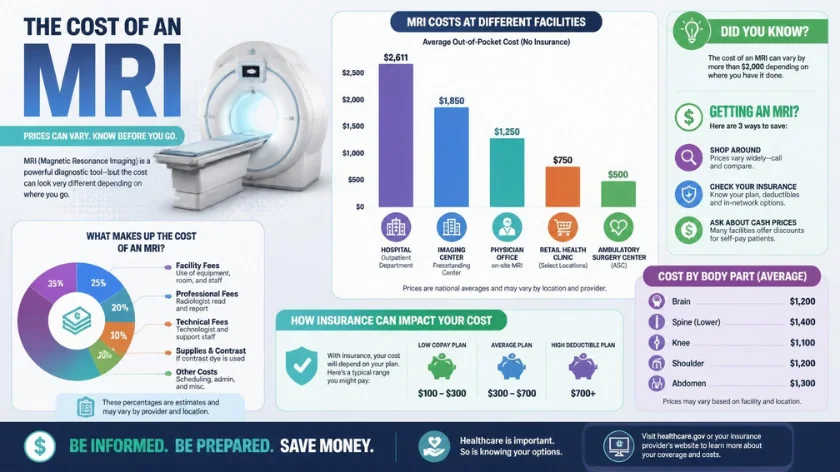
The cost of an MRI in the United States can range from a few hundred dollars to several thousand. Your price depends on the facility, body area, contrast, insurance, and local market. The most useful number is your written estimate for the exact scan ordered.
Direct answer: In the United States, a self-pay scan often costs about $500 to $700 at independent centers. Current marketplace data places the national cash median near $600. Hospital outpatient prices can reach thousands, while insured costs depend on deductibles, coinsurance, network status, and negotiated rates.
| Cost situation | Current U.S. planning benchmark | What changes the final amount |
| Independent imaging center, cash | About $600 median; commonly $500–$700 | City, body area, protocol |
| Scan without contrast, cash marketplace | About $300–$800 | Facility and body region |
| Scan with and without contrast, cash marketplace | About $400–$1,200 | Contrast, protocol, body region |
| Hospital brain scan without contrast | About $2,207 median posted cash price | Hospital and local market |
| Original Medicare outpatient imaging | Usually 20% after the Part B deductible at qualifying facilities | Setting and other coverage |
Key Takeaways
- Independent imaging centers often publish lower cash prices than hospital outpatient departments.
- A quoted price should include the scan, facility charge, radiologist reading, and contrast when required.
- Insurance can reduce the allowed price, but your deductible and coinsurance still control your share.
- Self-pay patients can request a Good Faith Estimate before qualifying scheduled care.
- Medicare cost sharing can differ between independent facilities and hospital outpatient departments.
Cost of an MRI Without Insurance in 2026
The Cost of an MRI varies widely, so treat a national figure as a planning benchmark. One 2026 dataset reports a $600 national median across 362 clinics. Its typical published range is $500 to $700, although the full observed range is much wider.
Another current marketplace lists $300 to $800 for scans without contrast. It lists $400 to $1,200 for studies performed with and without contrast. These ranges are useful for comparison, but your facility’s written quote should guide your budget.
Hospital outpatient departments can be much more expensive for the same procedure code. A 2026 hospital dataset found a $2,207 median posted cash price for a brain study without contrast. Its knee scan median was $2,129, showing how facility choice can sharply change the bill.
What Will You Pay With Health Insurance?
Insurance does not create one predictable patient price. Your plan may apply a deductible before it begins sharing covered costs. Afterward, you may owe a copayment or a percentage called coinsurance.
Suppose your plan’s allowed amount is $900 and you’ve already met your deductible. With 20% coinsurance, your simplified share would be $180. If you haven’t met your deductible, your responsibility can be much higher.
Network status also matters because insurers negotiate different rates with different facilities.You may need prior authorization before a scheduled scan. Ask your insurer for an estimate using the exact facility and procedure code.
How Medicare Handles Diagnostic Imaging Costs
Original Medicare Part B covers medically necessary diagnostic imaging when coverage requirements are met. According to Medicare’s coverage guidance, patients generally pay 20% of the Medicare-approved amount after the Part B deductible at qualifying independent facilities. Hospital outpatient testing can also involve a separate hospital copayment.
Medicare also requires accreditation for certain advanced imaging performed outside hospitals. Confirm the facility meets Medicare requirements before your appointment. Medicare Advantage members should check their plan because networks and cost sharing differ.
Why Scan Prices Differ So Much
Facility type is one of the largest price drivers. Hospital departments often carry higher posted prices than freestanding imaging centers. The exact protocol can also change how long the exam takes and what gets billed.
Main cost drivers
These factors most often move the final price.
- The body part being examined.
- Whether contrast is required.
- Whether several body regions are ordered.
- The city or local healthcare market.
- Sedation or anesthesia, when needed.
- Separate radiologist interpretation charges.
- Insurance network status.
- Prior authorization rules.
Contrast can raise the price because it changes the ordered protocol. A combined with-and-without-contrast study usually costs more than a noncontrast study. The clinical team, not the patient’s budget alone, should decide whether contrast is needed.
Hospital vs. Independent Imaging Center
A freestanding imaging center is often worth pricing first for a scheduled outpatient exam. Current cash datasets place many independent-center prices in the hundreds. Hospital price files often show much higher amounts for common studies.
Price should not be the only factor in choosing a location. Confirm the center can perform the exact ordered protocol and accepts the clinician’s order. Also verify accreditation, network status, and any special safety requirements.
HealthySpire’s Health section covers related diagnostic and wellness topics for everyday readers. That resource can help you prepare questions before contacting a provider. It should not replace your medical team’s instructions.
How to Get the Exact Price Before Your Appointment
The fastest route to a useful estimate is getting the exact order. Ask the ordering office for the body area and contrast instructions. Request the procedure code when it is available.
Price-checking process
- Get the exact order or procedure code.
- Ask your insurer which nearby facilities are in network.
- Ask your insurer for your estimated out-of-pocket amount.
- Compare two or three qualified imaging facilities.
- Ask each facility for both cash and insurance estimates.
- Confirm whether interpretation, contrast, and facility fees are included.
- Request the final estimate in writing before scheduling.
Federal hospital price-transparency rules can support this comparison. U.S. hospitals must publish standard charges and consumer-friendly information for shoppable services. Imaging tests are among the services that patients can often compare before care.
How to Lower Your Out-of-Pocket Bill
Start by comparing the hospital quote with qualified independent centers. Ask for the self-pay rate even when you have insurance. A cash offer can sometimes be lower than your deductible-based responsibility.
Don’t assume paying cash will help your insurance totals. Ask whether self-pay spending counts toward your deductible or out-of-pocket limit. Plan rules vary, so gaskyour insurer.
Uninsured or self-pay patients can request a Good Faith Estimate for qualifying scheduled care. Keep that document and compare it with the final bill. Under CMS’s No Surprises Act rules, a federal dispute process may apply when a bill is at least $400 above the estimate.
What to Check Before the Scan
Tell the facility about implanted devices, metal, pregnancy concerns, or severe claustrophobia. Follow the imaging center’s screening and preparation instructions. Do not change the ordered protocol only to reduce the price.
If brain imaging was ordered for persistent symptoms, review HealthySpire’s guide to head pressure before your appointment. Use it to organize questions and symptom history for your clinician. It does not determine whether imaging is medically necessary.
How HealthySpire Researched These Prices
This guide uses 2026 cash-price datasets, federal pricing rules, and current Medicare guidance. It separates marketplace benchmarks from insurance benefits because they answer different questions. HealthySpire’s editorial approach also favors official healthcare sources for coverage and billing rules.
Prices in this article are planning figures, not guaranteed quotes. Local rates can change, and benefit designs differ by plan. Confirm current financial details with the facility and insurer before receiving care.
Before You Book
Get the exact procedure code, then request written prices from two or three qualified facilities. Compare the cash quote with your insurer’s estimate before choosing a payment path. Confirm that every quote includes the same services.
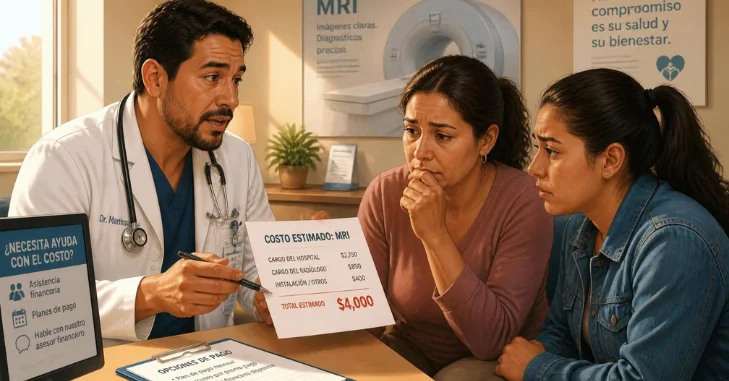
Do not delay urgent or medically necessary testing solely because of price. Ask the ordering clinician about timing if cost creates a barrier. Then ask the facility about lower-cost locations, payment options, or financial assistance.
Frequently Asked Questions
What Is the Average Cost of an MRI in the U.S.?
No single average predicts every patient’s bill. Current independent-clinic data shows a $600 median and a typical $500 to $700 range. Hospital prices can be much higher, especially for outpatient services.
Is a Scan Cheaper Without Insurance?
It can be cheaper for some patients, especially when a facility offers a discounted cash rate. Another patient may pay less through an in-network negotiated price. Compare both estimates before choosing how to pay.
Does Contrast Make the Scan More Expensive?
Yes, contrast can increase the charge because the protocol and supplies change. Current cash marketplaces list higher ranges for combined contrast studies than for noncontrast exams. Follow the clinical order rather than choosing contrast based only on price.
Can I Ask for the Price Before I Schedule?
Yes, and written estimates make comparison shopping much easier. Hospitals must publish pricing information for shoppable services under federal transparency rules. Self-pay patients can also request a Good Faith Estimate for qualifying planned care.
What Does Medicare Usually Pay?
Original Medicare generally covers medically necessary diagnostic imaging under Part B when requirements are met. Patients usually pay 20% after the Part B deductible at qualifying independent facilities. Hospital outpatient services can involve additional copayments, and Medicare Advantage rules differ.