

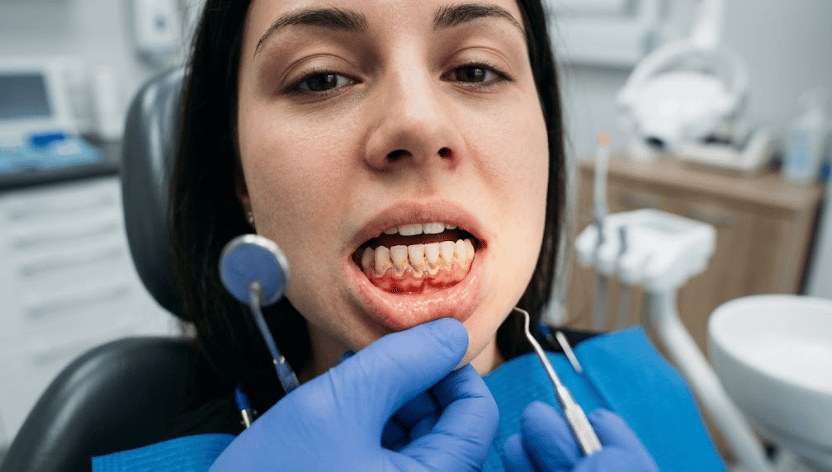
A calculus bridge is a continuous band of hardened tartar that spreads across several neighboring teeth. It usually develops when plaque remains long enough to absorb minerals and harden. Once that buildup forms, brushing and flossing cannot remove it safely.
The buildup may look yellow, tan, brown, or darker near the gumline. It can irritate nearby gums and make daily cleaning harder. Professional dental cleaning is needed to remove hardened deposits without damaging your teeth or gums.
Direct answer: A calculus bridge is hardened dental plaque, or tartar, that has joined across several teeth. Once mineralized, it can’t be brushed away. A dentist or dental hygienist removes it using professional instruments, while daily brushing and interdental cleaning help prevent new buildup.
| Key question | Quick answer |
|---|---|
| What is it? | Hardened tartar forming one connected deposit across multiple teeth |
| Where does it form? | Often along the gumline and between neighboring teeth |
| Can you remove it at home? | No. Hardened calculus needs professional removal |
| Is it dangerous? | It can contribute to gum inflammation and periodontal problems |
| How is it treated? | Professional scaling, with deeper periodontal treatment when needed |
| Can it return? | Yes, unless plaque control and professional care improve |
Key Takeaways
- Plaque can mineralize into hard dental calculus when it remains on tooth surfaces.
- Large deposits can connect across neighboring teeth, forming a hardened band.
- You can’t safely remove tartar with ordinary brushing or flossing.
- Bleeding, swollen, or receding gums may signal associated gum disease.
- Dentists may scale and, when needed, perform root planing below the gumline.
- Brushing twice daily and cleaning between teeth helps limit future plaque buildup.
What Is a Calculus Bridge?

Dental plaque is a sticky bacterial film that continually forms on your teeth. Minerals from saliva can enter plaque that remains undisturbed. The plaque then hardens into dental calculus, which is also called tartar.
When deposits on nearby teeth grow and connect, they can form one continuous hardened band. The phrase describes a pattern of heavy tartar buildup, not a dental appliance. It also has nothing to do with the mathematical meaning of calculus.
Ordinary plaque is soft enough to disrupt with effective home care. Hardened tartar is firmly attached to tooth surfaces and requires professional instruments. That difference explains why aggressive home scraping is not a safe substitute for dental treatment.
What Does the Buildup Look and Feel Like?
Heavy tartar often appears as a hard deposit near the gumline. It may range in color from pale yellow to brown or darker shades. Connected deposits can make separate teeth look partly covered by one solid crust.
Your tongue may feel a rough or raised area that doesn’t disappear after brushing. Nearby gums can also appear red, puffy, or irritated. Bleeding during brushing or interdental cleaning may accompany gingivitis.
Appearance alone cannot show how far deposits extend beneath the gums. A dentist can examine gum tissues and determine whether deeper periodontal problems are present. That assessment matters because subgingival calculus may not be easily visible.
Why Does Hardened Tartar Spread Across Several Teeth?
The process starts when plaque is not removed effectively from tooth surfaces. Salivary minerals then harden it into calculus. This rough deposit can make future plaque control harder.
Areas that are difficult to brush or clean between may collect more plaque. Inconsistent dental care can let deposits remain and grow. Individual differences also affect how quickly people develop visible tartar.
Daily habits still provide the most practical defense against excessive buildup. The ADA recommends brushing twice daily for two minutes with fluoride toothpaste. It also recommends cleaning between teeth every day.
Can a Calculus Bridge Damage Your Teeth or Gums?
Hardened tartar provides a rough surface where more plaque can collect. Plaque near the gums can trigger gingivitis, causing redness, swelling, and bleeding. Gingivitis may progress when plaque and calculus remain around susceptible tissues.
More advanced periodontal disease can damage the tissues and bone that support the teeth. In severe, untreated cases, teeth may eventually become loose. Tooth loss is possible when periodontal destruction becomes advanced.
Bad breath may also occur alongside heavy plaque and tartar accumulation. Gum recession can expose more tooth or root surface. These changes deserve professional evaluation rather than cosmetic treatment alone.
How Dentists Remove Heavy Calculus
Dentists and dental hygienists remove hardened deposits with professional scaling instruments. These may include hand instruments and powered equipment designed for dental cleaning. The goal is to remove deposits without damaging tooth surfaces or gum tissue.
A routine cleaning may be enough when deposits remain above the gumline and there is no significant periodontal disease. Deeper buildup may require scaling beneath the gums. Your dentist determines the appropriate treatment after examining your mouth.
Scaling and root planing may be recommended when periodontal pockets and root-surface deposits are present. Scaling removes plaque and tartar above and below the gumline. Root planing smooths root surfaces as part of periodontal treatment.
Deep cleaning can sometimes require more than one appointment. Temporary tenderness or sensitivity can occur afterward. Follow-up visits help your dental team assess healing and decide whether more periodontal care is needed.
Why You Should Not Scrape Tartar Off at Home
Hardened tartar may tempt you to use a sharp object or purchased scraping tool. That approach can injure gum tissue or damage tooth surfaces. It also cannot reliably address deposits extending beneath the gumline.
Brushing harder does not solve the problem either. A toothbrush removes soft plaque but cannot remove established calculus. The safer approach is professional removal followed by improved daily plaque control.
Seek dental care sooner if you notice substantial hard buildup with bleeding or swollen gums. Loose teeth, worsening gum recession, or painful chewing also need evaluation. These symptoms can indicate more advanced periodontal disease.
How to Prevent the Buildup From Returning
Brush twice daily for about two minutes using fluoride toothpaste and a soft-bristled toothbrush. Clean every tooth surface, not just the visible front areas. Gentle brushing along the gumline helps remove plaque before it mineralizes.
Clean between your teeth daily with floss or another suitable interdental cleaner. These tools reach surfaces that toothbrush bristles cannot clean effectively. Your dentist can recommend an option that suits your spacing and gum condition.
Regular dental visits allow a professional to identify deposits that home care cannot remove. Your ideal cleaning schedule may depend on your individual oral health. People with periodontal disease can need a different maintenance schedule than people with healthy gums.
Healthyspire’s Dental health section provides practical oral-health guidance. The site emphasizes understandable health information and encourages professional advice for individual medical needs. Its editorial approach is described on About Healthyspire.
When Should You See a Dentist?
Book a dental appointment if you can see or feel hard deposits that remain after normal brushing. Persistent gum bleeding, swelling, recession, or bad breath also deserves attention. A dentist can distinguish surface buildup from periodontal problems needing deeper treatment.
Seek prompt care when teeth feel newly loose, or chewing becomes painful. These signs may occur when supporting tissues are affected. Early assessment gives your dental team more information to protect your remaining gum and bone health.
You don’t need to wait for discomfort to request an examination. Significant calculus can exist without severe pain. Preventive dental care aims to identify problems before they become harder to manage.
Frequently Asked Questions
Is a calculus bridge the same thing as tartar?
Tartar and dental calculus are two names for hardened plaque. The “bridge” description refers to deposits that connect across several neighboring teeth. It describes the buildup’s extent and shape, not a different substance.
Can brushing remove hardened dental calculus?
No, ordinary brushing cannot remove plaque after it has hardened into calculus. Brushing remains essential because it removes soft plaque before mineralization occurs. Hardened deposits require professional dental instruments.
Does tartar removal hurt?
Comfort varies with the amount of buildup and the health of surrounding gums. Deep scaling may involve local anesthetic when periodontal treatment is required. Mild tenderness or sensitivity can occur after deeper cleaning.
Will the buildup come back after cleaning?
New plaque can form after professional cleaning, so consistent home care matters. Effective brushing and interdental cleaning reduce plaque before it can harden. Regular dental visits also help manage deposits that develop despite good home care.
What should I do if I think I have one?
Schedule an exam with a dentist or dental hygienist instead of trying to scrape it off yourself. They can assess both the visible buildup and your gum health. Treatment can then match the location and severity of the deposits.
The Bottom Line
A heavy tartar band across several teeth is more than a staining problem. It represents plaque that has mineralized and become too hard to remove at home. Professional cleaning is the best way to remove the deposits and check the surrounding gums.
After treatment, daily plaque control becomes the priority. Brush twice each day and clean between your teeth daily. See a qualified dental professional for personalized advice, especially if you have bleeding, recession, pain, or loose teeth.