

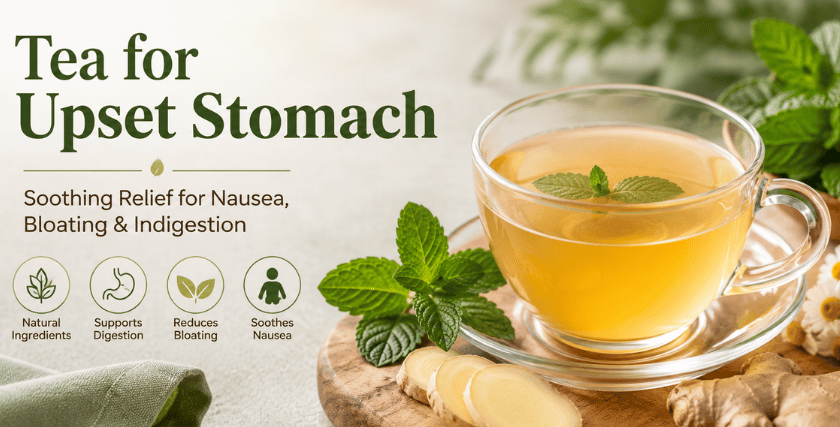
An occasional upset stomach can leave you feeling nauseated, bloated, crampy, or uncomfortably full. Choosing the right tea for upset stomach symptoms may provide warmth, hydration, and mild relief while your digestive system settles.
Ginger tea is usually the strongest first choice when nausea is the main problem. Chamomile may suit mild discomfort, while peppermint may help with bloating but can worsen heartburn. Tea won’t treat food poisoning, ulcers, or other medical conditions, so ongoing or severe symptoms need proper care.
| Tea for Upset Stomach Symptom | Tea to consider | Main caution |
| Nausea or queasiness | Ginger | May cause heartburn or interact with medicines |
| Mild cramps or stress-related discomfort | Chamomile | Avoid certain plant allergies |
| Gas and bloating | Peppermint | May worsen reflux or heartburn |
| Fullness after eating | Fennel | Evidence is limited |
| Loose stools with nausea | Ginger or weak black tea | Caffeine may irritate some stomachs |
| Acid reflux | Ginger or plain warm water | Avoid peppermint and strong caffeinated tea |
| Sensitive stomach | Rooibos | Evidence for direct symptom relief is limited |
What Counts as an Upset Stomach?

The “Upset stomach” isn’t a medical diagnosis. People often use the term for indigestion, nausea, bloating, belching, cramps, or a burning feeling in the upper abdomen. Indigestion can involve pain or discomfort, early fullness, bloating, nausea, and belching. It may happen occasionally or become a recurring issue.
The cause matters because one drink won’t suit every symptom. A rich meal may cause temporary fullness, while a stomach infection can bring vomiting or diarrhea. Reflux, food sensitivities, medicines, pregnancy, migraines, and other conditions may also cause nausea.
Its nutrition section is also the natural home for practical food and drink guidance.
7 Types of Tea for Upset Stomach Symptoms
1. Ginger Tea for Nausea
Ginger is the most sensible option when queasiness is your main complaint. Research has studied ginger for several forms of nausea, although most trials used supplements rather than brewed tea. The National Center for Complementary and Integrative Health says ginger may help with pregnancy-related nausea and vomiting. Evidence is less certain for nausea after surgery or chemotherapy, and most motion-sickness studies haven’t shown a clear benefit.
To make a mild cup:
- Slice or grate a small piece of fresh ginger.
- Add it to a cup of hot water.
- Let it steep for 5 to 10 minutes.
- Strain it and sip slowly.
Start with a weak brew. Ginger can cause abdominal discomfort, diarrhea, throat irritation, or heartburn. It may also interact with medicines, so speak with a healthcare professional when you take prescription drugs.
2. Chamomile Tea for Mild Discomfort
Chamomile has a long history of use for indigestion and digestive discomfort. A warm cup may feel calming when stress and mild stomach tension occur together. Clinical evidence for chamomile’s digestive benefits remains limited. NCCIH notes that research has not produced enough reliable evidence to rate its usefulness for many promoted conditions.
Chamomile tea is likely safe for most people in ordinary food and drink amounts. Avoid it when you have a known allergy to ragweed, daisies, chrysanthemums, or marigolds. Reported reactions can include nausea, dizziness, and, rarely, serious allergic responses.
3. Peppermint Tea for Gas and Bloating
Peppermint may feel soothing when your discomfort involves gas, bloating, or intestinal cramping. Most clinical research focuses on peppermint oil capsules rather than tea, so a brewed cup shouldn’t be treated as an equivalent dose.
Peppermint oil is used as an antispasmodic for cramps, bloating, and gas, particularly among people with irritable bowel syndrome. It can also cause heartburn or indigestion. Skip peppermint when your “upset stomach” feels like acid reflux. Mint can aggravate reflux symptoms in some people. Choose ginger, chamomile, or plain warm water instead.
4. Fennel Tea for Post-Meal Fullness
Fennel tea has traditionally been used after meals for gas and digestive fullness. Its mild, slightly sweet flavor makes it easy to sip without added sugar.
Evidence for fennel tea as a treatment is less developed than evidence for ginger and nausea. Treat it as a comfort drink rather than a proven remedy. Crush about one teaspoon of fennel seeds, cover them with hot water, and steep for 5 to 10 minutes. Stop drinking it if it appears to make your symptoms worse.
5. Lemon Balm Tea for a Stress-Sensitive Stomach
Stress and anxiety can affect digestion and may contribute to nausea, appetite changes, or a “knotted” stomach. Lemon balm is a caffeine-free herb with a mild citrus scent. A cup may support relaxation, but evidence that lemon balm directly treats indigestion is limited. It is best viewed as a calming drink when tension seems to accompany mild symptoms. Avoid heavily sweetened versions. Large amounts of sugar may feel unpleasant when you are already nauseated.
6. Rooibos for a Caffeine-Free Warm Drink
Rooibos contains no caffeine, which makes it a gentle alternative to black or green tea. It may suit people who want a warm drink but find caffeine irritating. There is no strong evidence that rooibos directly relieves nausea or indigestion. Its main advantages are that it is caffeine-free, mild, and easy to drink without milk. Brew it lightly and sip it slowly. A large mug consumed quickly can worsen fullness, even when the drink itself is mild.
7. Weak Black Tea When You Tolerate Caffeine
Some people drink weak black tea during mild digestive illness. It provides fluid and may be easier to tolerate than coffee, milk-based drinks, or rich beverages.
Black tea still contains caffeine and tannins. These may increase nausea, reflux, or stomach irritation in sensitive people. Make it weaker than usual and stop if burning or queasiness increases.
Green tea also contains caffeine. NCCIH says brewed green tea is generally safe for adults, but extracts can cause nausea and abdominal discomfort.
How to Drink Tea Without Making Symptoms Worse

A gentle drink can become uncomfortable when it is too strong, too hot, or consumed too quickly.
Use these practical steps: Choose one simple ingredient. Blends make it harder to identify what helps or irritates you.
- Brew a weak cup first. You can increase the strength another time.
- Let it cool slightly. Warm tea is easier to sip than a scalding drink.
- Take small sips. Drinking a full mug quickly can increase nausea or fullness.
- Skip heavy additions. Cream, large amounts of sugar, and rich syrups may worsen symptoms.
- Pay attention to reflux. Avoid mint, strong tea, and citrus additions when heartburn is present.
Stop if symptoms increase. A natural ingredient can still cause side effects.
Small, frequent amounts of clear liquid are often easier to keep down during nausea or vomiting.
When Tea Isn’t Enough

Tea may provide comfort during mild, brief symptoms. It cannot correct dehydration, treat a serious infection, or identify the cause of recurring pain.
Seek urgent medical advice when you:
- vomit blood or material that looks like coffee grounds;
- have severe abdominal pain;
- cannot keep fluids down for 12 hours;
- have not urinated for eight hours;
- have been vomiting for more than 24 hours;
- vomit three or more times in one day;
- develop a severe headache or stiff neck.
Dry mouth, unusual thirst, dark urine, and reduced urination can signal dehydration.
Recurring indigestion also deserves attention. Depending on the cause, treatment may involve diet changes, medicines, testing, or management of another condition.
HealthySpire explains that its articles provide general education rather than personal medical advice. Readers should consult a qualified professional about individual symptoms, medicines, pregnancy, allergies, or ongoing health concerns. Read more about HealthySpire’s editorial approach.
Apart from that, if you want to know about the article Disney Rash please visit our Health Category.
Conclusion
Choosing the right tea for upset stomach symptoms can provide gentle relief from nausea, gas, bloating, and indigestion. Ginger is the best choice for nausea; peppermint may help with bloating, and chamomile offers a calming option for mild digestive discomfort.
While herbal teas can support digestion, they are not a substitute for medical treatment. If your symptoms are severe, persistent, or accompanied by fever, dehydration, or severe pain, seek medical care promptly.
Frequently Asked Questions
Ginger is the best-supported starting point when nausea is the main symptom. Peppermint may suit gas or cramps, but it can worsen reflux. Chamomile is a milder option, although research for indigestion relief is limited.
Ginger may help with mild pregnancy-related nausea, but pregnant readers should discuss herbal remedies and supplements with their healthcare provider. Safety can depend on the amount used, other health conditions, and medicines.
Yes. Peppermint can trigger or worsen heartburn in some people. Avoid it when your discomfort includes an acidic taste, chest burning, or reflux.
Yes. Peppermint can trigger or worsen heartburn in some people. Avoid it when your discomfort includes an acidic taste, chest burning, or reflux.
Lemon may be fine for people without reflux. Its acidity can worsen burning or regurgitation in sensitive people. Try the tea without lemon first.
There is no guaranteed timeframe. Sip a mild cup slowly and watch how you feel. Get medical help when symptoms are severe, persistent, or accompanied by dehydration or significant pain.
Ask a pediatric healthcare professional first. Herbal products can cause allergies, interact with medicines, and affect children differently from adults.
The Bottom Line
Match the drink to the symptom. Ginger is the most reasonable first choice for nausea. Chamomile may offer a gentle, caffeine-free option, while peppermint may suit bloating unless reflux is present. Keep the brew weak, sip it slowly, and treat it as supportive care rather than a cure. Persistent vomiting, dehydration, blood, severe pain, or recurring indigestion requires medical evaluation.