

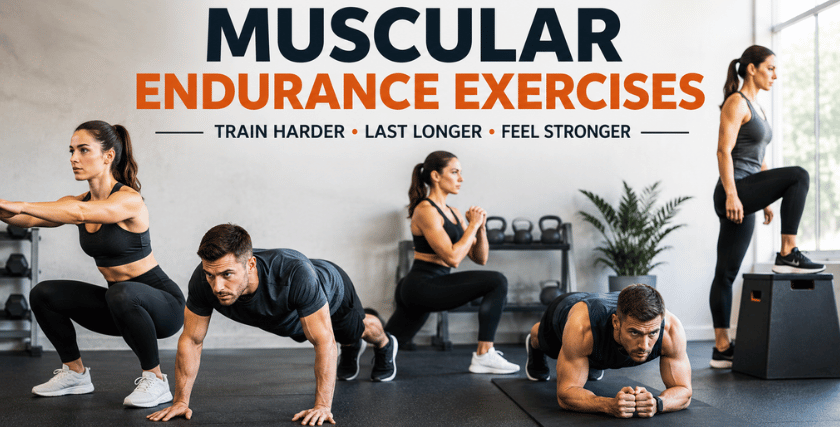
Muscular endurance exercises train your muscles to repeat an action or hold a position without tiring quickly. Squats, push-ups, lunges, planks, step-ups, and loaded carries are useful examples. You can improve by using controlled repetitions, moderate resistance, short rest periods, and gradual increases in volume.
| Muscular Endurance Exercises | Practical guidance |
| Main goal | Help muscles continue working despite fatigue |
| Ideal frequency | Two or three sessions each week |
| Typical repetition range | About 12–20 controlled repetitions |
| Hold-based exercises | Start with 15–30 seconds |
| Rest between exercises | About 30–60 seconds |
| Equipment needed | None, though bands or light weights can help |
| Beginner session length | 15–25 minutes |
What Are Muscular Endurance Exercises?
Muscular endurance is your muscles’ ability to perform repeated contractions or maintain tension over time. It helps you climb stairs, carry groceries, work in the garden, maintain good posture, and continue moving during sports. It differs from maximal strength. Strength describes how much force you can produce in one effort. Endurance describes how long your muscles can keep producing useful force.
Cardiovascular endurance is also different. It concerns how effectively your heart and lungs support sustained activity. The two systems often work together, especially during circuits, hiking, cycling, and higher-repetition resistance training. Adults should perform muscle-strengthening activities involving all major muscle groups at least twice each week, according to current CDC guidance.
10 Effective Muscular Endurance Exercises
The following movements cover the legs, hips, chest, shoulders, back, arms, and core. Choose variations that let you maintain steady breathing and sound technique.
1. Bodyweight Squats
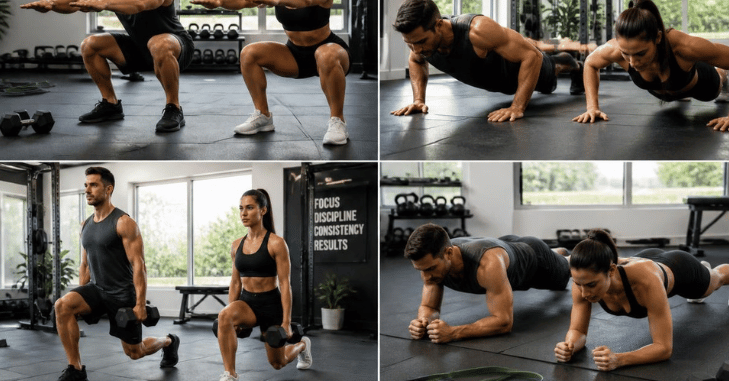
Squats train the quadriceps, glutes, hamstrings, and trunk. They also resemble everyday movements such as sitting down and standing up. Stand with your feet about shoulder-width apart. Push your hips back, bend your knees, and lower as far as you can control. Keep your knees tracking in the same direction as your toes. Drive through your feet to stand. Start with 12–20 repetitions. Hold a lightweight at your chest when bodyweight sets become easy.
2. Push-Ups
Push-ups develop endurance in the chest, shoulders, triceps, and core. They can be performed against a wall, on a raised surface, from the knees, or from the toes. Keep your body in a straight line. Lower your chest while keeping your elbows at a comfortable angle. Press the floor away without allowing your hips to sag. Choose a version you can complete for 8–15 clean repetitions. Stop the set when your alignment begins to change.
3. Reverse Lunges
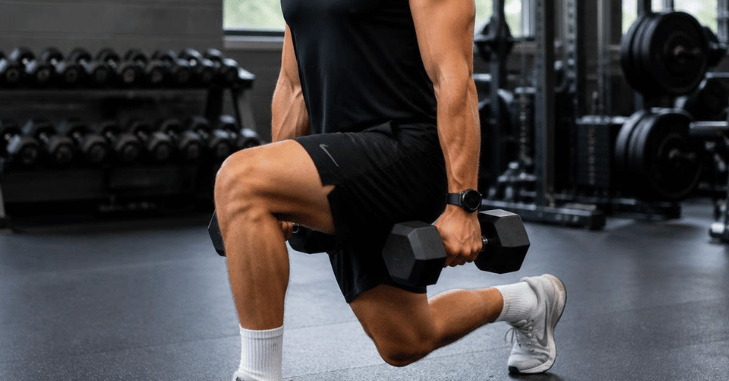
Reverse lunges train one leg at a time. They strengthen the thighs and glutes while challenging balance and hip control. Step one foot behind you and lower both knees. Keep most of your weight over the front foot. Push through that foot to return to standing. Complete 10–15 repetitions per side. Hold a wall or sturdy chair when extra balance support is needed.
4. Forearm Planks
A plank is an isometric exercise, which means the muscles create tension without repeated joint movement. It develops endurance through the abdomen, back, shoulders, and hips. Place your elbows beneath your shoulders. Extend your legs or keep your knees on the floor. Tighten your abdomen and glutes while keeping your neck relaxed. Begin with 15–30 seconds. End the hold when your lower back sags or your breathing becomes strained.
5. Step-Ups
Step-ups train the legs and hips through a movement used in stairs, curbs, and hikes. They also reveal differences between your stronger and weaker sides. Place one foot fully on a stable step. Press through that foot and stand tall on the platform. Lower yourself slowly rather than dropping to the floor. Perform 10–15 repetitions per leg. Start with a low platform and increase its height only after you can control every repetition.
6. Glute Bridges
Glute bridges build endurance in the glutes, hamstrings, and muscles around the pelvis. They can support hip control during walking, lifting, and lower-body training. Lie on your back with your knees bent. Brace your abdomen, press through your feet, and raise your hips. Pause when your shoulders, hips, and knees form a line. Complete 15–20 repetitions. A brief pause at the top makes the exercise harder without requiring equipment.
7. Calf Raises
The calf muscles work repeatedly while you walk, run, climb stairs, and stand for long periods. Calf raises train them through a simple movement. Stand beside a wall for support. Rise onto the balls of your feet, pause, and lower your heels under control. Avoid bouncing. Aim for 15–25 repetitions. Progress to one-leg calf raises when two-leg sets no longer feel challenging.
8. Resistance-Band Rows
Rows train the upper back, rear shoulders, and arms. These muscles help maintain posture and balance, such as pushing exercises. Secure a resistance band to a stable anchor. Pull the handles toward your ribs while drawing your shoulder blades back. Return slowly until your arms are extended. Perform 12–20 repetitions. Use a band that lets you move through the full range without shrugging.
Readers building a wider activity plan can explore HealthySpire’s fitness guidance and workout resources.
9. Farmer’s Carries
Farmers’ carries challenge the hands, forearms, shoulders, trunk, hips, and legs at the same time. They also transfer well to carrying shopping bags and other daily tasks. Hold a dumbbell or another balanced object in each hand. Stand tall and walk with short, controlled steps. Keep your shoulders relaxed and avoid leaning to one side. Walk for 20–40 seconds. Use a load that allows you to retain an upright posture throughout the set.
10. Mountain Climbers
Mountain climbers combine upper-body support, core control, hip movement, and a cardiovascular challenge. Start in a high plank. Bring one knee toward your chest, return it, and switch sides. Move at a pace that lets you keep your shoulders over your hands. Begin with 20–30 total repetitions. When your back starts to arch, or your hips start to bounce, slow down the movement.
A Beginner Muscular Endurance Workout

Complete the following circuit in order. Rest for 30–60 seconds between movements and one or two minutes between rounds.
- Perform 15 bodyweight squats.
- Complete 8–12 raised or floor push-ups.
- Perform 10 reverse lunges on each side.
- Hold a forearm plank for 20–30 seconds.
- Complete 12 step-ups on each leg.
- Perform 15 glute bridges.
- Complete 20 calf raises.
- Rest, then repeat the circuit once or twice.
Beginners can start with one round. Add another round when the first feels manageable, and your technique remains consistent. Resistance can come from bodyweight, bands, dumbbells, machines, or household objects. Mayo Clinic advises beginners to choose a resistance they can control comfortably for roughly 12–15 repetitions and to prioritize correct form.
Healthy habits outside the workout also affect performance. HealthySpire’s nutrition section can help readers connect training with balanced eating habits.
How to Improve Without Overtraining
Progress should be gradual. Changing one variable at a time makes it easier to measure improvement and protect your technique.
You can progress by:
- Adding two or three repetitions to each set
- Extending a hold by five seconds
- Completing one extra circuit
- Using slightly more resistance
- Reducing rest by 10–15 seconds
- Choosing a harder exercise variation
- Moving more slowly during each repetition
Avoid increasing every variable during the same week. More work is useful only when you can recover from it.
ACSM’s updated resistance-training guidance stresses that consistency matters more than creating a complicated plan. Training all major muscle groups at least twice a week and building gradually is a practical starting point.
Common Training Mistakes
Moving Too Fast
Fast repetitions can hide weak positions and reduce control. Use a steady pace, especially during the lowering phase.
Holding Your Breath
Breathe continuously. Exhale during the harder part of a repetition and inhale as you return. Mayo Clinic warns against straining while holding your breath during resistance exercise.
Training to Failure Every Time
You don’t need to reach complete exhaustion during each set. Finish most sets while you could still perform one to three good repetitions.
Ignoring Pain
Muscle fatigue and effort are expected. Sharp, sudden, or worsening pain is not. Stop the movement and seek qualified medical advice when pain persists.
Repeating the Same Muscles Daily
Your muscles need recovery time. Alternate muscle groups or leave at least one day between demanding full-body sessions.
For broader preventive health information, visit HealthySpire’s health and wellness resources.
How Often Should You Train?
Two or three weekly sessions work well for many beginners. Leave enough time between sessions for soreness and fatigue to settle.
A simple schedule might look like this:
| Day | Activity |
| Monday | Full-body endurance circuit |
| Tuesday | Walking or light mobility |
| Wednesday | Rest or gentle activity |
| Thursday | Full-body endurance circuit |
| Friday | Walking, cycling, or swimming |
| Weekend | Rest or optional light circuit |
Exercise frequency should match your training history, recovery, health, and schedule. People with chronic conditions, recent injuries, balance concerns, or unexplained symptoms should speak with a healthcare professional before starting a new program.
Conclusion
Muscular endurance exercises help your muscles work efficiently for longer, making everyday activities and sports feel easier. By including movements like squats, push-ups, lunges, planks, step-ups, and farmer’s carries in your routine, you can build stamina, improve posture, and increase overall fitness.
Start with exercises that match your current ability, focus on proper form, and progress gradually by adding repetitions, time, or light resistance. Consistency matters more than intensity, so aim for two or three sessions each week.
Apart from that, if you want to know about the article Ankle Mobility Exercises then please visit our Fitness Category.
Frequently Asked Questions
Squats, raised push-ups, glute bridges, step-ups, calf raises, and short planks are good starting choices. Each can be adjusted to suit your current ability and available equipment.
A practical starting range is 12–20 controlled repetitions. The correct number depends on the movement and resistance. Choose a range that feels challenging while allowing sound technique.
Planks can train both. Short, difficult holds emphasize strength. Longer controlled holds place more emphasis on the ability to sustain muscular tension.
Yes. Bodyweight movements, resistance bands, hills, stairs, and longer isometric holds can provide enough resistance. Progress by adding repetitions, time, range of motion, or harder variations.
Many people notice that sets feel easier within several weeks of regular training. The pace varies with consistency, recovery, exercise selection, and starting fitness.
No. Resistance work and aerobic activity support different parts of fitness. A balanced routine can include both muscle-strengthening sessions and walking, cycling, swimming, or another aerobic activity.