
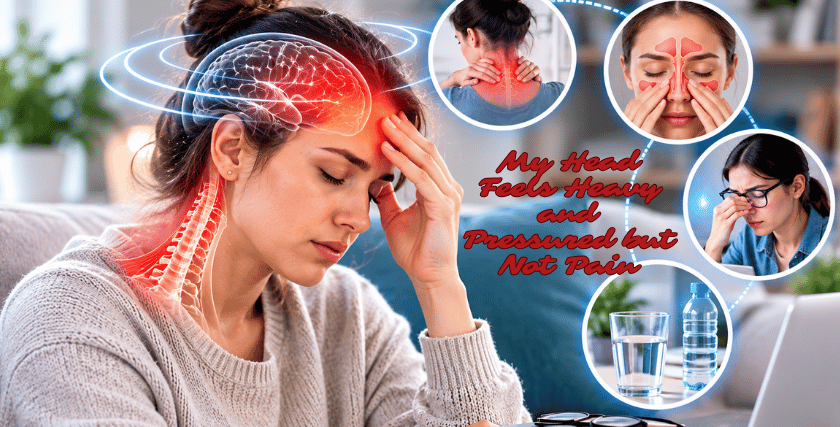
When my head feels heavy and pressured but not painful, it describes what you’re experiencing; the cause is often something manageable. Muscle tension, sinus congestion, eye strain, dehydration, stress, and poor posture can all create fullness or heaviness without a typical headache. More from us: Pain in Lower Right Back.
Still, a new or persistent pressure sensation deserves attention. The symptoms that occur with it can help you decide whether to try simple home care, contact a clinician, or seek urgent medical help.
| My head feels heavy and pressured but not painful. | Possible explanation | Reasonable next step |
| Tightness after computer or phone use | Neck tension, posture strain, or eye fatigue | Rest your eyes and change position |
| Facial fullness with congestion | Allergies, a cold, or sinus inflammation | Try saline, fluids, and humidity |
| Heaviness after poor sleep or stress | Muscle tension and nervous-system arousal | Rest, breathe slowly, and relax your jaw |
| Lightheadedness when standing | Dehydration or a blood-pressure change | Sit down, hydrate, and rise slowly |
| Vision changes, weakness, or confusion | Possible neurological emergency | Seek emergency care |
What Does a Heavy, Pressured Head Feel Like?

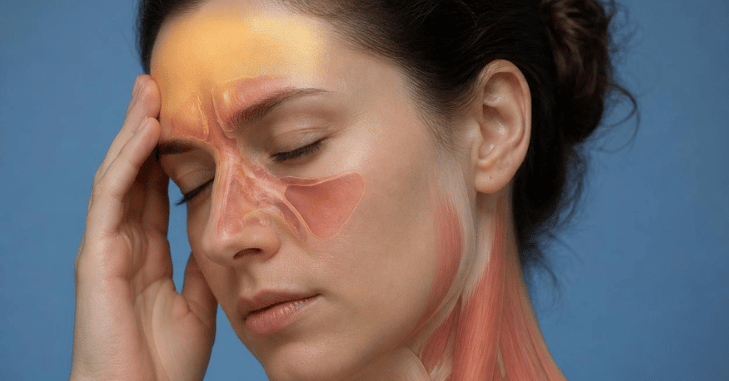
People describe this symptom in several ways. Your head may feel weighted, compressed, foggy, full, or difficult to hold upright. You may notice tightness around your forehead, behind your eyes, at your temples, or near the base of your skull.
The feeling does not always qualify as a headache. Pain is only one way the muscles, sinuses, eyes, blood vessels, and nerves signal irritation or strain.
Pay attention to three details:
- Where do you feel the sensation
- When it starts or becomes worse
- Which other symptoms appear with it
A forehead sensation after screen use suggests a different cause than facial fullness with a blocked nose. A feeling that begins after standing may point toward hydration or circulation.
My Head Feels Heavy and Pressured but Not Pain
There is no single cause that explains every case. The following possibilities are common, but they cannot replace a medical evaluation.
1. Tight neck and shoulder muscles
Your neck supports your head throughout the day. Looking down at a phone, leaning toward a laptop, driving, or sitting without back support can tire the muscles near your shoulders and skull. This strain may create a band-like or weighted sensation.
You might also notice neck stiffness, jaw clenching, tender shoulders, or symptoms that increase later in the day. Try bringing your screen closer to eye level. Keep your ears over your shoulders when possible, and take brief movement breaks.
2. Sinus congestion or allergies
Swelling inside the nasal passages can interfere with normal sinus drainage. This may cause fullness around the forehead, cheeks, nose, or eyes, even when there is no severe pain. Congestion, sneezing, itchy eyes, reduced smell, or nasal discharge may point toward allergies or a respiratory infection. Gentle saline irrigation may help some people. Use distilled, sterile, or previously boiled water rather than untreated tap water. Contact a clinician if symptoms become severe, persist, or occur with a high fever.
3. Eye strain
Long periods of close focus can tire the muscles involved in vision. Screen glare, small text, an outdated glasses prescription, dry eyes, and poor lighting may increase the strain. Eye fatigue can feel like pressure behind the eyes or across the forehead. Other clues include blurred vision, burning eyes, trouble focusing, or symptoms that improve when you stop using a screen.
Use the 20-20-20 approach: every 20 minutes, look about 20 feet away for 20 seconds. Increase text size and reduce glare instead of leaning toward the display. Sudden loss of vision, double vision, or a painful red eye requires prompt medical assessment.
4. Stress, anxiety, or jaw clenching
Stress can tighten the jaw, forehead, scalp, neck, and shoulders without you noticing. Shallow breathing and prolonged muscle bracing may add to the sensation. Check whether your teeth are touching while you work. To rest, your lips may meet, but your upper and lower teeth should usually remain slightly apart. Slow breathing can also help. Breathe in gently, then allow a longer and softer exhale. This will not treat every cause, but it may reduce stress-related muscle tension.
5. Dehydration or missed meals
Not drinking enough fluid can cause fatigue, lightheadedness, dry mouth, darker urine, and a heavy feeling. Hot weather, exercise, vomiting, diarrhea, fever, and some medications can increase fluid loss. Skipping meals may also contribute to weakness or mental fog.
Try water and a balanced meal if your symptoms are mild and you have no emergency warning signs. People with heart failure, kidney disease, or fluid restrictions should follow their clinician’s guidance rather than increasing fluid intake on their own.
6. Poor sleep or fatigue
A short or disrupted night can make your eyes, neck, and nervous system more sensitive. You may feel foggy, unsteady, or weighed down the following day. Consider whether the symptoms follow late-night screen use, an irregular schedule, snoring, or repeated awakenings. Persistent daytime sleepiness or loud snoring may warrant a discussion about sleep apnea.
7. Blood-pressure or circulation changes
A brief blood pressure drop when standing can cause lightheadedness, blurred vision, weakness, or a strange sensation in the head. Dehydration, illness, prolonged bed rest, and some medications may contribute to the problem.
Sit or lie down if you feel faint. Rise slowly and avoid driving until the sensation passes. High blood pressure usually has no clear symptoms. Do not assume that a heavy feeling proves your blood pressure is high. A properly taken reading is the only useful way to check it. Extremely high readings accompanied by chest pain, breathing difficulty, neurological symptoms, or severe illness require urgent medical attention.
A Five-Minute Symptom Check
Before deciding what to do, pause and review the pattern.
- Sit somewhere safe. Do not continue driving, climbing, or using machinery.
- Check for emergency symptoms. Look for weakness, confusion, speech trouble, fainting, major vision changes, or severe imbalance.
- Think about recent triggers. Consider screen use, poor sleep, congestion, stress, heat, missed meals, or a new medication.
- Drink some water if appropriate. Avoid excessive fluid intake if you have a medical restriction.
- Relax your eyes and upper body. Unclench your jaw, lower your shoulders, and move your neck within a comfortable range.
- Record what happens. Note the time, duration, triggers, location, and associated symptoms.
This short check cannot diagnose the cause. It can give you clearer information to share with a healthcare professional.
When You Should Seek Emergency Care

Call your local emergency number or go to an emergency department if the feeling appears suddenly or occurs with:
- Weakness, numbness, or paralysis
- Confusion or difficulty understanding speech
- Trouble speaking or walking
- Fainting
- Sudden loss of vision or major visual changes
- A stiff neck with a high fever
- Repeated vomiting
- A seizure
- A recent significant head injury
- A sudden, explosive, or severe headache
Mayo Clinic and MedlinePlus list confusion, fainting, weakness, speech problems, vision problems, fever, stiff neck, walking difficulty, and sudden severe symptoms among reasons to seek emergency care. Pressure around the brain is different from a vague feeling of pressure.
Increased intracranial pressure commonly involves symptoms such as persistent headache, temporary vision loss, nausea, balance problems, confusion, weakness, or a pulsing sound in the ears. Rapid onset, vision changes, confusion, weakness, or symptoms after a head injury need urgent assessment.
When to Schedule a Medical Appointment
Arrange a non-emergency appointment when the sensation
- Lasts for several days
- Keeps returning
- Becomes stronger or more frequent
- Interferes with work, sleep, or normal activities
- Starts after a new medication
- Occurs with ongoing dizziness or balance problems
- Comes with persistent sinus or ear symptoms
- Is new during pregnancy
- Causes concern even without other symptoms
A clinician may ask about your sleep, posture, hydration, allergies, medications, vision, stress, and medical history. The examination may include blood pressure, eye movements, strength, reflexes, coordination, balance, and the neck or sinuses. Imaging is not automatically needed. A clinician decides whether testing is appropriate after reviewing the history and examination.
What You Can Safely Try at Home
Home care is most appropriate when symptoms are mild, familiar, improving, and free from warning signs.
Try these steps:
- Drink fluids at a steady pace.
- Eat if you have skipped a meal.
- Step away from screens for 20 to 30 minutes.
- Adjust your chair and monitor.
- Relax your jaw and shoulders.
- Use gentle neck movement without forcing a stretch.
- Sleep on a regular schedule.
- Avoid smoke and strong fragrances if congestion is present.
- Track triggers and associated symptoms.
Do not take antibiotics, prescription migraine medicine, blood pressure medicine, or another person’s medication without professional guidance.
For more general preventive information, readers can continue to Healthy Spire’s Health section, which covers everyday wellness and informed healthcare decisions.
Conclusion
Describing what you’re experiencing, the cause is often related to everyday issues such as muscle tension, sinus congestion, eye strain, stress, dehydration, or poor posture. In many cases, simple measures like staying hydrated, taking breaks from screens, improving posture, and getting enough rest can provide relief.
However, if my head feels heavy and pressured but not painful and continues for several days; keeps returning; worsens over time; or occurs with symptoms such as vision changes, weakness, confusion, fainting, or difficulty speaking, seek medical attention promptly.
Apart from that, if you want to know about the article “Tea for Upset Stomach,” please visit our Health Category.
Frequently Asked Questions
It can happen with common issues such as muscle tension, tired eyes, sinus congestion, stress, dehydration, or poor sleep. A new, persistent, worsening, or unusual sensation should be discussed with a healthcare professional.
Yes. Stress and anxiety can tighten the jaw, scalp, neck, and shoulder muscles. They can also change breathing patterns and make normal sensations feel stronger. A clinician should still evaluate recurring symptoms rather than assuming anxiety is the cause.
Yes. Inflamed or blocked nasal passages may produce facial fullness, congestion, reduced smell, or pressure around the eyes. Severe symptoms, a high fever, swelling around an eye, or lasting symptoms need medical attention.
Not necessarily. High blood pressure often causes no symptoms. Check it with a validated monitor using proper technique. Seek urgent care for an extremely high reading with chest pain, breathing trouble, confusion, weakness, vision changes, or severe illness.
A vague feeling of heaviness alone is not enough to identify a brain tumor. Persistent neurological changes, seizures, progressive symptoms, repeated vomiting, personality changes, or vision problems need medical evaluation.