
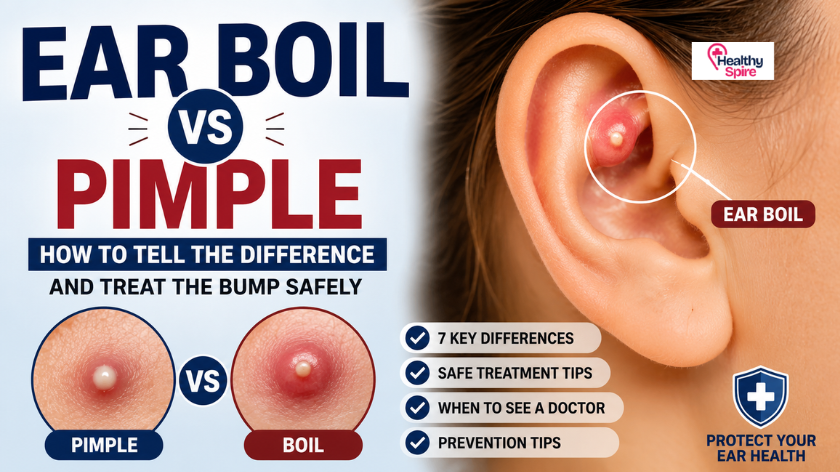
A painful lump in or around your ear can be hard to identify. In an ear boil vs pimple comparison, a boil is usually deeper, larger, warmer, and more painful. A pimple is often smaller and develops when oil and dead skin block a pore. Don’t squeeze either type of bump, especially inside the ear canal.
The location also matters. A spot on the outer ear may be easier to monitor. A swollen lump deep inside the canal deserves more caution because home acne products can irritate the ear or damage delicate tissue.
Direct answer: A pimple usually looks like a small whitehead, blackhead, or raised red spot. A boil tends to become a firm, tender lump that grows, throbs, and fills with pus. Severe pain, spreading redness, discharge, fever, hearing changes, or swelling inside the canal are reasons to seek medical care.
Quick Comparison
| Feature | Pimple | Boil |
| Main cause | A clogged pore or hair follicle | A bacterial infection in a hair follicle |
| Typical size | Usually small | May grow noticeably larger |
| Pain | Mild to moderate | Often intense or throbbing |
| Depth | Near the skin’s surface | Deeper in the skin |
| Center | May have a whitehead or blackhead | May develop a soft, pus-filled center |
| Growth | Often stays small | May enlarge over several days |
| Common care | Gentle cleansing and observation | Warm compresses and possible medical treatment |
| Should you squeeze it? | No | No |
Key Takeaways
- A pimple usually comes from a blocked pore.
- A boil is an infected follicle or small abscess.
- Boils tend to hurt more and grow larger.
- Never insert acne products, cotton swabs, needles, or fingers into the ear canal.
- Seek care for severe pain, fever, drainage, hearing loss, spreading redness, or persistent swelling.
Ear Boil vs Pimple: The Main Differences
Both conditions can start as a red, sore bump. In an ear boil vs pimple comparison, their development over time usually reveals the difference: boils become deeper and more painful, while pimples typically remain closer to the skin’s surface. For the full picture, read Cold Sore in Nose.
A pimple forms when a pore becomes blocked by oil and dead skin cells. The American Academy of Dermatology explains that acne blemishes can include papules, pustules, whiteheads, and blackheads. A pustule may contain yellow or white fluid, so the presence of pus alone doesn’t confirm a boil.
A boil, also called a furuncle, is a small abscess involving a hair follicle and nearby tissue. It often feels firm and painful at first. As it develops, its center may soften and fill with pus. Boils can be especially painful in sensitive locations such as the ear.
1. Size and growth
A standard pimple often remains small. It may form a visible whitehead or settle without becoming much larger. An infected lump may expand over several days. The surrounding skin can also become swollen, warm, and tender. Rapid growth is a reason to be cautious.
2. Pain level
Pimples can hurt, particularly when they form under the skin. Still, a boil often causes more severe, more persistent pain. Even a small infection in the ear canal can hurt sharply because the canal provides little room for swollen tissue. Pain may worsen when you touch the outer ear or move your jaw.
3. Depth
A whitehead or blackhead develops near the surface of a pore. You may see a small central plug. A boil starts deeper around a follicle. It can feel like a hard knot beneath the skin before a visible head appears.
4. Warmth and surrounding redness
A pimple can become red and inflamed. The irritation usually remains close to the blemish. A skin abscess often feels warm and painful. Redness may cover a broader area, although color changes can be harder to see on darker skin tones.
5. Drainage
A pustule contains a small amount of fluid. It shouldn’t be popped because squeezing can worsen inflammation and increase the risk of infection or scarring. A boil may release more pus if it opens. Discharge coming from inside the ear could also have another cause, including an outer or middle-ear infection. A clinician should assess unexplained ear drainage.
6. Hearing symptoms
A small spot on the earlobe usually doesn’t affect hearing. Swelling inside the canal can create fullness or temporarily reduce hearing by blocking sound. A canal boil may also cause itching, irritation, or sudden discharge if it bursts.
7. How long does it last?
A minor blemish may improve within several days. A painful infected lump may take longer to settle. Medical assessment is sensible if it continues growing, fails to improve, becomes severe, or keeps returning.
Why Do Bumps Form in the Ear?

The outer ear and the entrance to the canal contain skin, glands, pores, and hair follicles. This makes several types of bumps possible. Common triggers include:
- Oil and dead skin blocking a pore
- Bacteria entering a damaged follicle
- Friction from earbuds, headphones, hearing aids, or helmets
- Touching or scratching the ear
- Using cotton swabs inside the canal
- Moisture remaining in the ear after bathing or swimming
- Irritation from hair or skin products
Cotton swabs, fingernails, or other objects can damage the skin inside the canal. Even a small scratch may become inflamed or infected. Medical guidance recommends leaving the canal alone rather than trying to clean it manually.
HealthySpire’s broader general health section can serve as the main category for this topic.
Safe Care at Home
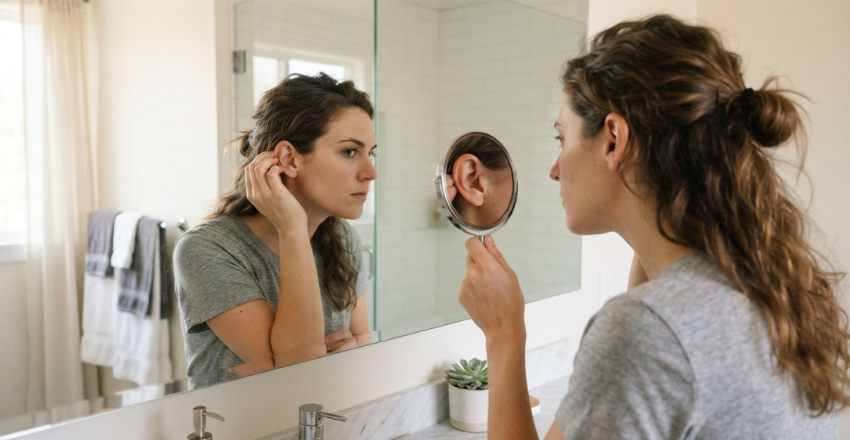
Home care depends on where the bump sits and how severe the symptoms are.
Use a warm compress
Hold a clean, warm, damp cloth against the outer ear for about 10 to 15 minutes. Repeat several times daily. Warmth may ease discomfort and encourage a deep blemish or small boil to drain naturally. The cloth should feel comfortably warm, not hot enough to burn your skin.
Keep your hands away.
Don’t squeeze, pierce, scratch, or pick the bump. These actions may push bacteria deeper, worsen swelling, or spread infection. Never attempt to drain a lesion inside the ear yourself.
Keep objects out of the canal.
Avoid cotton swabs, hairpins, ear-cleaning cameras, fingernails, and other tools. They may scratch the skin or push debris farther inward. Clean only the visible outer ear with a soft cloth.
Pause irritating devices
Avoid earbuds, in-ear headphones, or hearing devices that rub against the sore area. Clean reusable devices according to the manufacturer’s instructions before using them again.
Be careful with acne products.
Benzoyl peroxide and salicylic acid are commonly used for acne on ordinary skin. However, in an ear boil vs pimple situation, these products should not be placed deep inside the ear canal, as they may irritate delicate tissue and potentially damage the ear.
A product that is safe for the face may irritate the ear or travel toward the eardrum. Ask a pharmacist or clinician before applying medication near the canal opening.
When to See a Doctor?
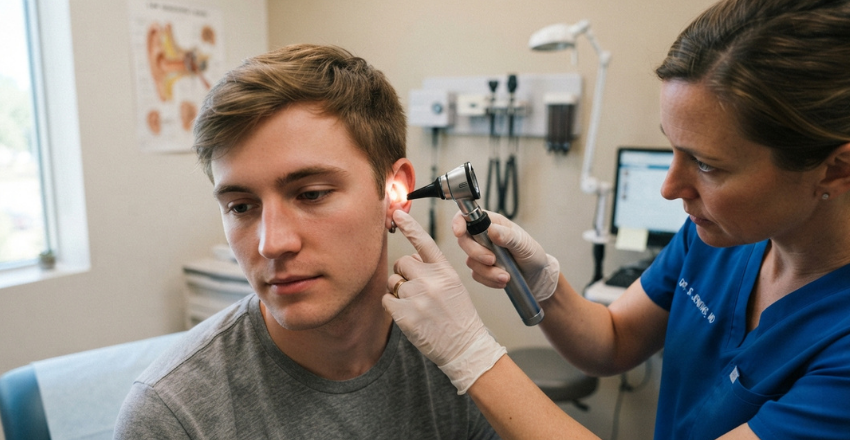
Arrange medical care when:
- Pain is severe, throbbing, or getting worse
- The swelling blocks the canal
- You notice pus, blood, or ongoing discharge
- Hearing becomes muffled
- Redness spreads beyond the bump
- You develop a fever or feel unwell
- The lump keeps growing
- It doesn’t begin improving
- Similar lumps return often
- You have diabetes or a weakened immune system
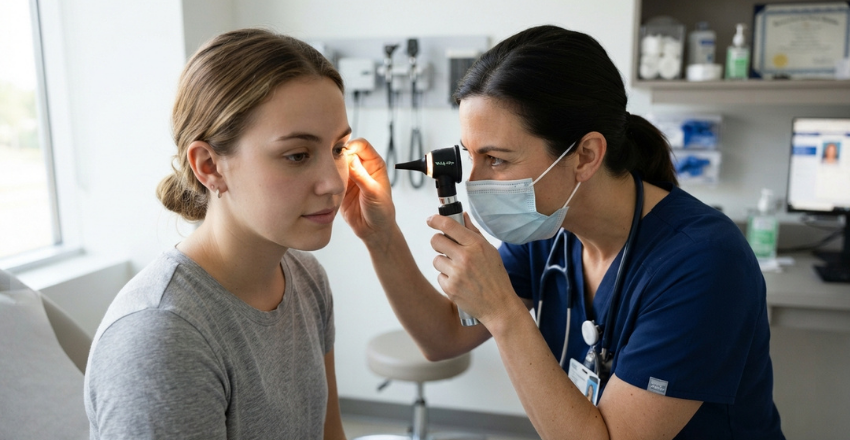
A clinician may examine the canal with an otoscope. Treatment can include pain relief, prescription drops, oral antibiotics, or drainage by a trained professional. Antibiotics aren’t required for every minor bump, so they should be used only when prescribed.
NHS guidance notes that persistent staph infections or abscesses may require antibiotics or professional drainage. Seek urgent help for severe swelling around the ear, rapidly spreading redness, significant hearing loss, intense headache, dizziness, or serious illness.
How to Reduce the Risk of Another Ear Bump?

You can’t prevent every blemish or infection, but simple habits may lower the risk.
- Wash the outer ear gently.
- Dry the ear after swimming or bathing.
- Don’t scratch the canal.
- Avoid cotton swabs inside the ear.
- Clean earbuds and headphones regularly.
- Give irritated skin time to recover.
- Avoid sharing towels or personal ear devices.
- Replace products that repeatedly irritate.
People who develop frequent painful lumps should speak with a healthcare professional. Recurrent boils can sometimes point to ongoing bacterial colonization, skin disease, or another risk factor that needs assessment.
The Bottom Line
A small surface blemish with a whitehead is more likely to be a pimple. In an ear boil vs pimple comparison, a deeper lump that becomes larger, warmer, and increasingly painful is more consistent with a boil.
Treat the area gently, use a warm compress on the outside of the ear, and don’t squeeze it. Seek medical care when pain, swelling, drainage, fever, hearing changes, or persistent symptoms suggest more than a minor skin blemish.
Apart from that, if you want to know about the article “Tea for Upset Stomach,” please visit our Health Category.
Frequently Asked Questions (FAQs)
No. Popping it can injure the ear, push inflammation deeper, and increase the risk of infection or scarring. This is especially risky inside the canal.
Some small boils resolve naturally. Warm compresses may ease the pain while the body clears the infection. Large, persistent, or severe lesions may need antibiotics or professional drainage.
The canal is narrow and contains sensitive tissue. Swelling creates pressure in a confined space, so even a small lesion can produce marked pain.
A swollen lump can temporarily block the canal and muffle hearing. Hearing changes should improve as the swelling settles. Prompt assessment is recommended when hearing loss is sudden, significant, or accompanied by discharge or severe pain.
No. Other possibilities include a deep acne lesion, cyst, inflamed hair follicle, outer-ear infection, insect bite, dermatitis, or another skin growth. A clinician can distinguish these conditions when the appearance or symptoms are unclear.
You may not be able to identify it with certainty by touch. A deeper lump that grows and causes strong throbbing pain is more suggestive of a boil. A small surface bump is more consistent with a pimple. An examination is the safest option when the lesion is inside the canal.