
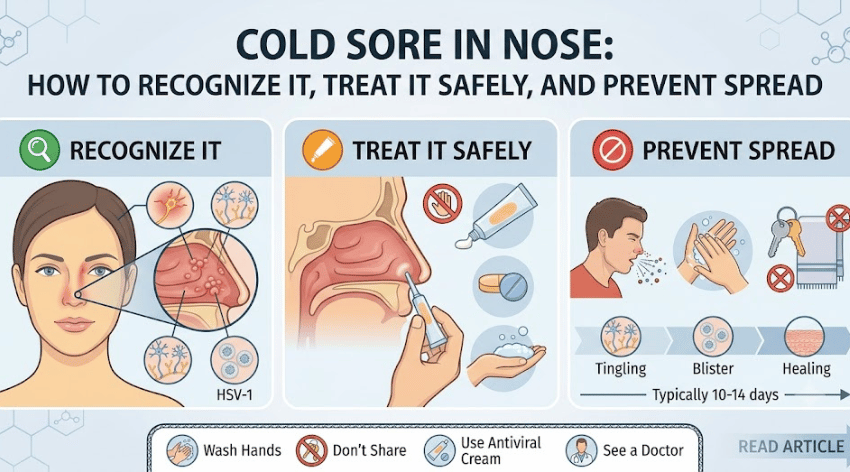
A cold sore in nose tissue can cause tingling, burning, tenderness, and small fluid-filled blisters near or inside a nostril. These sores are usually linked to the herpes simplex virus. Most heal within one to two weeks, but prompt care may ease discomfort and shorten an outbreak.
This article explains what nasal herpes can look like, how it differs from other nose problems, and which treatments may help. It also covers warning signs that need medical attention.
Direct answer: A nasal herpes outbreak often begins with tingling, itching, or burning. Small grouped blisters may then appear, break open, crust, and heal. Antiviral medicine works best when started early. Avoid picking the area or applying products deep inside the nostril without medical advice.
Key Facts at a Glance
| Question | Key information |
| What causes it? | Usually herpes simplex virus type 1 |
| Where can it appear? | On the nostril, beneath the nose, or near the nasal opening |
| What does it feel like? | Tingling, burning, tenderness, itching, or pain |
| How long does it last? | Often one to two weeks |
| Is it contagious? | Yes, particularly while symptoms or open sores are present |
| What may help? | Early antiviral treatment, gentle care, and pain relief |
| When should you seek care? | Eye symptoms, severe pain, spreading redness, fever, or delayed healing |
What Is a Cold Sore in Nose Tissue?
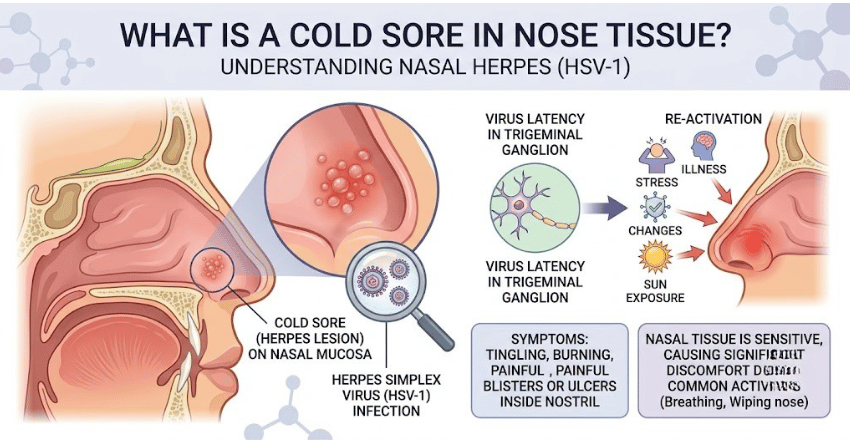
A nasal herpes lesion is a blister or ulcer caused by the herpes simplex virus, most often HSV-1. HSV-1 commonly affects the mouth and nearby facial skin, but sores can sometimes form around the nostrils or close to the nasal opening.
After the first infection, the virus stays inactive in nearby nerve cells. It may reactivate later and cause another outbreak. Illness, emotional stress, sun exposure, hormonal changes, skin injury, or a weakened immune system can act as triggers. The nose can feel more uncomfortable than one on the lip because nasal tissue is sensitive. Breathing, wiping the nose, and normal facial movement may irritate the area.
Seven Possible Signs of a Nasal Herpes Outbreak
Symptoms can vary, but common signs include:
- Tingling or burning: These sensations may begin before a visible blister develops.
- Localized tenderness: One small area may feel sore when touched or when you move your nose.
- Grouped blisters: Several tiny fluid-filled bumps may appear together.
- Redness or swelling: The skin surrounding the lesion may look inflamed.
- Weeping or oozing: The blisters can break and release clear or pale fluid.
- Crusting: A yellow, brown, or reddish scab may develop as the area dries.
- Itching during healing: The sore may itch as the crust loosens and healthy skin forms.
A typical outbreak progresses from tingling to blistering, oozing, crusting, and healing. It often clears within one to two weeks. Recognized HSV infection may cause stronger symptoms. These can include fever, swollen lymph nodes, body aches, a sore throat, or sores elsewhere around the mouth. Repeated outbreaks are often milder. Cosmetic procedures such as Nano Blading should be avoided on or near active skin infections until the area has fully healed to reduce irritation and potential complications. Other Nose Problems?
Not every painful bump or scab is caused by HSV. The inside of the nose can develop irritation or infection for several reasons.
| Possible cause | Common clues | Contagious? | Usual next step |
| Nasal herpes | Tingling followed by grouped blisters and crusting | Yes | Ask about antiviral treatment |
| Nasal vestibulitis | Redness, tenderness, crusting, or a pimple-like sore | The bacteria may spread | Medical assessment may be needed |
| Ingrown hair or pimple | One raised bump, sometimes with pus | Usually no | Avoid squeezing it |
| Dry or irritated skin | Cracks, light bleeding, or flaky scabs | No | Reduce irritation and add moisture safely |
| Impetigo | Spreading sores with honey-colored crust | Yes | Usually needs medical treatment |
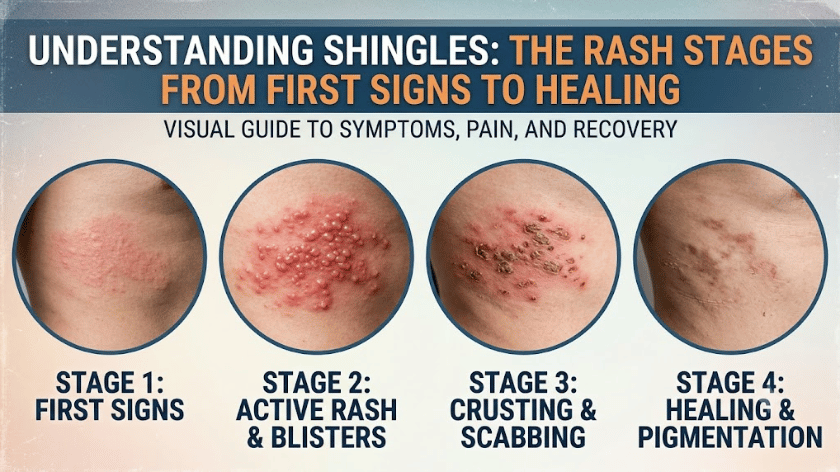
| Shingles | Painful rash or blisters, often on one side | Virus can affect susceptible contacts | Prompt medical assessment |
A herpes lesion often has a warning phase of tingling, itching, or burning. A bacterial infection is more likely to resemble a pimple, boil, or spreading red and swollen area.
Visual appearance alone is not always enough for a diagnosis. A clinician can examine the area and, when needed, test material from an active lesion. at a Cold Sore in Nose Tissue
Treatment depends on the lesion’s location, severity, and whether this is your first outbreak.
Contact a clinician early about antiviral medicine
Prescription antiviral medicines include acyclovir, famciclovir, and valacyclovir. They can reduce the severity or length of an outbreak but do not remove HSV from the body.
Treatment tends to work best when started during the tingling stage or within about 48 hours after symptoms begin. People with frequent or severe outbreaks may be offered daily suppressive treatment. A pharmacist should confirm which option is suitable. This matters when a lesion sits inside the nostril, where standard skin products may irritate delicate tissue.
Use topical products carefully.
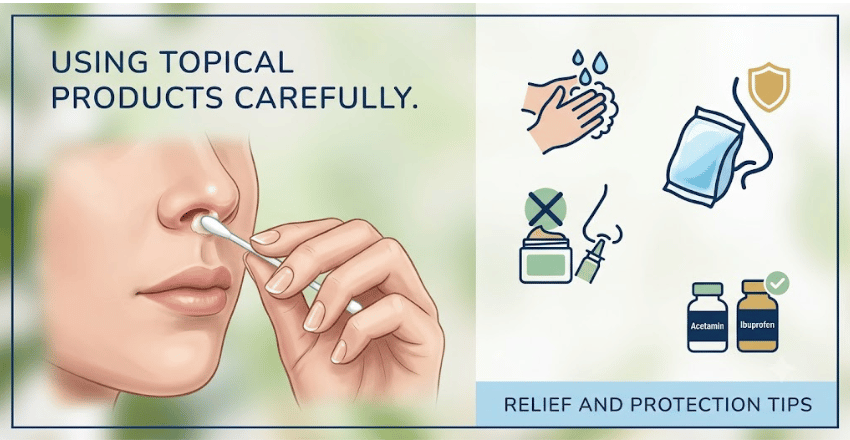
Docosanol and other topical products are commonly marketed for external facial sores. Product labels may not recommend use inside the nose.
Do not place creams, essential oils, rubbing alcohol, hydrogen peroxide, acne medicine, or numbing products deep inside a nostril unless a healthcare professional says they are safe there. These substances can irritate or damage the nasal lining.
When applying an approved treatment near the nostril:
- Wash your hands first.
- Use a clean cotton swab when appropriate.
- Dab rather than rub.
- Wash your hands again.
- Do not return a used applicator to the container.
Ease pain and protect the area.
A cool compress held against the outside of the nose may reduce discomfort. Over-the-counter acetaminophen or ibuprofen can help with pain when these medicines are safe for you.
Avoid picking, peeling, or squeezing the sore. Removing a crust too soon can cause bleeding, delay healing, and introduce bacteria.
Because the nasal lining needs moisture, harsh drying remedies may make the problem worse. Ask a pharmacist or clinician before placing petroleum jelly, saline gel, or another moisturizer directly on an active lesion.
How Long Does It Take to Heal?
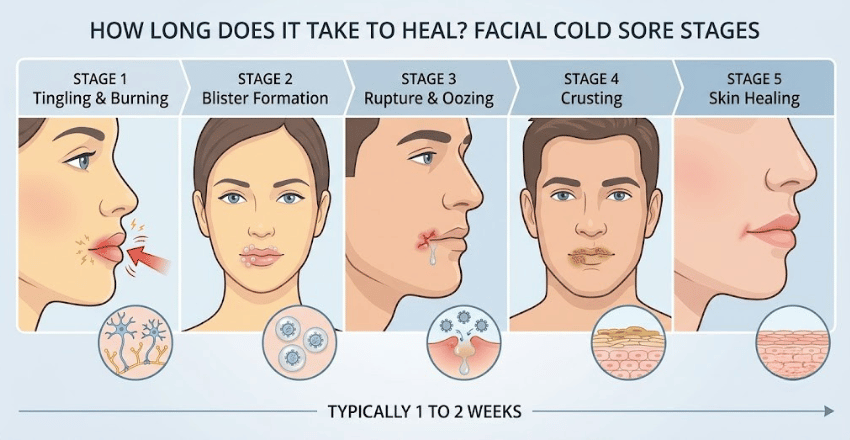
Most uncomplicated facial outbreaks heal within one to two weeks. The area may pass through five stages:
- Tingling or burning
- Blister formation
- Rupture or oozing
- Crusting
- Skin healing
Healing may take longer during a first outbreak or in someone with a weakened immune system. A sore that has not started improving after about 10 days should be assessed, especially when the diagnosis is uncertain. Lesion Contagious?
HSV can spread through direct contact with an active lesion, saliva, or affected skin. Transmission risk is highest while blisters or open sores are present. Spread can also occur before a blister appears or when no symptoms are visible. t tingling sensation until the skin has healed:
- Avoid kissing and close facial contact.
- Do not share cups, utensils, towels, razors, or cosmetics.
- Avoid oral sexual contact.
- Wash your hands after touching your face.
- Keep your hands away from your eyes.
- Avoid touching newborn babies after contact with the affected area.
Do not assume a crusted lesion is no longer contagious. Continue precautions until the scab is gone and the skin has returned to normal. See a Doctor
Arrange medical care when:
- This is your first suspected outbreak.
- You cannot tell whether the lesion is herpes, a boil, or another infection.
- The sore is unusually large or painful.
- It has not started healing within about 10 days.
- Outbreaks happen often.
- Redness, warmth, or swelling is spreading.
- Thick pus or a foul-smelling discharge develops.
- You have a fever or feel seriously unwell.
- You are pregnant.
- You have eczema, diabetes, HIV, or another condition affecting immunity.
- You take chemotherapy, immune-suppressing medicine, or high-dose steroids.
Seek urgent care for eye pain, eye redness, light sensitivity, blurred vision, or a lesion near the eye. HSV infection of the eye can threaten vision and requires prompt treatment. People need special protection. Anyone with an active facial outbreak should avoid kissing a newborn. Suspected exposure or blisters in a young baby require immediate medical advice. Outbreaks Be Prevented?
There is no guaranteed way to prevent every recurrence. A simple symptom and trigger log may help you spot patterns.
Record:
- When tingling begins
- Recent illness or fever
- Stress and sleep changes
- Sun exposure
- Menstrual timing
- Skin irritation around the nose
- How soon treatment was started
- How long healing took
The Next Step
A familiar, mild outbreak may improve with early antiviral treatment and gentle care. An unfamiliar sore deserves more caution. Avoid picking it, keep your hands away from your eyes, and ask a clinician or pharmacist which treatments are safe near the nasal lining.
Seek medical attention promptly if symptoms affect your eyes, spread across the face, cause severe pain, or occur while your immune system is weakened.
Conclusion
A cold sore in nose tissue can be uncomfortable, but recognizing the early signs can help you manage it more effectively. Tingling, burning, tenderness, and grouped fluid-filled blisters are common clues of a nasal herpes outbreak, while other conditions such as bacterial infections, irritation, or pimples may require different care.
Early antiviral treatment, gentle cleaning, avoiding irritation, and preventing contact with the affected area can support faster healing and reduce the chance of spreading HSV. Avoid picking or applying unapproved products inside the nostril, as this can worsen irritation and delay recovery.
If you want to know about My Head Feels Heavy and Pressured but Not Pain then visit our Health category.
Frequently Question
Yes. HSV-related blisters can occur near or inside a nostril even when no lip lesion is present. A clinician should assess unfamiliar or recurrent nasal sores because bacterial infections and irritation can look similar.
No. Popping or squeezing it can increase pain, delay healing, spread fluid to other skin, and introduce bacteria.
Do not assume a product intended for the lips is safe inside a nostril. Read the label and ask a pharmacist or clinician before using it on nasal tissue.
Antibiotics do not treat HSV. They may be prescribed when a bacterial infection is present instead of, or alongside, a viral lesion.
HSV remains in nearby nerve cells after the first infection. When it reactivates, symptoms may return in a similar facial location.
No. The virus may remain contagious until the lesion has fully healed and normal skin has returned.