

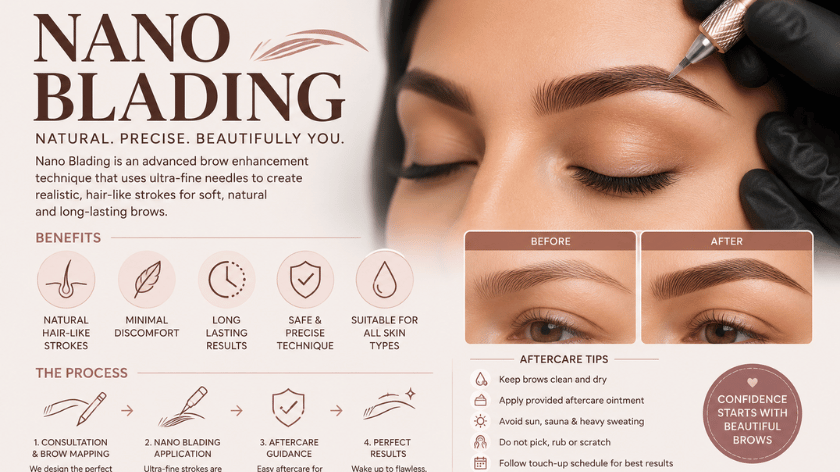
Nano blading is a semi-permanent eyebrow treatment that creates fine, hair-like strokes with pigment. The goal is to make sparse or uneven brows look fuller while keeping the finish soft and natural. Before booking, it helps to understand that salons don’t always use the term consistently.
Some describe a fine manual blade technique, while others use “nanobrows” for machine-made strokes produced with a single needle. The treatment may last one to three years, but results vary. Your skin type, sun exposure, skincare routine, pigment, technique, and aftercare can all affect how quickly the color fades.
| Key point | What to expect |
| Purpose | Create realistic eyebrow hair strokes and improve brow shape. |
| Technique | May involve an ultra-fine manual blade or a single-needle cosmetic tattoo machine |
| Appointment length | Often two to four hours, including mapping and numbing |
| Visible healing | Redness, tenderness, flaking, or light crusting may occur. |
| Full healing | Often around three to four weeks |
| Typical longevity | Roughly one to three years, depending on technique and individual factors |
| Typical price | Often $500 to $2,000, depending on location and artist experience |
| Main risks | Infection, allergic reaction, scarring, uneven color, or an unwanted shape |
Direct answer: Nano blading is a form of cosmetic eyebrow tattooing designed to produce thinner, more natural-looking strokes than many traditional brow treatments. It can reduce the need for daily brow makeup, but it still breaks the skin and carries tattoo-related risks. Choose a qualified artist, confirm the exact method, and follow the aftercare plan closely. For the full picture, read how long can you go without pooping before it kills you.
What Is Nano Blading?
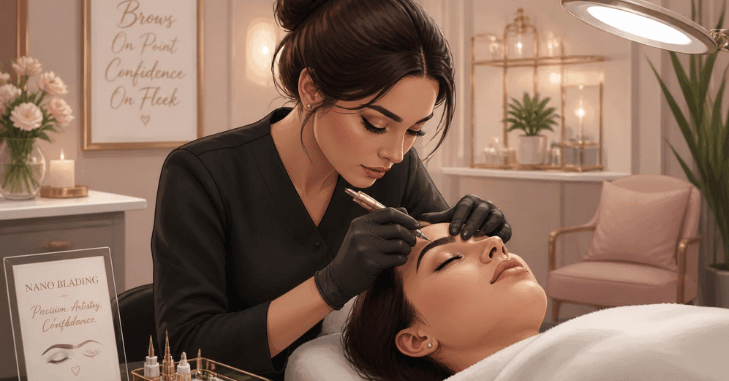
Nano blading places cosmetic pigment into the skin to imitate individual eyebrow hairs. A technician first maps the brow shape, selects a pigment, applies a topical numbing product, and creates each stroke.
The wording can be confusing. In many modern studios, nanobrows are made with a cosmetic tattoo machine and one fine needle. Microblading, by comparison, usually uses a handheld tool containing several tiny needles arranged like a blade.
Other providers use “nanoblading” for a manual method performed with an especially fine blade. That means the service name alone doesn’t tell you what tool will be used.
Before paying a deposit, ask:
- Will you use a manual tool or a tattoo machine?
- Is the needle or blade single-use?
- What training and licensing do you hold?
- Could you show me healed results, not just fresh results?
- Does the quoted price include the follow-up session?
These questions matter because the artist’s technique, sanitation practices, and experience can influence both safety and appearance.
Nano Blading vs. Microblading
Both treatments aim to create realistic brow hairs, but the tool and application method may differ.
| Feature | Nano brows | Microblading |
| Common tool | Single-needle cosmetic tattoo machine | Manual handheld blade |
| Stroke appearance | Fine, soft, slightly pixelated strokes | Crisp, defined incisions |
| Skin types | Often offered for oily, mature, textured, or sensitive skin | Often recommended for normal or dry skin |
| Typical duration | Often one to three years | Often one to two years |
| Skin trauma | May cause less cutting when a machine needle is used | Creates small manual cuts |
| Finish | Soft and natural | Sharp hair-stroke effect |
These differences aren’t absolute. Machine settings, pigment depth, the artist’s pressure, skin characteristics, and aftercare can change the outcome. A consultation should focus on your skin and desired finish rather than whichever treatment has the trendiest name.
Who May Be a Good Candidate?
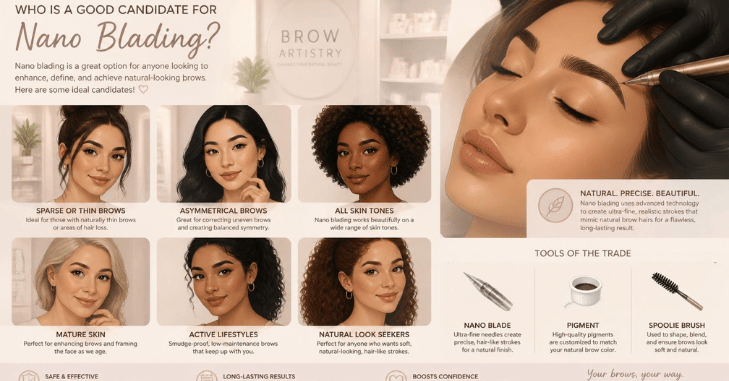
The procedure may appeal to people who:
- Have thin, patchy, or uneven eyebrows.
- Want a natural hair-stroke effect.
- Spend time filling their brows each morning.
- Have difficulty applying brow makeup
- Want to improve brow symmetry.
- Have oily or textured skin that didn’t retain traditional microblading well.
People with hair loss may also consider cosmetic eyebrow tattooing. Still, anyone experiencing unexplained brow loss should first discuss the cause with a healthcare professional.
You may need medical advice before treatment if you have eczema, psoriasis, active acne, an infection, a bleeding disorder, a history of keloid scarring, pigment allergies, or an immune condition. A dermatologist may also advise extra caution if your skin reacts easily.
Tell the artist about prescription medicines, recent procedures, allergies, and ongoing skin treatments. Don’t stop prescribed medicine unless the clinician who prescribed it tells you to do so.
What Happens During the Appointment?
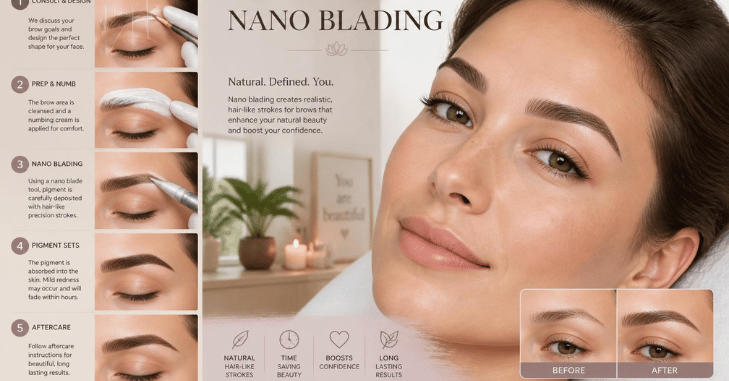
A typical appointment includes several stages.
1. Consultation and health screening
The artist reviews your goals, skin history, allergies, previous cosmetic tattoos, and current brow condition. This is also the time to confirm which technique the studio calls “nanoblading.”
2. Brow mapping
The technician measures and draws a proposed shape. Review it while sitting upright because facial proportions can look different when you lie down.
Don’t approve a shape you feel unsure about. Pigment can fade, but removal may be costly and can cause color changes, soreness, or scarring.
3. Pigment selection
The chosen shade should complement your natural brow hair and skin tone. Fresh pigment often looks darker or warmer than the healed result.
4. Numbing
A topical anesthetic is commonly used to reduce discomfort. You may still notice scratching, vibration, pressure, or tenderness.
5. Hair-stroke application
The technician creates strokes following the natural direction of your brow growth. This stage may take an hour or longer, depending on the density and design.
6. Aftercare instructions
You should receive clear written guidance before leaving. Ask whom to contact if you notice unusual pain, swelling, discharge, or spreading redness.
How Long Does Healing Take?
The brows can take around three to four weeks to settle fully. Early redness, tenderness, swelling, darker color, flaking, and light crusting may occur.
A common healing pattern looks like this:
- Days 1–3: The brows may look dark, sharp, swollen, or slightly red.
- Days 4–7: Dryness, itching, flaking, or light crusting may begin.
- Days 8–14: The color can appear patchy or lighter as surface skin sheds.
- Weeks 3–4: The pigment becomes clearer as the skin settles.
- Weeks 6–8: The artist may assess retention and perform a perfecting session.
Don’t judge the final shape or color during the first week. The initial appearance is not the healed result.
Nano Blading Aftercare
Follow your artist’s instructions because aftercare methods can vary by technique and pigment system.
Common guidance includes:
- Keep the area clean according to the provided directions.
- Don’t scratch, peel, or pick at flakes.
- Avoid brow makeup while the skin is open or irritated.
- Limit heavy sweating during early healing.
- Avoid swimming pools, hot tubs, saunas, and steam.
- Keep strong acids, retinoids, and exfoliants away from the brows.
- Protect healed brows from strong sun exposure.
- Use only the ointment or cleanser your artist recommends.
Picking at crusts can remove pigment and may raise the chance of scarring. Excess moisture, sweat, and sun may also affect retention.
Once healed, daily sunscreen around the brow area may help slow fading. Take care not to place sunscreen over broken skin unless a healthcare professional advises it.
How Long Do the Results Last?
Results may remain visible for one to three years. Some people need a color refresh sooner, while others retain pigment longer.
Fading may happen faster because of:
- Oily skin
- Frequent sun exposure
- Chemical peels
- Retinoid use near the brows
- Strong exfoliating products
- Heavy sweating
- Pigment color and formulation
- A shallow application technique
- Individual immune and skin responses
“Semipermanent” doesn’t mean the pigment will disappear on a fixed date. Traces can remain after the main strokes have faded. Color may also become warmer, cooler, or less defined.
Ask to see photos of the artist’s work after six months, one year, and longer. Freshly completed brows don’t show how the pigment will age.
How Much Does It Cost?
Pricing varies widely. Published estimates commonly range from about $500 to $2,000, while some premium services charge more.
The price may depend on:
- Your city or country
- The artist’s training and experience
- Studio licensing and sanitation standards
- Appointment length
- Complexity of the correction
- Whether a follow-up is included
- Demand for the artist
- Previous brow tattooing
Don’t select a provider on price alone. An inexpensive treatment may become costly if you later need correction or removal.
Ask for the full price in writing. Confirm whether it covers consultation, initial treatment, aftercare supplies, a six-to-eight-week touch-up, and later color refreshes.
Risks and Side Effects
Because the procedure places pigment through the skin, it carries many of the same concerns as tattooing and permanent makeup.
Possible complications include:
- Bacterial or fungal infection
- Blood-borne infection from unsafe equipment
- Allergic reaction to pigment
- Persistent itching or swelling
- Scarring or keloid formation
- Uneven strokes or poor symmetry
- Unwanted pigment color
- Premature fading
- Difficulty correcting or removing the work
The FDA reports that contaminated inks can cause infections, even when a container appears sealed. It also warns that unsterile equipment can transmit serious infections.
Seek medical care if pain gets worse instead of better, redness spreads, the skin feels hot, pus appears, or you develop fever or a rash. These symptoms shouldn’t be treated as routine healing.
Rare reactions involving tattoo pigment and MRI procedures have also been reported. Tell the MRI technician that you have permanent makeup before a scan. More from us: How Much Does an MRI Cost.
How to Choose a Safe Brow Artist?

A strong portfolio is useful, but safety checks matter more.
Look for a provider who:
- Meets local licensing or registration requirements
- Uses sterile, single-use needles or blades
- Opens disposable equipment in front of you
- Uses fresh pigment cups for each client
- Wears clean gloves
- Maintains a clean treatment area
- Provides written consent and aftercare information
- Shows healed, unedited client photos
- Explains risks without minimizing them
- Has a clear process for complications
Avoid a technician who can’t explain the tool, pigment brand, sanitation process, or local credentials.
You can browse more general wellness guidance in HealthySpire’s health section and women’s health section. HealthySpire’s category pages are currently live but contained no published posts when checked on July 21, 2026.
Is Nano Blading Worth It?
Nano blading may be worth considering when you want realistic nanoblading brow strokes and understand the ongoing maintenance. A good result can reduce daily makeup time and improve the appearance of sparse areas.
It isn’t a risk-free beauty service. The outcome depends heavily on the artist, and unwanted permanent makeup can be difficult to correct. Book only after seeing healed results, confirming the method, checking credentials, reviewing the total cost, and understanding the healing period.
Frequently Asked Questions
It is usually described as semi-permanent because the pigment fades. Still, some pigment may remain for years. There is no guaranteed date when every trace will disappear.
Most artists apply numbing cream. You may feel scratching, pressure, vibration, or mild discomfort. Pain levels vary by person and technique.
A machine-made nano-brow may create less cutting than a manual blade, but it still breaks the skin. Infection, allergy, scarring, and poor cosmetic results remain possible.
Many artists recommend machine hair strokes for oily or textured skin because the technique may retain better than manual microblading. Results still depend on the individual and artist.
You can wash the rest of your face carefully, but follow the artist’s specific cleaning and moisture instructions for the brows. Avoid soaking or rubbing the treated area.
Wait until the surface has healed and your technician says makeup is safe. Applying cosmetics too early may irritate the skin or introduce bacteria.
Many clients attend a perfecting session about six to eight weeks later. Future color refreshes depend on fading, skin type, and personal preference.
Confirm the exact technique, check local credentials, inspect healed results, ask about sterile supplies, discuss medical concerns, and request the full price.