

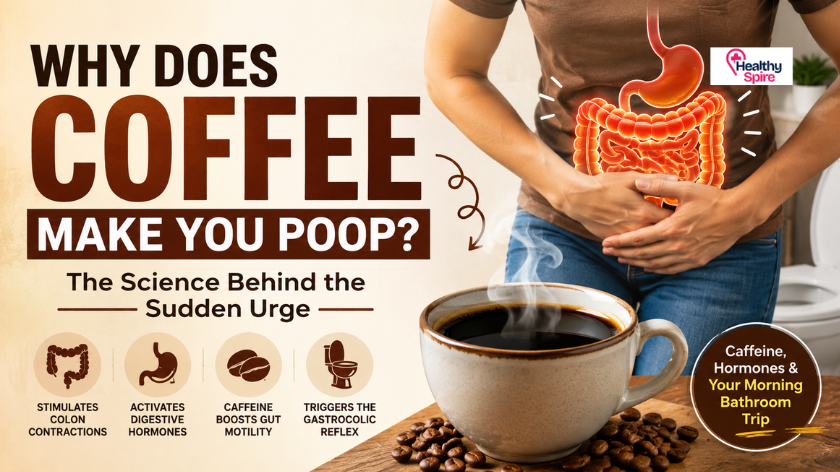
You finish your morning cup, and a few minutes later, you need the bathroom. So, why does coffee make you poop? The drink can stimulate contractions in your colon, activate digestive hormones, and strengthen the natural bowel reflex that is already most active after waking. For most people, this reaction is normal. It does not necessarily mean anything is wrong with your digestive system.
| Key question | Quick answer |
| What causes the urge? | Colon contractions, digestive hormones, caffeine, and the gastrocolic reflex |
| How quickly can it happen? | Sometimes within minutes, though the timing varies |
| Does decaf have the same effect? | It can, but its effect may be milder |
| Is it a laxative? | Not technically, though it can act like a mild bowel stimulant |
| When should you be concerned? | When bowel changes involve pain, blood, dehydration, or persistent diarrhea |
Direct answer: Your morning drink can prompt a bowel movement because it activates the muscles and hormones involved in digestion. Caffeine may strengthen the effect, but it is not the only cause. Decaffeinated varieties can also stimulate the colon, which suggests that other natural compounds in the beverage contribute.
Why Does Coffee Make You Poop So Quickly?
The digestive response involves several processes happening at the same time. Your colon may already be active because you have recently awakened. Drinking liquid and filling your stomach then signals the lower digestive tract to make room for incoming food.
Your cup may strengthen this signal by increasing colon movement and stimulating the release of digestive hormones. Research reviews have found that the beverage can affect gastric acid production, bile secretion, pancreatic activity, and colon motility. The result is often a quick, noticeable urge to use the bathroom.
1. It Activates the Gastrocolic Reflex

The gastrocolic reflex is a normal digestive response. When food or liquid enters your stomach, nerves tell your colon that more material is on the way. Your colon responds by contracting and moving existing stool toward the rectum. This process creates space farther up the digestive tract.
Everyone has this reflex, but its strength varies. Some people barely notice it, while others immediately wonder, “Why Does Coffee Make You Poop?” after breakfast, a large glass of water, or a warm morning cup. Your usual routine can reinforce this response. Drinking coffee at the same time each morning may train your body to expect a bowel movement soon afterward.
2. Caffeine Can Increase Colon Activity
Caffeine stimulates more than your brain. It may also increase muscle activity in the colon, helping move digestive contents forward. Studies and clinical reviews indicate that caffeine can contribute to gastrointestinal motility. However, this does not fully explain why does coffee make you poop, because decaffeinated coffee can also trigger bowel movements.
Caffeine sensitivity differs from person to person. A small amount may be enough to trigger urgency in one person, while another can drink several cups without noticing a digestive effect. The FDA says that up to 400 milligrams of caffeine per day is not generally associated with negative effects for most adults. Individual tolerance still varies widely.
3. Digestive Hormones Help Get Things Moving
Certain compounds in the drink may increase the release of hormones such as gastrin and cholecystokinin. Gastrin helps regulate digestive activity in the stomach and intestines. It can also encourage contractions that move material through the digestive system.
Cholecystokinin supports digestion by helping coordinate bile release, pancreatic secretions, and intestinal movement. Cleveland Clinic notes that both hormones may help explain why caffeinated and decaffeinated varieties can prompt a bathroom trip. This hormone response is one reason switching to decaf does not always eliminate the urge.
4. Your Colon Is More Active in the Morning
Timing matters when it comes to why does coffee make you poop. Colon activity naturally increases after you wake up, and eating breakfast, moving around, and drinking coffee can strengthen this morning digestive pattern. That means the same cup may affect you differently depending on when you drink it.
A morning serving taken with breakfast may produce a stronger response than one consumed later in the afternoon. The effect can also appear faster when you drink it on an empty stomach. There is less food to slow stomach emptying, and you may notice the digestive response more clearly.
5. Warm Liquid and Hydration May Contribute
Warm drinks can feel soothing and may encourage digestive movement, though temperature is not considered the main reason for the effect. The liquid itself also adds to your daily fluid intake. Adequate hydration helps keep stools softer and easier to pass.
Still, why does coffee make you poop does not mean coffee is a reliable treatment for constipation. While coffee may stimulate a bowel movement in some people, water, dietary fiber, regular physical activity, and consistent bathroom habits play much larger roles in maintaining long-term bowel regularity and digestive health.
For more everyday wellness information, explore Healthyspire’s general health guidance and nutrition resources.
Does Decaf Make You Poop Too?
Yes, it can. Decaf contains much less caffeine, but it still contains acids, oils, and other compounds that may affect digestive hormones and colon activity. Research has found that both caffeinated and decaffeinated varieties can stimulate bowel function.
The caffeinated version may have a stronger effect in some people, but the response is not caused by caffeine alone. This is one reason why does coffee make you poop even if you choose decaf. Switching to decaffeinated coffee may help if caffeine causes jitters, anxiety, or a racing heartbeat. Still, it may not completely stop bathroom urgency because other natural compounds in coffee can also stimulate the digestive system.
Could Milk, Cream, or Sweeteners Be the Real Cause?

Sometimes the problem is not the brewed drink itself. It is what you add to it.
Milk and cream
People with lactose intolerance may develop:
- Gas
- Bloating
- Abdominal cramps
- Loose stools
- Sudden bathroom urgency
The symptoms can be easy to blame on your morning cup because they appear soon after drinking it. Try a lactose-free or nondairy option for several days and watch whether your symptoms improve.
Sugar-free sweeteners
Some sugar alcohols and sweeteners can cause gas or loose stools when consumed in larger amounts. Check flavored creamers, syrups, and “sugar-free” mixes for ingredients such as sorbitol, mannitol, or erythritol.
High-fat additions
A large amount of cream or butter can speed digestive symptoms in people who are sensitive to rich, fatty foods. A useful test is to drink a small serving without add-ins. If the urgency disappears, reintroduce one ingredient at a time.
Is the Bathroom Urge Normal?
An occasional bowel movement after your morning drink is usually harmless. It may even support a predictable routine. A normal response usually has these features:
- The stool is formed rather than watery
- There is no severe pain
- The urgency passes after one bowel movement
- You are not losing weight
- The pattern is familiar and stable
The urge becomes more concerning when it represents a major change from your normal bowel habits. Diarrhea generally means passing loose, watery stools at least three times a day, or more often than is normal for you. It can lead to dehydration if it continues.
How to Reduce the Urge to Poop After Drinking It
You may not need to give up your morning routine. Start with small changes and note what helps.
- Drink a smaller serving. Try half your usual amount for several days.
- Choose a lower-caffeine option. A half-caf or decaf version may reduce colon stimulation.
- Have it with food. Eating a balanced breakfast may make the response feel less abrupt.
- Remove milk temporarily. This can help identify lactose intolerance.
- Review sweeteners and creamers. Test the drink without flavored additions.
- Sip it slowly. Drinking a large amount quickly may strengthen the stomach-filling reflex.
- Change the timing. Wait until after your first bowel movement or until later in the morning.
Change one factor at a time. Otherwise, you will not know which adjustment made the difference.
Can You Use It for Constipation

Some people find that a warm caffeinated drink helps them maintain a regular morning schedule, which may explain why does coffee make you poop shortly after your first cup. However, this does not make coffee a dependable medical treatment for constipation, and it should not replace proven approaches such as adequate fiber, hydration, and regular physical activity.
Relying on increasing amounts can cause unwanted effects such as poor sleep, anxiety, heart palpitations, or stomach irritation. Large servings may also worsen urgency rather than produce a comfortable bowel movement.
For ongoing constipation, focus on:
- Eating enough fiber.
- Drinking adequate fluids.
- Staying physically active.
- Going to the bathroom when you feel the urge.
- Discussing persistent symptoms with a healthcare professional
Healthyspire aims to explain health subjects in plain language while keeping its information educational rather than diagnostic. You can read more about the site’s health content standards.
When to Speak With a Doctor?
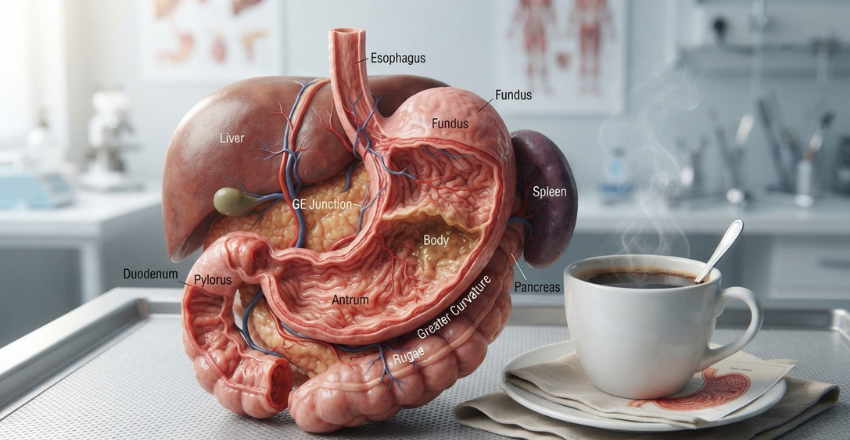
Contact a healthcare professional when the reaction is new, persistent, or disruptive.
Seek prompt medical care if you have:
- Blood or pus in your stool
- Black or tarry stool
- Severe abdominal or rectal pain
- Frequent vomiting
- High fever
- Unexplained weight loss
- Signs of dehydration
- Diarrhea lasting more than two days
Possible dehydration signs include extreme thirst, dry mouth, dark urine, reduced urination, dizziness, or unusual tiredness. NIDDK advises seeking medical help for severe pain, bloody or black stools, frequent vomiting, or dehydration symptoms.
A clinician can help determine whether your symptoms relate to caffeine sensitivity, lactose intolerance, irritable bowel syndrome, medication, infection, or another digestive condition.
The Bottom Line
Your morning cup can activate the gastrocolic reflex, stimulate digestive hormones, and increase colon contractions. Caffeine may strengthen the effect, but other natural compounds in coffee also play an important role in why does coffee make you poop, even for some people who choose decaffeinated coffee.
A quick, comfortable bowel movement is usually not a cause for concern. Persistent diarrhea, severe pain, bleeding, weight loss, or dehydration deserves medical attention. This article provides general educational information and does not replace personalized medical advice.
Apart from that, if you want to learn about the article Dysregulated Nervous System then visit our Health category.
Frequently Asked Questions (FAQs)
People differ in caffeine sensitivity, hormone response, gut motility, routines, and underlying digestive conditions. Your gastrocolic reflex may be stronger than someone else’s.
Some people notice an urge within minutes. Others feel it later or not at all. Studies have observed increased colon movement during the first 30 minutes after consumption.
A single formed stool is not diarrhea. Repeated loose or watery stools, cramping, or dehydration suggest that the drink or one of its add-ins may be irritating your digestive system.
Roasting changes the drink’s chemical composition, but there isn’t strong enough evidence to say one roast consistently causes more bowel movements. Serving size, caffeine level, add-ins, and personal sensitivity may matter more.
Not necessarily. A predictable bowel movement without pain or diarrhea is often normal. Reduce or avoid it when the reaction is uncomfortable, urgent, or accompanied by other symptoms.