


If you track food closely, you may wonder, does creatine have calories when added to your daily routine? Plain monohydrate is generally considered to have no meaningful calorie impact for everyday nutrition tracking. Still, U.S. supplement labels can vary, so use your specific product label to guide your count.
Pure powder differs from gummies, flavored mixes, and pre-workout blends. Those products may contain sugar, carbohydrates, or other ingredients that add measurable energy. Understanding that distinction makes calorie tracking much easier.
Creatine Calories at a Glance
| Question | Practical answer |
|---|---|
| Does plain monohydrate meaningfully add calories? | Usually not for practical calorie tracking |
| Can a supplement label show calories? | Yes, some U.S. products do |
| Can flavored powders contain calories? | Yes, depending on added ingredients |
| Can gummies contain calories? | Yes, especially when sugars or gummy bases are included |
| Does it contain protein, fat, or carbohydrate? | Pure monohydrate generally does not provide these macronutrients |
| Can it cause scale weight gain? | Yes, mainly through increased water storage |
| Should you count your specific product? | Follow the calories shown on its label |
Direct answer: Plain monohydrate generally contributes no meaningful calories to a normal diet. It is not used like carbohydrate, fat, or protein for dietary energy. Some U.S. supplement labels still report calories, so check your container before entering a serving into a food-tracking app.
Why the Calorie Question Gets Confusing
Calories measure usable dietary energy. The FDA explains that carbohydrate and protein provide about 4 calories per gram, fat about 9, and alcohol about 7. Pure monohydrate is not one of those conventional dietary energy sources.
The supplement supports a different process inside muscle cells. Stored phosphocreatine helps regenerate ATP during short periods of intense activity. It supports rapid energy recycling rather than acting like a serving of carbohydrate or fat.
That difference explains why the internet gives conflicting answers. Some websites calculate theoretical energy from the molecule itself. Others focus on metabolizable energy and practical nutrition tracking.
For most people, the second question matters more. You want to know whether a scoop changes your calorie deficit, maintenance intake, or surplus. In normal dietary tracking, plain monohydrate makes little practical difference.
Does Creatine Have Calories in a 5-Gram Scoop?
A standard maintenance serving is often around three to five grams daily. The NIH Office of Dietary Supplements describes three to five grams as a common maintenance range. Loading protocols may use higher amounts for several days.
A plain five-gram scoop is generally treated as contributing negligible dietary energy. It also doesn’t count as five grams of protein just because amino acids help form it. Applying the protein rule of four calories per gram can therefore be misleading.
There is one important U.S. labeling wrinkle. The NIH Dietary Supplement Label Database includes single-ingredient monohydrate products with listed calories, such as one archived five-gram product that declared 15 calories per serving.
That does not mean every five-gram serving should automatically be counted as 15 calories. Product labeling practices differ, and formulas can change over time. The safest approach is to use the current label on the container you bought.
Why Some Creatine Products Have More Calories
The delivery format often matters more than the active ingredient. A plain white powder can have a completely different nutrition profile from a gummy. Flavored drink mixes can also include several calorie-containing ingredients.
Common additions include:
* Sugar * Dextrose * Maltodextrin * Gummy syrups * Starches * Juice concentrates * Protein ingredients * Calorie-containing flavor systems
A product can therefore have the same active dose but a different calorie count. Always check both the serving size and ingredient list. Do not assume every product with the same front-label claim has identical nutrition.
This distinction also matters during a lean-bulking phase. A few calories may not affect a large calorie surplus much. Accurate tracking still helps you understand where your total intake comes from.
Plain Powder vs. Gummies and Blends
| Product type | Likely calorie impact | What to check |
|---|---|---|
| Pure unflavored monohydrate | Usually negligible | Supplement Facts label |
| Flavored powder | Varies | Sugar, maltodextrin, flavoring |
| Gummies or chews | Often higher | Sugars, syrups, starches |
| Pre-workout blend | Varies widely | Full ingredient and nutrition panel |
| Protein-plus-creatine blend | Usually meaningful | Protein, carbohydrate, fat, serving size |
Gummies deserve special attention because the gummy base itself requires additional ingredients. Sweeteners and texture agents can contribute calories even when the active ingredient does not. Two products providing equal active amounts may therefore have different energy values.
Powder blends can create the same issue. A product containing carbohydrates may contribute more than plain monohydrate mixed with water. Reading the entire label prevents inaccurate calorie estimates.
Does Creatine Cause Weight Gain If It Has Few Calories?
The scale can rise after supplementation without a corresponding increase in body fat. Cleveland Clinic lists water retention as a possible reason for weight gain. More water can be stored alongside increased muscle creatine stores.
That early scale change can confuse anyone who is dieting. Body fat increases when energy intake consistently exceeds energy expenditure. Water retention is a different process.
This distinction mirrors other short-term scale changes. Heavy sweating can temporarily lower body weight because it removes water. Our guide on whether sweating burns calories explains why you shouldn’t confuse water weight with fat loss.
A changing scale number therefore needs context. Look at longer-term weight trends rather than a single morning measurement. Waist measurements and training performance can add useful information.
Does It Matter During a Calorie Deficit?
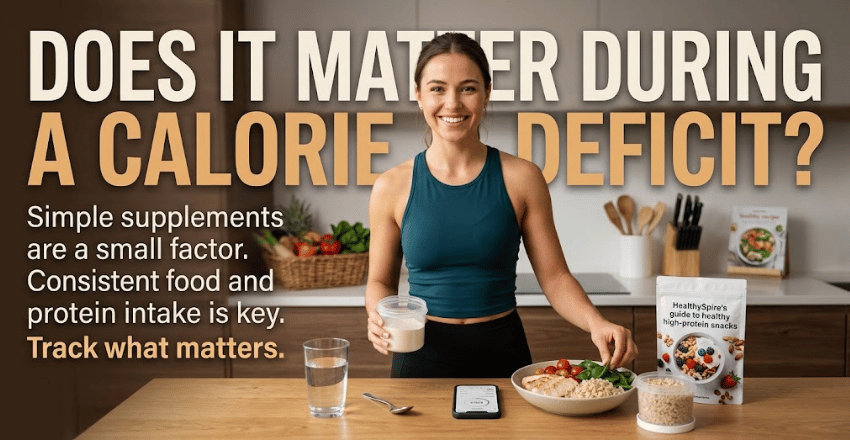
For most people using plain powder, the amount is too small to meaningfully change a calorie deficit. A 300-calorie daily deficit does not suddenly disappear because you took an unflavored serving. Consistent food intake remains the larger factor.
The answer changes if your supplement contains meaningful added calories. Gummies, sweetened powders, or blended drinks can contribute to your daily total. The label tells you whether you need to track those calories.
Food quality still matters during a cut. Adequate protein can help support muscle while you manage total calories. HealthySpire’s guide to healthy high-protein snacks offers practical food ideas for that goal.
Does Creatine Break a Fast?
Plain monohydrate mixed with water contributes little meaningful dietary energy. For calorie-focused intermittent fasting, many people therefore treat it differently from food or sweetened drinks. Strict fasting protocols can use different rules.
Medical and religious fasts require more caution. A laboratory, doctor, or religious practice may prohibit supplements regardless of their calorie content. Follow those instructions rather than using a general fitness rule.
Added ingredients also change the situation. Gummies, juice, milk, or sweetened powders can provide measurable energy. Our guide to drinking coffee while fasting explains why fasting rules depend on your goal.
How to Read a Creatine Supplement Label
Start with the serving size rather than the front of the package. A scoop, gummy serving, or packet may contain different amounts. The stated nutrition information applies to that defined serving.
Next, review these label details:
* Calories per serving * Amount of active ingredient * Total carbohydrate * Added sugars * Other ingredients * Number of servings per container
A product with one listed ingredient is easier to evaluate. A flavored formula needs closer inspection because other components may affect calories. Enter the label value into your nutrition tracker when the product lists one.
The FDA recommends using the serving information on packaged products when evaluating calorie intake. That advice is particularly useful for multi-ingredient supplements. Formulas can differ even within the same product category.
Is Creatine a Protein?
No, the supplement is not dietary protein. The body can synthesize it using the amino acids arginine, glycine, and methionine. That origin does not make the finished compound equivalent to protein.
Protein provides amino acids for many structural and metabolic functions. Monohydrate primarily supports the phosphocreatine energy system. The two supplements therefore serve different nutritional purposes.
This difference matters when logging macros. Do not enter five grams of monohydrate as five grams of protein unless your product contains actual protein. Follow the nutrition information printed on the package.
Can Creatine Make You Gain Body Fat?
The supplement itself is unlikely to drive meaningful fat gain through its calorie contribution. A rise on the scale soon after starting it often reflects changes in body water. That increase should not automatically be labeled as fat.
Your overall calorie balance still determines longer-term fat gain. A high-calorie shake containing the supplement can contribute significant energy. In that case, the other ingredients matter more than the active powder.
This is another reason labels matter. Track the full drink instead of tracking one ingredient in isolation. Your daily intake should include everything mixed into the serving.
What U.S. Consumers Should Know About Supplement Labels
In the United States, dietary supplements often use Supplement Facts labeling rather than standard food labels. Manufacturers may present calorie information differently depending on the formula and applicable labeling requirements. Older database entries also may not match products currently sold.
The NIH Dietary Supplement Label Database is useful for seeing real product examples. It contains archived labels showing that calorie declarations have varied among monohydrate products. Your current package remains the best source for the product in your kitchen.
The FDA also advises consumers to pay attention to serving size. Taking two servings means consuming twice the listed amount of calorie-containing ingredients. That simple rule matters most with flavored or sweetened formulas.
Frequently Asked Questions
Does pure creatine have calories?
Plain monohydrate is generally treated as having negligible dietary calories for normal tracking. Some U.S. supplement labels have still declared calories for single-ingredient products. Use your current product label for the most precise number.
How many calories are in 5 grams?
No single label value applies to every product. Many plain powders contribute little meaningful dietary energy, while some labels have reported calories. Added ingredients can increase the total further.
Do creatine gummies have calories?
Many gummies contain calorie-contributing ingredients besides the active compound. Sugars, syrups, starches, and other gummy ingredients can raise the calorie count. Read the serving information instead of assuming gummies match plain powder.
Will it ruin a calorie deficit?
Plain powder is unlikely to meaningfully affect a typical calorie deficit. Sweetened blends can contribute additional energy that should be included in your daily intake. The rest of your diet has a much larger effect.
Does it cause fat gain?
Early weight gain is often due to increased water retention. That is not the same as gaining body fat. Long-term fat gain depends mainly on your total energy balance.
Should I count it in a calorie-tracking app?
Use the number shown on your specific product’s current label. If the label lists zero calories, logging zero is practical. If it lists calories, enter the stated amount.
The Bottom Line
For everyday nutrition tracking, plain monohydrate generally doesn’t meaningfully affect your calorie intake. Product labels can differ, so don’t override the information on your own container. Gummies and flavored blends deserve more attention because other ingredients can add measurable energy.
Do not confuse water-related scale changes with fat gain. Look at your overall diet, weekly weight trend, and supplement formula together. That approach gives you a much clearer picture than assigning a universal calorie number to every product.