

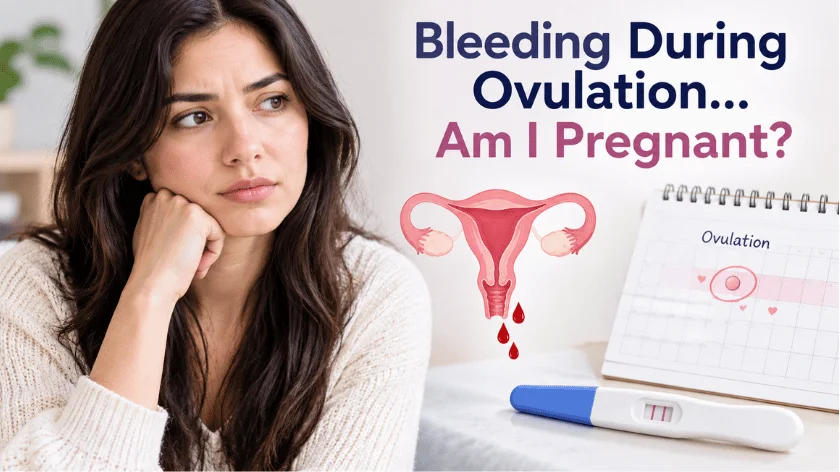
Seeing blood between periods can make you wonder whether pregnancy has already started. Bleeding during ovulation am I pregnant? Light spotting can occur because hormone levels change when an ovary releases an egg. Pregnancy is possible from sex around this time, but pregnancy-related spotting generally happens later.
If you are asking, “Bleeding during ovulation, am I pregnant?” timing matters more than blood color alone. Ovulation spotting happens around the fertile window. Pregnancy testing becomes useful later, usually around the time your next period is due.
Direct answer: Light bleeding around ovulation is usually related to ovulation rather than an existing pregnancy. Pregnancy can result from sex during this fertile period, though. Implantation-related spotting, when it occurs, happens after fertilization and later than ovulation. A home pregnancy test after your missed period gives a more useful answer.
| What you notice | What it may mean | What to do |
|---|---|---|
| Very light mid-cycle spotting | Ovulation-related spotting | Track the timing and symptoms. |
| Spotting near an expected period | Early pregnancy is one possibility. | Take a pregnancy test when appropriate. |
| Missed period | Pregnancy becomes more likely. | Take a home pregnancy test. |
| Heavy or persistent bleeding | May have another cause | Contact a healthcare professional. |
| Bleeding with severe one-sided pain | Needs prompt evaluation | Seek urgent medical care. |
| Positive test plus pain, dizziness, or bleeding | Possible pregnancy complication | Get medical care promptly. |
Key Takeaways
* Ovulation spotting is usually light and may last only one or two days. * Spotting during ovulation does not confirm pregnancy. * Sex around ovulation can result in pregnancy because this is the fertile window. * Implantation-related spotting occurs later than ovulation. * A pregnancy test is more reliable after a missed period. * Heavy bleeding, severe pain, fainting, or shoulder pain requires medical attention.
Why Can Bleeding Happen During Ovulation?
Ovulation happens when an ovary releases an egg. Hormone levels change rapidly around this stage of the menstrual cycle. These shifts can sometimes cause a small amount of bleeding or pink discharge.
Cleveland Clinic reports that light spotting can occur around ovulation. It usually lasts a day or two and remains much lighter than menstrual bleeding. You might see a few drops on underwear or blood when wiping.
Ovulation can also cause mild pelvic discomfort in some people. This discomfort is sometimes called mittelschmerz and often affects one side. Light spotting alongside mild mid-cycle discomfort can therefore fit an ovulation pattern.
Bleeding During Ovulation Am I Pregnant or Simply Ovulating?
Bleeding on your estimated ovulation day usually cannot tell you that pregnancy has occurred. Fertilization can happen after sperm meets the released egg. The fertilized egg must then continue through several stages before implantation occurs.
This timing creates an important distinction between fertility and pregnancy. You can be fertile when ovulation spotting occurs without having an established pregnancy. Sex during the preceding days or around ovulation can still lead to conception.
An egg is generally available for fertilization for about 12 to 24 hours after ovulation. Sperm can survive within the reproductive tract for several days. This creates a fertile window extending beyond the ovulation day itself.
Ovulation Spotting vs. Implantation-Related Spotting
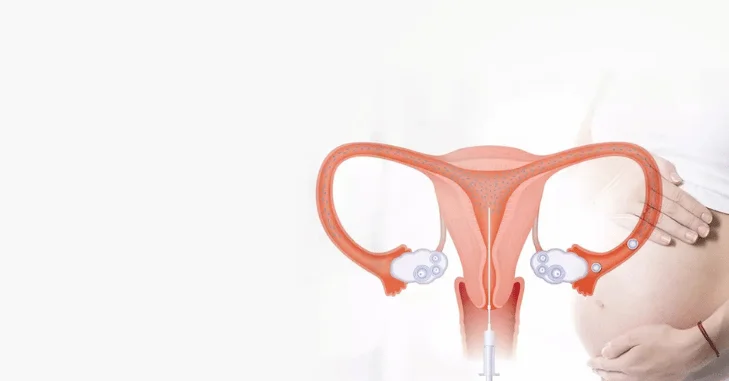
The timing of the bleeding provides one of the most useful clues. Ovulation spotting occurs around the middle portion of the cycle. Implantation-related spotting, when present, happens later after fertilization.
| Feature | Ovulation spotting | Implantation-related spotting |
|---|---|---|
| Timing | Around ovulation | Later after fertilization |
| Typical flow | Light spotting | Usually light spotting |
| Duration | Often one or two days | Usually brief |
| Pregnancy confirmed? | No | Not by spotting alone |
| Best next step | Track your cycle. | Test around a missed period. |
Color is less useful than many people assume. Both types of spotting may appear pink, red, or brown. A pregnancy test and the timing of your cycle provide stronger information than color alone.
Implantation-related bleeding is also not something every pregnant person experiences. Having no spotting does not mean pregnancy failed to occur. Likewise, spotting by itself cannot establish that implantation happened.
Can You Get Pregnant If You Are Spotting During Ovulation?
Yes, pregnancy can result from sex around the time you notice ovulation spotting. This part of the cycle overlaps with your most fertile days. The spotting itself does not make pregnancy more or less likely.
Mayo Clinic notes that pregnancy is most likely when sperm are present around ovulation. Sperm may survive for roughly three to five days in the reproductive tract. An egg remains available for fertilization for a much shorter period after its release.
This means sex several days before estimated ovulation can still result in conception. Sex around the day of ovulation can also lead to pregnancy. Spotting should not be used as birth control or as proof of fertility.
When Should You Take a Pregnancy Test?
Testing immediately when you notice ovulation spotting may be too early. Home pregnancy tests detect human chorionic gonadotropin, usually called hCG. This hormone rises after a pregnancy becomes established.
The U.S. Office on Women’s Health recommends testing from the first day of a missed period for better accuracy. Testing earlier increases the possibility of a false-negative result. Follow the specific instructions included with your test.
If the first result is negative but your period still does not arrive, test again after several days. You can also contact a healthcare professional if pregnancy remains possible. A clinician may recommend further testing based on your cycle and symptoms.
People with irregular cycles may have more difficulty deciding when to test. Ovulation does not always happen on the same calendar day each month. Tracking periods, ovulation tests, and sexual activity can provide more useful context.
What Does Normal Ovulation Spotting Look Like?
Typical ovulation spotting should be light rather than period-like. You may notice a small pink, red, or brown mark when wiping. It should not normally require the same menstrual products as a regular period.
The bleeding also tends to be short-lived. A pattern that appears around the same point in several cycles can support an ovulation explanation. Still, new or unexplained bleeding deserves attention if it continues.
Tracking the first day of each period can help you identify your usual pattern. Record spotting days, flow, pain, discharge, and other symptoms. This information can also help a clinician investigate changes.
What Else Can Cause Bleeding Between Periods?
Not every episode of mid-cycle bleeding comes from ovulation. Hormonal contraception can cause breakthrough bleeding, especially after starting or changing a method. Missed pills and emergency contraception may also alter bleeding patterns.
Infections and reproductive health conditions can cause bleeding between periods as well. Possible causes include cervical irritation, polyps, fibroids, and some sexually transmitted infections such as chlamydia and its symptoms. A healthcare professional can evaluate unexplained or recurring symptoms.
Sex can sometimes cause light bleeding because of irritation to vaginal or cervical tissue. Bleeding that repeatedly occurs after sex should still be discussed with a clinician. The cause cannot reliably be identified from appearance alone.
Healthyspire’s Women’s Health section covers reproductive care, pregnancy, hormonal health, and preventive care. Readers can use that section for related educational information. Individual symptoms should still be discussed with a qualified healthcare professional.
When Bleeding Needs Medical Attention
Seek medical advice when unexpected bleeding is persistent, recurring, or significantly different from your normal pattern. Heavy bleeding also deserves evaluation. Pregnancy combined with vaginal bleeding should be discussed with a healthcare professional.
More urgent symptoms include severe abdominal or pelvic pain, fainting, marked dizziness, or shoulder pain. These symptoms can occur with an ectopic pregnancy, which develops outside the uterus. An ectopic pregnancy can become a life-threatening emergency.
Do not rely on spotting patterns to exclude this condition. Get prompt medical care if you have a positive pregnancy test with significant pain or bleeding. Emergency symptoms warrant immediate evaluation in the United States.
What Should You Do Next?
Start by identifying where you are in your menstrual cycle. Note when your last period began and when the spotting appeared. Also record whether you had unprotected vaginal sex during your fertile window.
Next, wait until pregnancy testing can provide useful information. Testing around or after your expected period is generally more reliable than testing during ovulation. Repeat a negative test later if your period remains absent.
Contact an OB-GYN or other healthcare professional when bleeding is unusual for you. You should also seek advice for persistent spotting or significant pain. Healthyspire provides general educational information and does not replace individualized medical care.
Frequently Asked Questions
Bleeding During Ovulation: Am I Pregnant?
Not necessarily. Light bleeding around ovulation is more commonly associated with hormonal changes surrounding egg release. Pregnancy remains possible if you had sex during your fertile window.
A pregnancy test taken immediately around ovulation is generally too early to answer the question reliably. Wait until around your expected period and follow the test instructions. Repeat testing may be appropriate when a period remains absent.
Does bleeding on ovulation day mean the egg was fertilized?
No, bleeding cannot show whether fertilization occurred. Fertilization happens when sperm successfully joins an egg after ovulation. Most people cannot feel or otherwise identify the moment fertilization happens.
Spotting may instead reflect hormonal changes occurring around egg release. The presence or absence of spotting does not confirm successful conception. Pregnancy testing later in the cycle provides better evidence.
How many days after ovulation can pregnancy spotting happen?
Pregnancy-related spotting, when it occurs, happens after ovulation and fertilization rather than on the ovulation day itself. Mayo Clinic describes implantation-related spotting as occurring around the time an expected period approaches. Individual cycle timing varies.
You should not use bleeding alone to determine when implantation occurred. Many pregnancies have no noticeable implantation spotting. A properly timed pregnancy test is more informative.
Can ovulation bleeding look like a period?
Ovulation spotting is usually much lighter than a normal menstrual period. It may involve several drops or light staining rather than continuous menstrual flow. Bleeding that resembles a full period is less typical for ovulation spotting.
Contact a healthcare professional if mid-cycle bleeding becomes heavy or continues. Evaluation is also sensible when the pattern suddenly changes. Other conditions can cause bleeding between periods.
Can spotting during ovulation mean I am fertile?
Spotting can coincide with ovulation, which occurs during the fertile portion of your cycle. It cannot prove that ovulation happened, however. Other signs and testing methods can provide additional information.
Changes in cervical mucus and ovulation predictor kits can help estimate fertile days. Cycle tracking can also identify recurring patterns. None of these methods confirms pregnancy.
Can I get a positive pregnancy test during ovulation?
A new pregnancy caused by intercourse during the current ovulation period would generally be too early for a urine test. The body needs time before detectable hCG levels develop. Testing immediately after sex or ovulation can therefore produce an unhelpful negative result.
A positive result during apparent ovulation could indicate that conception happened earlier than estimated. Cycle dates can be inaccurate because ovulation timing varies. Contact a healthcare professional if test results and bleeding patterns seem inconsistent.
The Bottom Line
If you are wondering, “Bleeding during ovulation, am I pregnant?” spotting alone cannot provide the answer. Mid-cycle bleeding is usually more consistent with ovulation than pregnancy-related spotting. Pregnancy is still possible when sex occurs during the fertile window.
Use your cycle timing and a properly timed pregnancy test instead of relying on blood color. Seek medical advice for unexplained, recurring, or heavy bleeding. Get urgent care for severe pain, fainting, dizziness, or concerning bleeding with a positive pregnancy test.