
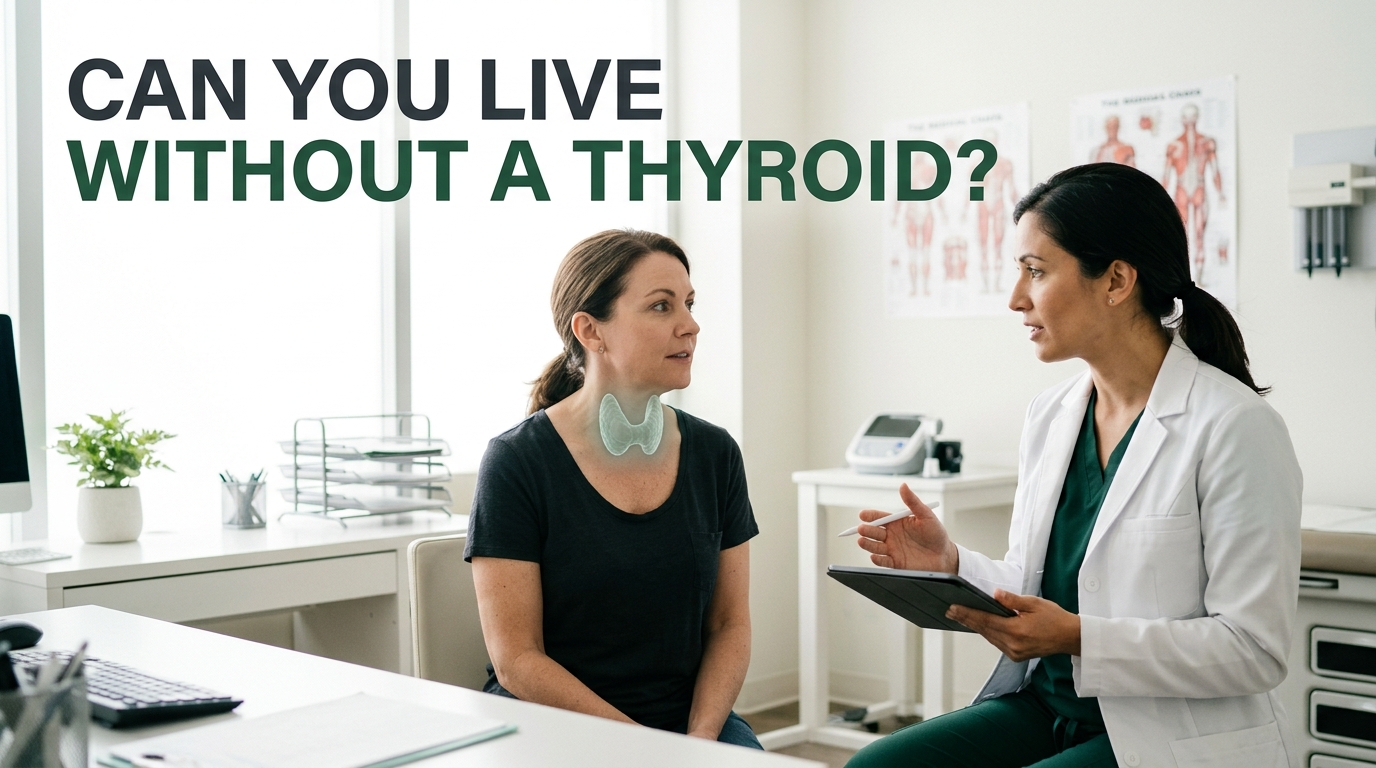
Yes, you can live without a thyroid, but your body still needs thyroid hormone. After total thyroid removal, daily replacement medicine usually becomes lifelong treatment. With the right dose and regular monitoring, most people can live active, healthy lives.
Direct answer: Can you live without a thyroid? Yes, most people can live normally after complete thyroid removal. They need prescribed thyroid hormone replacement because their bodies can no longer make enough thyroid hormone. Regular blood tests help keep the medication dose within the right range.
| Question | Practical answer |
|---|---|
| Can you live without a thyroid? | Yes, with appropriate thyroid hormone replacement after total removal |
| Is medication lifelong? | Usually yes after a total thyroidectomy |
| What medication is commonly used? | Levothyroxine, a synthetic form of thyroid hormone |
| Are blood tests needed? | Yes, TSH and sometimes free T4 help guide treatment |
| Can you exercise normally? | Usually yes after surgical recovery and medical clearance |
| Is weight gain guaranteed? | No, although low thyroid hormone levels can affect weight |
| Can pregnancy be healthy? | Yes, but thyroid levels need closer monitoring |
| What if only part was removed? | The remaining tissue may produce enough hormone |
Key Takeaways
- A person can live without the entire gland when missing thyroid hormone is replaced.
- Total thyroidectomy usually means taking levothyroxine for life.
- Partial thyroid removal does not always require lifelong medication.
- Blood tests help doctors adjust treatment when hormone needs change.
- Persistent fatigue, cold intolerance, constipation, or weight changes deserve medical review.
- Pregnancy, supplements, medicines, and major weight changes can affect treatment needs.
- Never stop or change prescribed thyroid medication without medical guidance.
What Happens When Your Thyroid Is Removed?
Your thyroid is a butterfly-shaped gland near the front of your neck. It produces hormones that help regulate energy use, temperature, heart rate, and other functions. These hormones affect tissues throughout your body.
A total thyroidectomy removes the whole gland. A lobectomy or partial thyroidectomy leaves some functioning thyroid tissue behind. The amount removed determines whether the remaining tissue can continue producing natural hormone.
The American Thyroid Association says complete removal requires lifelong thyroid hormone supplementation. After partial removal, the remaining tissue may produce enough hormone. Your doctor can determine that through symptoms and laboratory testing.
Can You Live Without a Thyroid and Still Feel Normal?
Many people return to normal work, exercise, family activities, and daily routines after recovery. The missing gland itself does not prevent an active life. The key is replacing the hormone the gland used to produce.
Levothyroxine replaces thyroxine (T4). The body uses T4 and converts some of it into the active thyroid hormone, T3. The goal is to restore normal hormone activity, not provide a stimulant.
Finding the right dose can require adjustments. Age, body weight, pregnancy, health conditions, and other medicines can change hormone needs. Regular follow-up helps your clinician respond to those changes.
Why Would Someone Need Their Thyroid Removed?
Doctors may recommend surgery for thyroid cancer, large goiters, suspicious nodules, or certain cases of hyperthyroidism. Surgery may remove part or all of the gland. The recommended procedure depends on the diagnosis and individual risks.
According to the Mayo Clinic, thyroid cancer is a common reason for thyroidectomy. Large goiters can also cause swallowing or breathing problems. Certain people with overactive thyroid disease may choose surgery when other treatments are unsuitable.
Surgical decisions should be individualized. Removing less tissue can sometimes preserve hormone production. Some thyroid cancers can also be treated with a lobectomy rather than complete removal.
What Medication Do You Need After Total Thyroidectomy?
Most people receive levothyroxine after complete removal. It replaces the thyroid hormone that the body can no longer produce. Treatment is usually taken once each day.
MedlinePlus advises taking levothyroxine exactly as prescribed. It is commonly taken on an empty stomach before breakfast. Consistent timing helps maintain predictable absorption.
Calcium, iron, antacids, and some supplements may reduce absorption. Your pharmacist or clinician may recommend separating them from your thyroid medicine. Do not change your schedule without checking your instructions first.
How Are Thyroid Hormone Levels Monitored?

Doctors commonly use a TSH blood test when adjusting levothyroxine. Free T4 testing may also provide useful information. Your treatment plan can differ if thyroid cancer affects the desired TSH level.
The American Thyroid Association recommends repeat blood testing after starting or changing treatment. Testing often occurs about six to eight weeks after a dose change. Once stable, many patients need less frequent monitoring.
Symptoms matter alongside laboratory numbers. Fatigue or anxiety can have many possible causes besides thyroid hormone levels. HealthySpire’s guide to nervous system dysregulation explains several overlapping symptoms and possible causes.
What Happens If You Do Not Take Thyroid Medicine?
Without thyroid hormone, your body cannot make enough thyroid hormone on its own. Skipping replacement repeatedly can eventually cause significant hypothyroidism. The change usually develops gradually because thyroid hormone remains in the body for some time.
Low hormone levels can cause fatigue, cold sensitivity, dry skin, constipation, and weight gain. Concentration and mood may also change. Severe untreated hypothyroidism can become medically dangerous.
Do not intentionally stop levothyroxine to test whether you still need it. After complete removal, the missing gland cannot restart hormone production. Any medication changes should be managed with your healthcare professional.
Will You Gain Weight Without a Thyroid?
Weight gain is not guaranteed after thyroid removal. Weight can increase when replacement hormone levels remain too low. Many other factors also affect body weight.
The goal of levothyroxine treatment is restoring appropriate hormone levels. Once treatment is stable, weight management still depends on diet, activity, sleep, medications, and other health factors. Thyroid medicine should never be taken in excessive doses for weight loss.
Exercise can remain part of a healthy routine after your surgeon clears you. HealthySpire’s article on sweating and calorie burn explains why sweating alone does not measure fat loss. Focus on sustainable habits instead of trying to manipulate thyroid medication.
What Symptoms Suggest Your Dose May Need Review?
Too little thyroid hormone can slow down normal body processes. Symptoms can include tiredness, sensitivity to cold, constipation, dry skin, and unexplained weight gain. Some people also notice slower thinking or reduced exercise tolerance.
Too much replacement hormone can cause different problems. Possible symptoms include a racing heartbeat, shakiness, sweating, anxiety, and unexplained weight loss. These symptoms should prompt a conversation with your clinician.
Constipation has many causes and does not automatically mean your dose is wrong. HealthySpire’s guide to how long you can go without pooping explains when bowel symptoms require medical evaluation. Persistent symptoms deserve assessment rather than self-adjusting thyroid medication.
What Is Recovery Like After Thyroid Removal?
Short-term recovery depends on the procedure and your general health. You may experience neck soreness, tightness, swallowing discomfort, and temporary hoarseness. Many people return gradually to their usual activities.
Mayo Clinic advises avoiding strenuous activity during early recovery. Your surgeon will give specific instructions based on your operation. Follow those instructions even as you start to feel better.
The nearby parathyroid glands help regulate blood calcium. Surgery can sometimes disrupt their function and lower calcium levels. Tingling, muscle cramps, or unusual twitching after surgery require prompt medical advice.
What If Only Half of the Thyroid Is Removed?
Removing one lobe does not always eliminate natural hormone production. The remaining lobe may produce enough hormone for your body’s needs. Some patients therefore avoid lifelong replacement therapy.
Other people develop hypothyroidism after partial removal. Blood tests help determine whether the remaining gland keeps hormone levels adequate. Monitoring may continue even when medication is not initially necessary.
A 2026 American Thyroid Association patient summary discussed predicting replacement needs after partial thyroid removal. It confirms that medication needs vary by patient. Follow-up testing remains important after either partial or complete surgery.
Can You Get Pregnant Without a Thyroid?
Pregnancy is possible after thyroid removal. Adequate thyroid hormone levels are especially important during pregnancy. Treatment therefore requires closer medical monitoring.
Thyroid hormone requirements can change after conception. People taking levothyroxine should contact their clinician promptly after learning they are pregnant. Preconception planning can also help establish appropriate hormone levels beforehand.
Do not change your medication independently during pregnancy. Your obstetric and thyroid care teams can coordinate testing and dose adjustments. Proper treatment supports both maternal health and fetal development.
Tips for Living Well After Thyroid Removal
Daily routines can make long-term treatment easier. Consistency is more useful than constantly changing medication timing or diet. Keep your healthcare team informed about new medicines and supplements.
Practical habits include:
- Take levothyroxine exactly as prescribed.
- Take it under consistent conditions each day.
- Keep scheduled blood tests and follow-up appointments.
- Tell clinicians about calcium, iron, antacids, and supplements.
- Recheck treatment after significant weight or medication changes.
- Contact your clinician when planning or confirming pregnancy.
- Keep extra medication available before travel.
- Never use extra thyroid hormone to lose weight.
Treatment should fit your medical history rather than someone else’s routine. Thyroid cancer patients can have different TSH targets from other patients. An endocrinologist can explain the goals that apply to you.
When Should You Contact a Doctor?
Contact your healthcare professional if symptoms return or persist. New palpitations, marked fatigue, unexplained weight changes, or worsening cold intolerance deserve review. Medication changes or new supplements can also justify repeat testing.
After surgery, contact your surgical team if neck swelling increases or you have wound concerns. Persistent swallowing problems or significant voice changes also need evaluation. Tingling around your mouth or fingers can indicate low calcium.
Seek emergency care for serious breathing difficulty or rapidly increasing neck swelling after recent surgery. Those symptoms can represent urgent postoperative complications. Follow the discharge instructions your surgical team provides.
Frequently Asked Questions
Can you live without a thyroid for your entire life?
Yes, many people live for decades after complete thyroid removal. Lifelong thyroid hormone replacement usually provides the hormone their bodies can no longer produce. Regular monitoring helps keep treatment appropriate as health needs change.
Do you need medication forever after thyroid removal?
After a total thyroidectomy, lifelong replacement is generally required. Partial removal is different because remaining tissue can sometimes make enough hormone. Blood tests determine whether you need additional treatment.
Can you survive without thyroid medication?
Long-term survival without thyroid hormone after total removal is unsafe. Severe untreated hypothyroidism can eventually cause life-threatening complications. Never stop prescribed replacement therapy without guidance from your healthcare professional.
Can you exercise after your thyroid is removed?
Most people can return to exercise after recovering from surgery. Your surgeon may temporarily restrict heavy lifting or strenuous activity. You can usually resume normal exercise once you’re healed and your hormone levels are stable.
Is there a special diet for people without a thyroid?
Most people don’t need a special diet after thyroidectomy. Food and supplements can still affect levothyroxine absorption. Ask your clinician or pharmacist about appropriate timing for calcium, iron, and other products.
Does thyroid removal shorten life expectancy?
Thyroid removal itself does not automatically shorten life expectancy. Long-term health depends on the underlying condition and appropriate hormone replacement. Cancer diagnosis, other diseases, and adherence to treatment can also affect individual outcomes.
The Bottom Line
For most people, living without the gland is manageable when thyroid hormone is replaced correctly. Medication and routine blood testing become important parts of long-term care. Many people return to ordinary work, exercise, travel, and family life.
Total removal usually requires lifelong levothyroxine, while partial surgery may not. Symptoms and laboratory results help guide treatment over time. Your healthcare professional should manage any medication changes.
HealthySpire provides educational health information and does not replace personal medical care. Discuss thyroid surgery, medication, pregnancy, or persistent symptoms with a qualified healthcare professional. Recommendations can vary based on your diagnosis and medical history.