
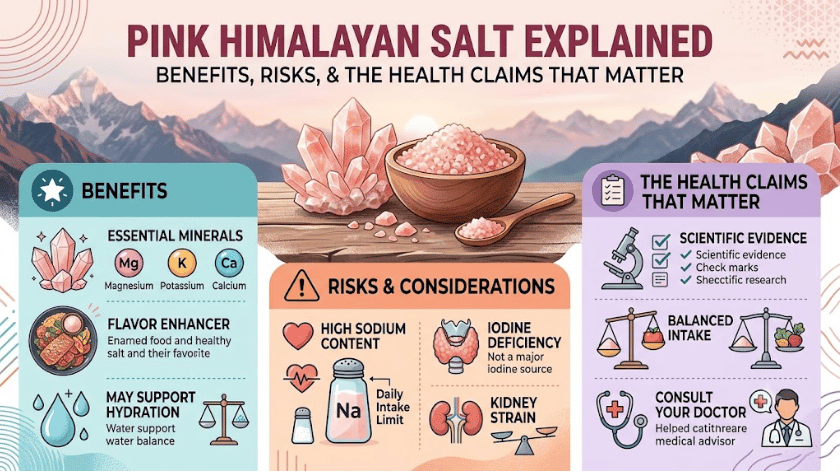
Pink Himalayan salt is widely promoted as a healthier and more natural replacement for ordinary table salt. Its color, trace minerals, and less-refined appearance make it appealing, but most bold health claims go beyond the available evidence.
The practical answer is simple: pink Himalayan salt can add color, texture, and flavor to food, but it is still primarily sodium chloride. It does not provide enough trace minerals to transform your diet, and excessive use carries the same sodium-related risks as other salts.
| Quick fact | What to know |
| Main component | Sodium chloride |
| Pink color | Comes from small amounts of minerals and other natural compounds |
| Major nutritional advantage | None proven over ordinary salt |
| Iodine content | Usually little or none unless the label says iodized |
| Best use | Flavor, texture, finishing dishes, and visual presentation |
| Main concern | Excess sodium intake |
| Healthier than table salt? | Not in a meaningful nutritional sense |
Key takeaways
- Pink salt contains trace minerals, but the amounts are generally too small to offer a major health benefit.
- Its sodium content and health risks are broadly similar to those of ordinary salt.
- It is usually not iodized, so it may not support iodine intake as iodized table salt does.
- The grain size can change how much fits into a teaspoon, but it does not make the salt sodium-free.
- You can use it for flavor while keeping your total daily sodium intake in check.
What Is Pink Himalayan Salt?
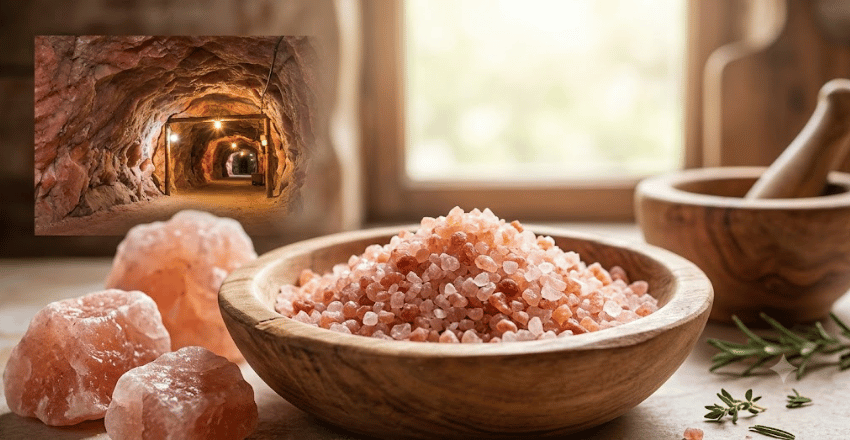
Pink Himalayan salt is a rock salt commonly mined from deposits in Pakistan near the Himalayan region. It is usually sold as fine crystals, coarse crystals, flakes, or large cooking blocks. Like table salt, it consists mainly of sodium chloride. Its pink or reddish appearance comes from naturally occurring trace substances, including small amounts of iron and other minerals.
One analysis of commercially available pink salts found that their mineral composition varied between products. The study also concluded that a person would need to consume an unsafe amount of sodium to obtain meaningful quantities of many minerals from the salt. This makes it better viewed as a culinary ingredient, rather than a mineral supplement.
Is Pink Himalayan Salt Healthier Than Regular Salt?
For most people, it is not meaningfully healthier than table salt.
Both varieties supply sodium, which the body needs for fluid balance, muscle activity, and nerve function. The body requires only a modest amount, and excessive intake can contribute to high blood pressure and cardiovascular risk. The World Health Organization recommends that adults consume less than 2,000 milligrams of sodium per day.
That equals less than 5 grams of salt, or slightly under one teaspoon from all dietary sources. The U.S. Food and Drug Administration uses a Daily Value of 2,300 milligrams for sodium on food labels. Packaged foods providing 20% or more of that value per serving are considered high in sodium.
A coarse salt may appear lower in sodium per teaspoon because its larger crystals leave more air between them. By weight, however, different culinary salts remain much more alike than their marketing may suggest.
Pink salt versus iodized table salt
| Feature | Pink salt | Iodized table salt |
| Main ingredient | Sodium chloride | Sodium chloride |
| Trace minerals | Present in tiny amounts | Usually minimal |
| Added iodine | Usually absent | Commonly added |
| Texture | Fine or coarse | Usually fine |
| Flavor | Mild mineral or salty taste | Clean salty taste |
| Best reason to choose it | Texture and appearance | Reliable iodine source |
Iodine is needed to produce thyroid hormones. Salt contributes iodine only when its package specifically identifies it as iodized. The National Institutes of Health notes that specialty salts, including Himalayan varieties, usually contain little or no iodine. By comparison, one-quarter teaspoon of iodized salt may provide about 75 micrograms.
You do not have to get iodine from salt. Seafood, dairy products, eggs, seaweed, and some fortified foods can also provide it. Still, replacing all iodized salt with a non-iodized product may matter if your diet contains few other iodine sources.
7 Pink Himalayan Salt Health Facts
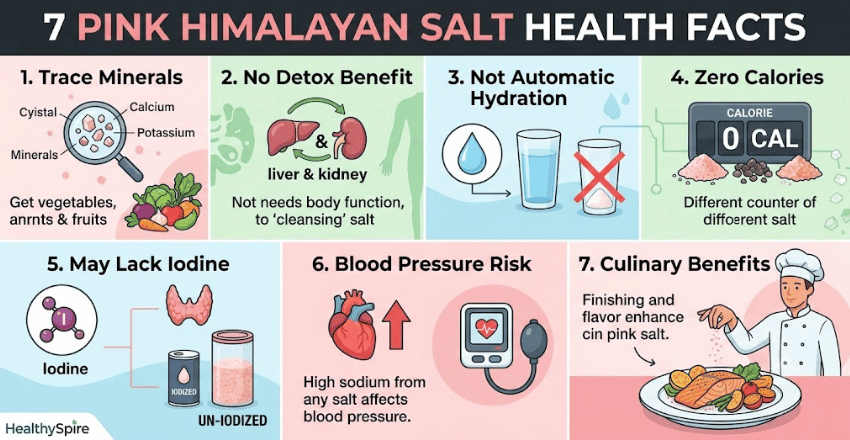
1. It contains trace minerals
Laboratory testing can detect calcium, potassium, magnesium, iron, and other elements in some samples. The exact mix varies by source and brand. The word “trace” is important. These substances occur in amounts too small to make salt an efficient source of daily minerals.
You would gain more useful nutrients, without a large sodium dose, from foods such as vegetables, fruit, beans, nuts, dairy products, and whole grains. For example, learning whether seaweed is good for you can help you find nutrient-rich foods that naturally provide important vitamins and minerals. Explore HealthySpire’s nutrition guidance for more ways to build a balanced diet.
2. The minerals do not make it a detox product
Claims that specialty salt removes toxins from the body lack good clinical support. Your liver, kidneys, lungs, digestive system, and skin already manage waste and normal metabolic by-products.
Drinking concentrated salt water can increase sodium intake and may cause thirst, nausea, bloating, or fluid retention. It should not be treated as a cleansing routine.
3. It does not automatically improve hydration
Sodium is an electrolyte, and people can lose it through heavy sweating. That does not mean everyone needs salted water. Most people obtain ample sodium through normal meals. Water is usually sufficient for ordinary daily hydration.
Electrolyte replacement may be useful after prolonged exercise, significant sweating, vomiting, or diarrhea, but the correct mixture matters. A homemade drink containing too much salt can work against your goals. People with medical conditions should ask a qualified clinician before increasing electrolytes.
4. It does not contain fewer calories
Salt contains no meaningful calories, whether it is white, pink, flaky, fine, or coarse. Switching salts will not directly cause weight loss. Any change on the scale after a salty meal is more likely connected to temporary water retention than body-fat gain.
Weight management depends more on total eating patterns, physical activity, sleep, health conditions, and sustainable habits. HealthySpire’s fitness resources provide a broader place to explore movement and exercise topics.
5. It may lack iodine
This is one of the most useful differences to understand. Iodized table salt was developed as a practical way to reduce iodine deficiency. Specialty salts are not reliable iodine sources unless their labels clearly state that iodine has been added.
Adults generally need 150 micrograms of iodine per day, according to the FDA Daily Value. Requirements can differ during pregnancy and breastfeeding. People who avoid dairy, seafood, eggs, and iodized products may need to pay closer attention to their intake. Too much iodine can also be harmful, so supplements should not be taken casually.
6. Too much can raise blood pressure
The body needs sodium, but regularly consuming more than necessary can increase blood pressure in many people. High blood pressure raises the risk of heart disease and stroke. WHO advises reducing sodium intake because doing so can lower blood pressure and cardiovascular risk.
This concern applies whether the sodium comes from pink crystals, sea salt, kosher salt, restaurant food, sauces, snacks, or packaged meals. Changing the color of the salt does not remove the sodium. People with high blood pressure, heart disease, kidney disease, liver disease, or a prescribed low-sodium diet should follow their clinician’s guidance.
7. Its strongest benefits are culinary
The most credible advantages involve cooking rather than medicine. Coarse crystals add crunch to roasted vegetables, salads, eggs, fish, and baked goods. Fine grains dissolve more evenly in soups, sauces, and dough. A small finishing pinch can make a dish taste more seasoned without requiring repeated salting. Its color can also improve food presentation. Those are valid reasons to buy it, even without treating it as a wellness product.
How to Use It Without Overdoing Sodium
The biggest sources of sodium in many diets are packaged foods, restaurant meals, processed meats, sauces, instant noodles, salty snacks, and ready-made soups. The salt shaker is only part of the picture.
Try these practical steps:
- Read the sodium line on labels. Compare similar products before buying.
- Measure instead of pouring freely. Small amounts are easier to track.
- Taste food before adding more. Habit often drives extra seasoning.
- Use herbs, acids, and spices. Lemon, vinegar, garlic, cumin, pepper, and fresh herbs add flavor without sodium.
- Rinse canned foods. Rinsing beans and vegetables can remove some surface sodium.
- Choose unsalted basics. Start with plain grains, proteins, nuts, and vegetables.
- Use coarse crystals as a finish. A little texture on the surface may make the taste more noticeable.
For wider information on making sensible health decisions, visit HealthySpire’s health section.
Who Should Be More Careful?

Most healthy adults can use pink salt in modest amounts as part of an otherwise balanced diet. Extra caution may be needed for people who have:
- High blood pressure
- Heart failure or cardiovascular disease
- Chronic kidney disease
- Liver disease with fluid retention
- A history of swelling or sodium sensitivity
- Instructions to follow a low-sodium diet
- Concerns about iodine deficiency
- Medications that affect fluid or electrolyte balance
Children also need less sodium than adults. Salt should not be added freely to an infant’s food.
A clinician or registered dietitian can help set an appropriate target based on your health, medications, activity level, and overall diet.
Conclusion
Pink Himalayan salt is attractive, flavorful, and useful in the kitchen. It is not a proven detoxifier, hydration cure, weight-loss aid, or rich mineral supplement. Choose it because you enjoy its taste or texture, not because the color suggests it is sodium-free or medicinal. Measure it carefully, consider your iodine intake, and pay attention to sodium across your full diet.
Healthy eating depends on the overall pattern of your meals. One specialty ingredient cannot outweigh a diet built around heavily processed, high-sodium foods. This article provides general educational information and is not a substitute for individualized medical or nutritional advice. Our related guide, Yellow Dragon Fruit Benefits, goes further into this.
If you want to know about Smoothies for Diabetics then visit our Nutrition category.
Frequently Asked Questions
It supplies sodium and contains trace minerals, but research has not shown a meaningful health advantage over ordinary salt. Its clearest benefits are flavor, texture, and appearance.
It can be used daily when your total sodium intake stays within an appropriate limit. Daily use does not make unlimited use safe.
No salt is a treatment for high blood pressure. Because it contains sodium, excessive intake can make blood-pressure control harder.
You can use it for cooking, but check whether you receive enough iodine from other foods. Most specialty salts are not iodized.
Sodium replacement may be useful after major fluid and electrolyte losses. Most people do not need to add salt to ordinary drinking water.
Neither has a major nutritional advantage. Choose based on grain size, taste, price, and cooking purpose while limiting total sodium.