

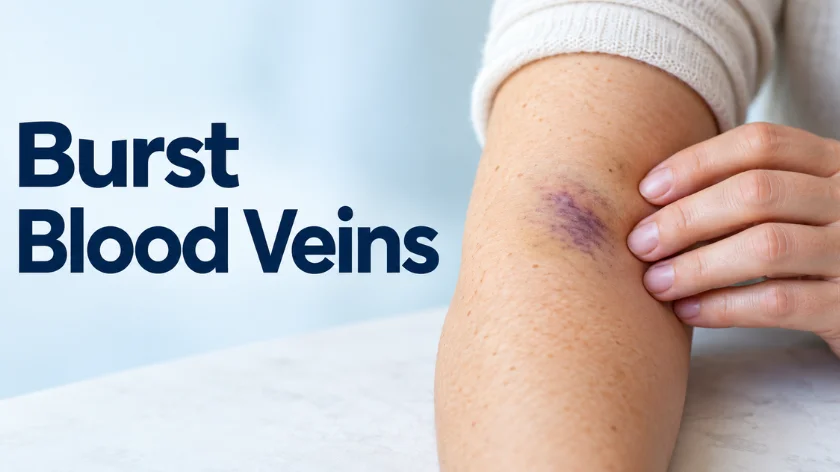
People often search for burst blood veins after noticing a bruise, red dots, or a suddenly red eye. Most small broken vessels are harmless and heal without medical treatment. Still, the location and accompanying symptoms can change what the finding means. More from us: Bump on Tongue.
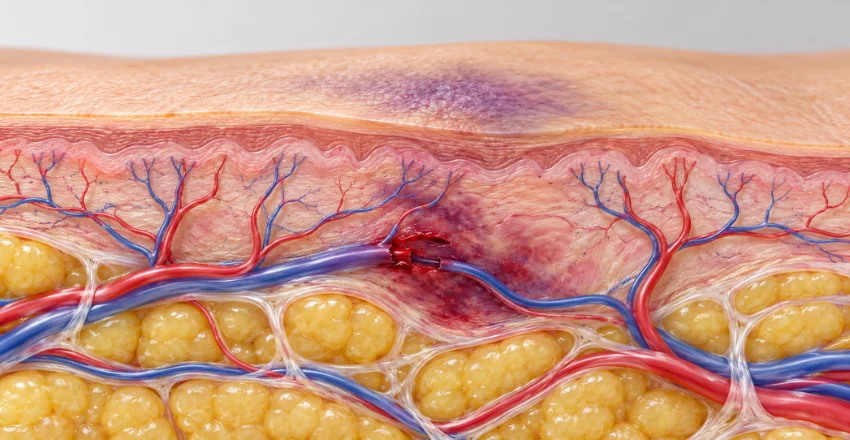
A minor injury can break tiny vessels beneath your skin, allowing blood to collect nearby. Coughing, straining, medications, aging skin, or certain medical conditions can also contribute. Unexplained or repeated bleeding deserves medical attention rather than repeated home treatment.
Direct answer: “Burst blood veins” usually describes a small broken vessel that leaks blood into nearby tissue. On skin, this may cause bruises, petechiae, or purpura. In the eye, it may cause a red patch. Heavy varicose-vein bleeding, vision changes, or neurological symptoms need urgent care.
Broken Blood Vessels at a Glance
| Finding | What it may look like | Common explanation | Typical next step |
|---|---|---|---|
| Bruise | Blue, purple, brown, or yellow patch | Injury causing bleeding under skin | Ice, rest, elevation |
| Petechiae | Tiny red or purple pinpoint spots | Small capillary bleeding | Medical review if unexplained |
| Purpura | Larger red or purple patches | Bleeding beneath skin | Evaluation if new or widespread |
| Spider veins | Fine red, blue, or purple lines | Enlarged surface vessels | Usually nonurgent |
| Eye hemorrhage | Bright red patch on eye white | Broken conjunctival vessel | Usually observation |
| Bleeding varicose vein | Active bleeding from a bulging leg vein | Ruptured superficial vein | Emergency care if heavy |
Medical sources distinguish ordinary bruises from petechiae, purpura, and larger bleeding areas. MedlinePlus notes that these patterns can reflect different amounts of bleeding beneath the skin.
Key Takeaways
- Most small bruises follow minor trauma and fade as your body reabsorbs the blood.
- Petechiae are tiny red or purple spots caused by bleeding from very small vessels.
- A bright red eye patch may be a subconjunctival hemorrhage and often clears without treatment.
- Blood thinners, platelet problems, and some illnesses can make bruising or bleeding easier.
- A bleeding varicose vein can become serious and requires prompt medical attention.
- Vision loss, severe headache, weakness, confusion, or uncontrolled bleeding require emergency care.
What Do Burst Blood Veins Mean?
The phrase “burst blood veins” is not a specific medical diagnosis. People may use it for broken capillaries, bruising, petechiae, spider veins, or bleeding from larger veins. Identifying the location and appearance helps narrow the likely explanation.
A true bruise forms after small vessels break beneath intact skin. Blood becomes trapped in the surrounding tissue, creating visible discoloration. Most uncomplicated bruises gradually change color before fading. Visible spider veins are different from ordinary bruises. They are widened surface vessels rather than fresh pools of blood beneath the skin. They commonly appear on the face or legs and are often harmless.
7 Common Causes of Broken or Leaking Vessels
1. Minor Injury or Pressure
Bumps, falls, sports injuries, or pressure against the skin can break small vessels. Blood then leaks into the surrounding tissue, forming a bruise. Larger impacts can produce deeper swelling or a hematoma. For a routine bruise, early cooling can reduce swelling and discomfort. The Mayo Clinic recommends elevating the area and applying a wrapped ice pack after a minor injury. Seek care when swelling or pain becomes severe.
2. Coughing, Sneezing, Vomiting, or Straining
Strong pressure changes can sometimes rupture delicate capillaries. This may happen after forceful coughing, vomiting, crying, or physical straining. The resulting marks are often small and may disappear on their own. Similar pressure can break a vessel on the eye’s surface.
Mayo Clinic lists coughing, sneezing, vomiting, and straining among possible triggers. The resulting red patch is called a subconjunctival hemorrhage.
3. Aging and Thinner Skin
Bruising often becomes easier as people age. Skin becomes thinner and loses some protective fatty tissue around surface vessels. Smaller impacts may then create larger or more noticeable marks. Age alone does not explain every new bruising pattern. Large, frequent, or unexplained bruises should be discussed with a healthcare professional. A sudden change deserves particular attention.
4. Medicines That Affect Bleeding
Anticoagulants and antiplatelet medicines can increase bruising or prolong bleeding after small injuries. Aspirin and some anti-inflammatory medicines may also affect clotting. Corticosteroids can thin the skin, making it easier to bruise.
Do not stop a prescribed medicine because bruising appears. Discuss the change with the clinician who prescribed your treatment. Medication changes should be based on your medical history and bleeding risk.
Platelets help damaged vessels form clots and stop bleeding. HealthySpire explains platelet size and related laboratory findings in its MPV blood test results guide. Abnormal bruising may prompt a clinician to review platelet counts and other blood tests.
5. Platelet or Clotting Problems
Unexplained bruises or pinpoint spots can sometimes occur when platelet levels are low. Clotting disorders can also make minor vessel damage more noticeable. Bleeding gums or frequent nosebleeds may appear alongside skin findings.
These symptoms do not identify a single disease on their own. Clinicians may use a complete blood count and clotting tests when the pattern is concerning. Your medication history and family history also provide important clues.
6. Skin and Blood Vessel Conditions
Rosacea can enlarge small facial vessels, making them more visible. Chronic venous insufficiency can increase pressure in the lower-leg vessels. Over time, this pressure may contribute to skin discoloration and fragile capillaries.
Inflammation can also affect smaller vessels in the leg. HealthySpire’s guide to Disney rash and exercise-induced vasculitis explains one example. A new rash still needs proper evaluation when its cause is uncertain.
7. Varicose Veins
Varicose veins are enlarged, twisted veins that usually develop in the legs. They may cause aching, swelling, itching, skin changes, or visible bulging. Most do not cause dangerous complications. A vein near the skin can occasionally bleed after minor trauma. Cleveland Clinic advises prompt care for bleeding varicose veins. Heavy bleeding warrants emergency assistance.
The U.S. National Heart, Lung, and Blood Institute treats bleeding from varicose veins as a medical emergency. Call 911 for uncontrolled or substantial bleeding. Do not rely on home observation when active bleeding continues.
What Does a Broken Vessel in the Eye Mean?
A bright red patch on the white of your eye can look alarming. It may be a subconjunctival hemorrhage caused by a tiny ruptured vessel. Most cases do not affect vision and are clear as the blood is absorbed. Minor trauma, eye rubbing, coughing, sneezing, vomiting, or straining can trigger an episode. High blood pressure and blood-thinning medicines may also increase risk.
Repeated episodes can justify checking for underlying factors. Eye pain or vision changes are different warning signs. An eye injury also deserves prompt assessment. Mayo Clinic recommends medical evaluation when these symptoms accompany eye redness.
When Are Red or Purple Skin Spots Concerning?
Petechiae usually appear as tiny red or purple dots. Purpura forms larger areas, while ecchymosis describes broader bruising. These findings involve blood leaking beneath the skin. An isolated bruise after a known bump is usually less concerning. Widespread spots without an injury require more attention.
Fever, bleeding gums, dizziness, or blood in urine or stool increases the need for medical evaluation. A clinician may examine the skin and ask about medications or recent illnesses. Blood testing can assess platelets and other possible bleeding problems. Testing depends on your symptoms and medical history.
What Can You Safely Do at Home?
Minor bruises often improve with simple care. Protect the area from another injury and rest the affected body part. Elevation may help reduce swelling. A wrapped ice pack can be used during the first day or two. Never place ice directly against your skin. Mayo Clinic suggests applying wrapped ice for about 20 minutes at a time.
Do not repeatedly massage a newly bruised area. Avoid changing prescribed blood thinners without medical guidance. Persistent or worsening symptoms need professional evaluation.
When Should You See a Doctor?
Schedule medical care for bruising without a clear cause. Frequent large bruises also deserve assessment. The same applies when bleeding begins suddenly after a medication change. Seek care if skin bleeding lasts longer than expected or keeps returning. Blood in urine or stool, bleeding gums, or repeated nosebleeds need attention. Severe pain or major swelling also changes the level of concern.
For related symptom guidance, HealthySpire’s general health section covers blood tests, circulation concerns, and other everyday medical questions. Online information can help you prepare for care. It cannot determine the cause of unexplained bleeding.
When Is It an Emergency?
Call 911 for heavy or uncontrolled bleeding from a varicose vein. Apply firm direct pressure while emergency help is being arranged. Raising the affected leg can also reduce venous pressure. Seek emergency care for sudden weakness, trouble speaking, severe confusion, or a new, intense headache. New major vision loss also requires urgent evaluation.
These symptoms can signal problems far beyond a minor surface vessel. Chest pain or sudden breathing difficulty also needs emergency assessment. Do not assume these symptoms come from visible veins or ordinary bruising. Serious vascular conditions require rapid diagnosis.
Frequently Asked Questions
Are burst blood veins dangerous?
Most burst blood vessels involving tiny surface vessels are not dangerous. A routine bruise or uncomplicated eye hemorrhage often resolves with time. Active varicose-vein bleeding or serious accompanying symptoms require urgent care.
How long does a broken blood vessel take to heal?
Many ordinary bruises fade within about two weeks. Larger or deeper bruises may take longer to fade. Healing time depends on the injury, location, age, and medications.
Can high blood pressure cause broken vessels?
High blood pressure can be associated with certain vessel problems, including repeated eye hemorrhages. Yet visible bruising alone does not prove that your blood pressure is high. A measured blood pressure reading is needed to assess this.
Can stress make blood vessels burst?
Emotional stress alone is not a usual direct cause of ordinary bruising. Straining, vomiting, coughing, or other physical pressure can rupture small vessels. Repeated unexplained bleeding should not automatically be attributed to stress.
Should I worry about unexplained bruising?
You may get a small bruise without remembering an injury. Frequent, sudden, or unusually large bruises deserve medical discussion. Bleeding gums, nosebleeds, or other bleeding increase concern.
The Bottom Line
A broken vessel can mean different things depending on where it occurs. Minor bruises and uncomplicated eye hemorrhages often heal without specific treatment. Widespread, unexplained, repeated, or actively bleeding areas need closer attention.
Look at the overall symptom pattern, not just the color. Medications, recent injuries, illnesses, and other bleeding symptoms can provide useful clues. A healthcare professional can decide whether examination or blood testing is appropriate.
Call 911 for uncontrolled bleeding, severe neurological symptoms, major vision changes, chest pain, or sudden breathing difficulty. For nonurgent concerns, arrange an appointment with your healthcare provider. HealthySpire provides educational information and does not replace individualized medical diagnosis or treatment.