

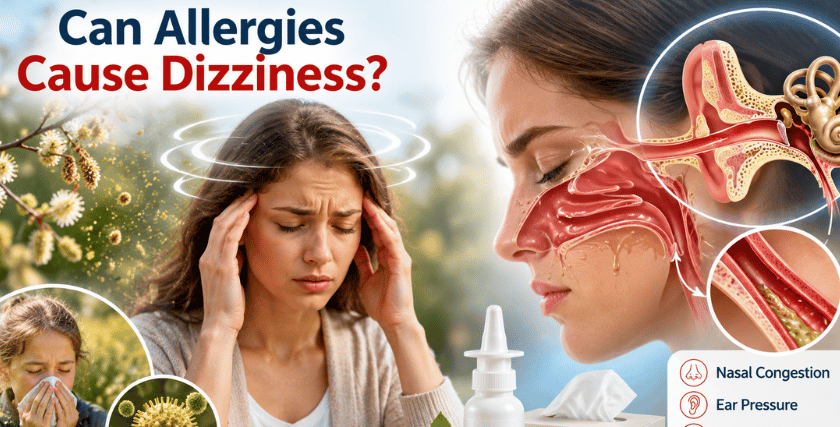
Yes, can allergies cause dizziness is a reasonable question because nasal allergies can indirectly affect your balance. Swelling and mucus may block the small tubes that regulate pressure in your middle ears. This can make you feel unsteady, lightheaded, or as though the room is spinning.
Dizziness is not among the most common seasonal allergy symptoms. Still, it can occur when congestion affects the ears. Allergy medicine may also make some people feel sleepy, foggy, or dizzy.
Allergy-Related Dizziness at a Glance
| Can allergies cause dizziness? | Key information |
| Can nasal allergies affect balance? | Yes, especially when congestion blocks pressure regulation in the ears. |
| What may it feel like? | Lightheadedness, unsteadiness, imbalance, or spinning sensation. |
| What other symptoms may occur? | Ear pressure, popping, muffled hearing, congestion, sneezing, or watery eyes. |
| Can allergy medicine cause dizziness? | Some antihistamines can cause drowsiness, slower reactions, or dizziness. |
| When should you seek care? | When symptoms are sudden, severe, persistent, recurrent, or accompanied by neurological or breathing symptoms. |
Why Allergies May Make You Feel Dizzy

Seasonal and environmental allergies occur when your immune system reacts to substances such as pollen, mold, dust mites, or pet dander. This response can inflame your nasal passages and sinuses. Common symptoms include sneezing, itching, congestion, watery eyes, and fatigue.
The inflammation may also reach the openings of your Eustachian tubes. These narrow passages connect each middle ear to the upper throat. They help drain fluid and keep air pressure balanced. When the tubes become swollen or blocked, pressure may change behind the eardrum. Fluid can also collect in the middle ear. This condition is called Eustachian tube dysfunction.
Medical guidance lists allergies as one possible cause of this dysfunction. Symptoms can include ear fullness, popping, muffled hearing, tinnitus, balance problems, dizziness, or vertigo. Researchers have also found a close relationship between allergic disease and Eustachian tube problems. The exact biological process is still being studied, so an allergy should not be assumed to explain every dizzy spell.
Can Allergies Cause Dizziness or True Vertigo?
People often use “dizziness” and “vertigo” to describe the same feeling, but they are not identical. Dizziness is a broad term. You may feel faint, off-balance, weak, foggy, or unstable. Vertigo is a false sensation of movement. You may feel as though you are spinning, tilting, or moving when you are still.
Blocked Eustachian tubes may cause either feeling. Allergy-related symptoms often occur with nasal congestion, ear pressure, popping, or muffled hearing. They may also follow a seasonal pattern. The connection is possible but relatively uncommon. Cleveland Clinic notes that nasal and sinus inflammation may narrow the Eustachian tubes, allowing fluid to build behind the ear and affect balance signals.
Seven Signs Your Dizziness May Be Connected to Allergies
No single symptom proves that an allergy is responsible. The connection becomes more plausible when several of these signs occur together:
- Your symptoms appear during pollen season. Dizziness starts or worsens during the same months as sneezing, itching, and congestion.
- You have blocked or stuffy nasal passages. Significant congestion may place pressure around the Eustachian tube openings.
- Your ears feel full or clogged. You may feel as though you are underwater or need to pop your ears.
- You notice popping or clicking. These sounds can occur when pressure changes or the tubes open unevenly.
- Your hearing seems muffled. Temporary pressure or fluid may reduce sound clarity.
- Symptoms improve as congestion improves. Relief after appropriate allergy treatment may support a connection, though it does not confirm a diagnosis.
- The problem follows allergen exposure. Symptoms may appear after gardening, cleaning a dusty area, visiting a home with pets, or spending time outdoors.
A symptom diary can help. Record your congestion, ear symptoms, medication use, possible exposures, and the length of each dizzy episode. This gives a healthcare professional more useful information than a general description.
Allergy Medicine Can Also Cause Dizziness

The allergy itself may not always be the cause. Some medications can make you feel sleepy, less alert, or unsteady.
First-generation antihistamines are more likely to cause sedation. Even certain products marketed for daytime use may affect individuals differently. The FDA warns that antihistamines can slow reaction time and make concentration or clear thinking more difficult, even when you do not feel noticeably drowsy.
Check the label before driving, climbing, exercising near traffic, or operating equipment. Do not combine sedating medication with alcohol unless a qualified healthcare professional says it is safe.
Speak with a pharmacist or clinician when dizziness begins after starting a new product. They can help you assess the ingredients, dosage, timing, and possible alternatives.
What May Help With Allergy-Related Dizziness?
Treatment should focus on the underlying cause rather than the dizzy feeling alone. A clinician may recommend one or more of the following approaches based on your symptoms and medical history.
Reduce exposure to known triggers
Check local pollen conditions and limit outdoor activity when levels are high. Keep windows closed during peak seasons. Shower and change clothes after spending time outdoors. Wash bedding regularly and address indoor moisture that supports mold growth. A suitable vacuum and air filtration system may help reduce some indoor particles.
Use saline carefully.
A saline nasal spray may help clear mucus and allergens from the nasal passages. Nasal irrigation requires properly treated water and a clean device. People with recurring ear or sinus problems should ask a clinician whether irrigation is suitable for them.
Discuss nasal allergy treatments.
Nasal corticosteroid sprays may reduce inflammation when used correctly and consistently. Antihistamine sprays or oral antihistamines may suit other symptom patterns. Do not assume every over-the-counter product is safe for you. Pregnancy, glaucoma, high blood pressure, prostate problems, heart conditions, and other medicines may affect your options. Cleveland Clinic advises asking a healthcare provider before using some oral decongestants because they can worsen Eustachian tube symptoms in certain cases.
Avoid forceful ear popping.
Gentle swallowing, yawning, or chewing gum may help equalize pressure. Do not repeatedly force air against a pinched nose, especially when you have pain, an infection, or recent ear surgery. Stop if a technique increases pain or dizziness.
When Dizziness May Have Another Cause
Dizziness has many possible explanations. These include dehydration, low blood pressure, anemia, migraine, low blood sugar, heart rhythm problems, medication effects, inner-ear disorders, infections, and neurological conditions.
Brief spinning triggered by rolling over in bed or looking upward may suggest benign paroxysmal positional vertigo. Vertigo with one-sided hearing loss, tinnitus, or persistent ear pressure may need an ear examination. Labyrinthitis and vestibular neuritis can also cause severe imbalance, nausea, or spinning.
Do not keep increasing allergy treatment when symptoms do not match your usual pattern. A proper evaluation may include a medication review, ear examination, hearing assessment, blood pressure check, balance tests, or other investigations.
Warning Signs That Need Prompt Medical Attention
Seek emergency help when dizziness occurs with:
- Sudden weakness or numbness, especially on one side
- Trouble speaking, understanding speech, or seeing
- New loss of coordination or difficulty walking
- A sudden, severe headache
- Chest pain, fainting, or severe shortness of breath
- Repeated vomiting or an inability to stand safely
- Swelling of the tongue or throat
- Hives with breathing trouble, a weak pulse, or collapse
Sudden dizziness with weakness, speech problems, vision changes, or loss of coordination can be a stroke warning sign. Emergency assessment is essential.
Dizziness during a severe allergic reaction can result from low blood pressure. Anaphylaxis may also cause breathing problems, throat tightness, facial swelling, hives, vomiting, or fainting. Use prescribed epinephrine immediately and contact emergency services.
When to Schedule a Nonemergency Appointment

Arrange an appointment when experiencing dizziness:
- Keeps returning
- Lasts longer than expected
- Interferes with walking, driving, work, or sleep
- Occurs without clear nasal or eye symptoms
- Continue after your allergy symptoms settle
- Comes with ear pain, drainage, hearing changes, or one-sided tinnitus
- Began after starting or changing medication
Tell the clinician whether the feeling is spinning, faintness, imbalance, or mental fog. Mention how long each episode lasts and what triggers it.
Healthyspire states that its articles provide general educational information rather than personal medical advice. Individual symptoms should be discussed with a qualified healthcare professional.
Conclusion
Allergies can sometimes contribute to dizziness by causing inflammation and congestion that affect the Eustachian tubes and middle-ear pressure. While symptoms such as ear fullness, popping, nasal congestion, and seasonal flare-ups may point toward an allergy-related cause, dizziness can also result from many other medical conditions.
Managing your allergies, reducing exposure to triggers, and using appropriate treatments may help relieve symptoms. However, persistent, severe, or recurring dizziness should always be evaluated by a healthcare professional, especially if it is accompanied by hearing changes, chest pain, fainting, breathing difficulties, or neurological symptoms. You might also like Winter Allergies.
If you want to know more about our article, “Do Silverfish Bite,” please visit our Allergies Category.
Frequently Asked Questions
It is possible, but the link is less obvious without nasal, sinus, or ear symptoms. Medication effects, dehydration, migraine, blood pressure changes, and other conditions may be more likely. Persistent symptoms should be assessed rather than attributed to allergies.
There is no set duration. It may improve as inflammation and congestion settle. Eustachian tube dysfunction often clears within one or two weeks, but chronic cases can last longer. Symptoms that persist, worsen, or repeatedly return need evaluation.
Pollen may trigger nasal inflammation that affects pressure regulation in the middle ears. This can contribute to vertigo in some people. True spinning symptoms can also come from unrelated inner-ear or neurological conditions.
They may help when allergy symptoms are driving congestion. Some antihistamines can also cause drowsiness or dizziness. Ask a pharmacist or clinician which product is appropriate, especially when you take other medicines.
A severe food-allergy reaction can cause dizziness or lightheadedness because blood pressure may fall. Dizziness with throat swelling, breathing trouble, widespread hives, vomiting, or faintness is an emergency.
The Takeaway
Allergies can contribute to dizziness when inflammation blocks the tubes that regulate middle-ear pressure. Ear fullness, congestion, popping, and a seasonal pattern make this explanation more plausible. Still, dizziness should not automatically be blamed on allergies. Review your medicines, note associated symptoms, and seek care when episodes recur or interfere with daily life. Sudden neurological symptoms, breathing problems, swelling, or fainting require emergency help.