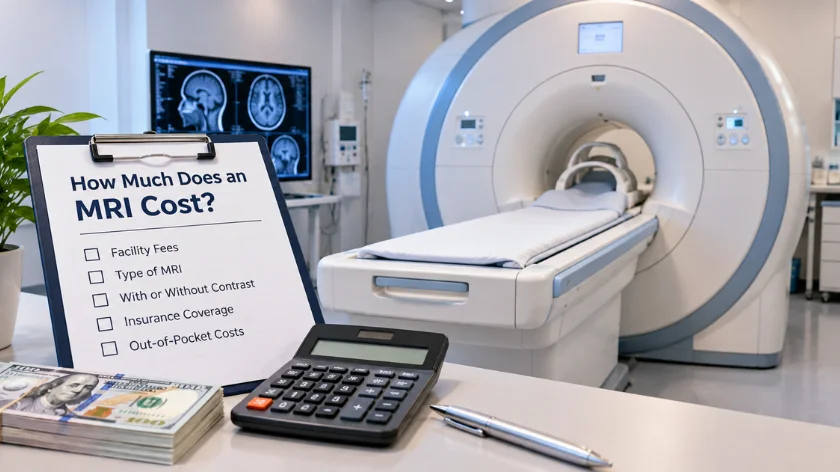

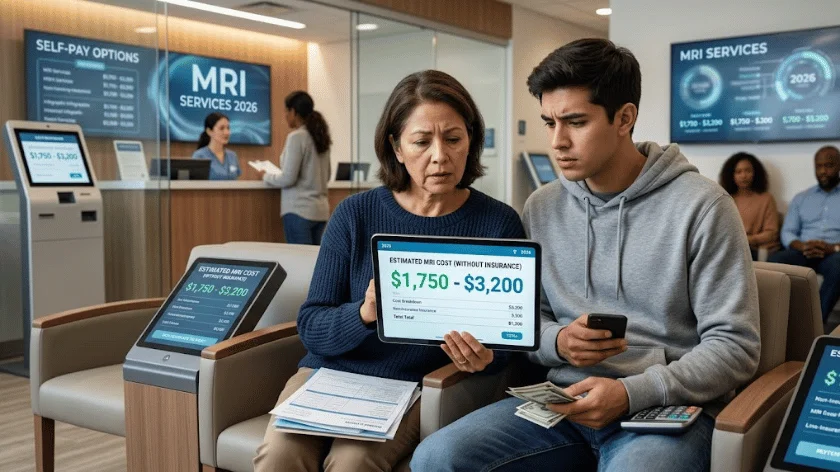
If you need an MRI but don’t have health insurance, MRI cost without insurance, the price can be hard to predict before you start calling facilities. One imaging center may quote several hundred dollars while a hospital may charge several thousand for a similar scan. The difference often comes down to where the MRI is performed, whether contrast is required, what body part is scanned, and exactly which fees are included in the quote. There is more on this in MRI Scan Cost in the U.S.
The good news is that uninsured patients can compare prices more easily than many people realize. Hospitals must publish certain pricing information, and uninsured people, or those choosing not to use insurance, can generally request a written Good Faith Estimate before scheduled care. Knowing what to ask before booking may save hundreds or even thousands of dollars.
Direct answer: Without insurance, an MRI in the U.S. can cost a few hundred dollars to several thousand, depending mainly on the facility, scan type, and contrast. Current MDsave data shows an estimated national average of about $900 without contrast and $1,334 with and without contrast, while some cash-pay programs advertise starting prices near $250.
MRI Cost Without Insurance at a Glance
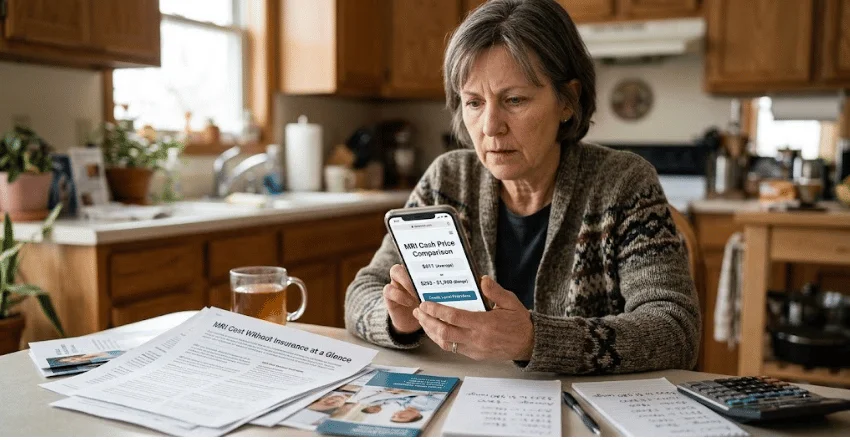
No single nationwide cash price applies to every uninsured patient’s MRI. Current MDsave listings provide one useful benchmark: an MRI without contrast has an estimated national average of about $900, while the platform’s own national average cash price is about $611. Its current listed prices for that category range from approximately $293 to $1,980, depending on provider and location.
For an MRI performed with and without contrast, MDsave reports an estimated national average of about $1,334 and a marketplace average of about $809. Current listed prices on the platform range from roughly $406 to $2,200. These figures are useful benchmarks, not guaranteed prices for every patient, because your actual quote depends on the specific study and local facility.
| MRI pricing benchmark | Approximate 2026 price |
|---|---|
| MRI without contrast, estimated national average | $900 |
| MRI without contrast, MDsave national average | $611 |
| MRI without contrast, current MDsave range | $293–$1,980 |
| MRI with and without contrast, estimated national average | $1,334 |
| MRI with and without contrast, MDsave national average | $809 |
| MRI with and without contrast, current MDsave range | $406–$2,200 |
| Radiology Assist advertised starting price | From about $250 |
Radiology Assist, another nationwide cash-pay imaging program, advertises MRI appointments starting at about $250, although the price changes by body part and participating center. That helps explain why an online “average MRI cost” should never be treated as the amount you automatically need to pay. Calling several facilities for the same ordered study is usually more useful than relying on one national average.
Why Does an MRI Cost So Much Without Insurance?
The facility is often one of the biggest drivers of MRI pricing. A freestanding outpatient imaging center may have a substantially lower self-pay rate than a hospital outpatient department, while hospitals have broader staffing, infrastructure, and facility costs. Since 2021, CMS hospital price transparency rules have required hospitals to publish discounted cash prices along with other standard-charge information, giving patients a way to compare at least some hospital pricing before scheduling.
The type of MRI also changes the bill. An MRI of one body region without contrast is generally a different service from an examination performed both before and after contrast is injected, and more complex imaging can require additional sequences or scanner time. The exact body part and the number of regions scanned both affect the price. The ordered protocol also matters, so two appointments described simply as an MRI can carry very different charges.
Contrast is another important factor because it adds medication, IV supplies, staff time, and additional imaging to the procedure. MRI contrast commonly uses a gadolinium-based agent to improve the visibility of certain structures or abnormalities. Whether contrast is medically necessary is a clinical decision, so an uninsured patient should not ask a facility to remove it simply to make the scan cheaper without first discussing the order with the clinician.
Finally, an advertised price is only useful when you know what it includes. Depending on the facility, the technical charge for performing the scan and the professional charge for a radiologist to interpret it may be bundled together or billed separately. Ask whether the quote includes the MRI, contrast if ordered, facility charges, radiologist interpretation, and the final report before comparing one provider with another.
What Should You Ask When Calling for a Cash MRI Price?
Do not simply ask, “How much is an MRI?” because the scheduling representative needs enough information to price the correct examination. Have your doctor’s order available and ask whether the facility can identify the CPT code or exact study being scheduled. Comparing the same study at each facility makes the quotes far more meaningful.
Ask these questions before booking:
What is your self-pay or cash-pay price for this exact MRI?
Is that price for the exact CPT code on my order?
Does the quote include the radiologist’s interpretation and report?
Does it include the facility or technical fee?
If contrast is ordered, is the contrast charge included?
Are there any additional fees I could receive after the scan?
Is there a lower price for paying before or on the day of service?
Can you give me the total quote in writing?
Can you provide a Good Faith Estimate before my appointment?
A quote of $500 is not necessarily cheaper than a quote of $650 if the first facility later sends a separate radiologist bill. An all-inclusive price is easier to compare because you know more of the expected cost before you arrive. Save written estimates, confirmation emails, receipts, and the name of anyone who gives you a price.
How to Pay Less for an MRI Without Insurance
Start by checking freestanding diagnostic imaging centers in addition to the hospital or health system your clinician normally uses. Your doctor may have a preferred facility, but for a scheduled, non-emergency scan, you can ask whether the order can be sent to another qualified imaging center. Confirm that the alternative facility can perform the exact study and that your clinician is comfortable receiving and reviewing its images and report.
Next, ask specifically for the cash price, self-pay price, or uninsured discount rather than only the standard charge. Hospitals must disclose discounted cash prices under federal price-transparency requirements, although navigating hospital price files can still be difficult. Many facilities also have online estimators or staff who can provide a more practical quote by phone.
Compare at least a few facilities when the scan is not urgent. Geography can make a major difference even within the same region; for example, current MDsave listings show MRI-without-contrast prices of roughly $360 to $613 in the San Diego region and about $477 to $741 in the Baltimore region. These examples aren’t national guarantees, but they show why shopping the same study locally can matter.
You can also ask about prompt-pay discounts, payment plans, and financial assistance before putting a large medical charge on a credit card. If the MRI will be performed at a nonprofit hospital, ask for its financial assistance policy and application rather than assuming your income is too high to qualify. Federal tax rules require tax-exempt hospital organizations to maintain written financial assistance policies covering emergency and other medically necessary care, with eligibility determined under each hospital’s policy.
Get a Good Faith Estimate Before the MRI
A Good Faith Estimate is especially important when you are paying without insurance. Under federal rules, healthcare providers and facilities generally must provide uninsured or self-pay patients with an estimate of expected charges when qualifying care is scheduled in advance or when the patient requests an estimate. The estimate should identify expected charges for the scheduled items and services from the provider or facility issuing it.
Keep the estimate after your scan and compare it with every bill you receive. If a provider or facility bills you at least $400 more than its Good Faith Estimate, you may qualify for the federal patient-provider dispute resolution process, provided the other eligibility requirements are met. CMS says the initial bill generally must also be within the applicable dispute window, so do not ignore a major difference between your estimate and final bill.
A Good Faith Estimate does not mean that every possible circumstance can be predicted perfectly. Unexpected medical needs can change what services are performed, and estimates from one provider do not necessarily cover every separate provider involved in your care. Ask who could bill you separately so you have the clearest possible picture before the appointment.
Can You Get an MRI Without Insurance?
Yes, lack of insurance does not automatically prevent you from receiving an MRI. You will usually need an appropriate medical order or referral, depending on the imaging facility’s policies and the type of examination being performed. Once you have the order, you can contact facilities and tell them that you will be paying as a self-pay patient.
Paying cash does not mean you should decide for yourself which MRI to order. Select diagnostic imaging based on your symptoms, examination, and clinical circumstances, because an MRI isn’t necessary for every problem. HealthySpire’s guide to a heavy or pressured feeling in the head, for example, explains that imaging is not automatically required for that symptom and that a clinician determines whether testing is appropriate after evaluating the patient.
Is a Lower-Cost MRI Less Safe?
A lower cash price by itself does not mean an MRI is lower quality. MRI uses powerful magnetic fields, radiofrequency energy, and a computer to create detailed images, and unlike X-rays or CT scans, standard MRI does not use ionizing radiation. Facilities still need appropriate equipment, safety screening, trained technologists, and qualified professionals to interpret the study.
Before booking, confirm that the center routinely performs the exact examination you need and ask who interprets the images. Tell the facility about implanted devices, metal in your body, previous surgeries, pregnancy, kidney problems, and other issues requested during MRI safety screening. Some implants and devices require special evaluation before a patient can safely enter the MRI environment.
If your scan uses gadolinium contrast, the imaging team may also ask about kidney disease and previous reactions to contrast. Serious reactions are uncommon, but contrast decisions depend on the individual examination and medical history. Follow the facility’s instructions rather than modifying a contrast order because of price concerns.
Do You Need to Fast Before an MRI?
Most routine MRI examinations do not require fasting, but preparation varies by body part, use of contrast, sedation, and facility protocol. RadiologyInfo advises patients to follow the specific eating, drinking, and medication instructions given for their examination rather than relying on a single rule for all MRIs. If your center gives you fasting instructions, confirm how long you should avoid food and what liquids or medications are permitted.
Do not use general online fasting advice instead of instructions from the imaging center. Preparation for a diagnostic procedure can follow different rules from intermittent or religious fasting. HealthySpire’s guide to coffee and different types of fasting also emphasizes that medical procedure instructions should take priority over general fasting rules.
Frequently Asked Questions
How much is a typical MRI without insurance?
A useful 2026 benchmark is about $900 for an MRI without contrast based on MDsave’s estimated national average. However, the same platform currently lists cash-purchase prices ranging from approximately $293 to $1,980, showing how much location and provider choice can change the bill. Hospital prices and more complex studies can be substantially higher, so obtain an individual quote rather than budgeting from one national number alone.
How much does an MRI with contrast cost without insurance?
MDsave currently reports an estimated national average of about $1,334 for an MRI performed with and without contrast. Its marketplace average is about $809, with current listed prices ranging from approximately $406 to $2,200. Your own price may fall outside those figures because contrast protocol, body region, facility, and local market all affect the total.
Is an MRI cheaper at an imaging center than at a hospital?
It frequently can be, which is why comparison shopping is worthwhile for a scheduled non-emergency scan. Independent centers may have lower overhead and may offer straightforward self-pay packages, while hospitals can have additional facility costs. Compare written all-in quotes for the same ordered examination rather than assuming either type of facility will always be cheapest.
Can I negotiate the price of an MRI without insurance?
You can ask whether the facility offers a self-pay discount, prompt-pay rate, financial assistance, or payment plan. Negotiation policies differ, so there is no guaranteed percentage that every provider will remove from the bill. The best time to discuss the price is generally before the MRI, when you can still compare alternatives.
What if the final MRI bill is much higher than my estimate?
Keep your written Good Faith Estimate and compare it with the final bill from each provider or facility. An uninsured or self-pay patient may qualify for the federal dispute process when a provider’s bill is at least $400 more than that provider’s Good Faith Estimate and the other CMS requirements are met. Contact the provider promptly, because some discrepancies result from billing errors or charges not included in the original quote.
Can a hospital reduce my MRI bill if I cannot afford it?
Possibly, particularly if the MRI is provided by a nonprofit hospital and you meet its financial assistance criteria. Tax-exempt hospitals must maintain written financial assistance policies explaining eligibility, available free or discounted care, and how patients can apply. Ask for the policy and application directly rather than waiting until an unpaid balance has already entered collections.
The Bottom Line
MRI cost without insurance varies dramatically across the United States, but uninsured patients do not necessarily have to accept the first price they are quoted. Start with the exact MRI order, compare cash prices at multiple qualified facilities, confirm what each quote includes, and request a written Good Faith Estimate before the scan. For more practical information about tests, symptoms, and everyday healthcare decisions, browse HealthySpire’s Health resources.
Price shopping should never mean postponing urgent medical evaluation or changing a physician’s imaging order on your own. If an MRI is medically necessary but unaffordable, ask about self-pay discounts, financial assistance, and payment options, and discuss any delay with the clinician who ordered the scan. The goal is to find an appropriate scan at a transparent price without allowing cost confusion to interfere with necessary care.