
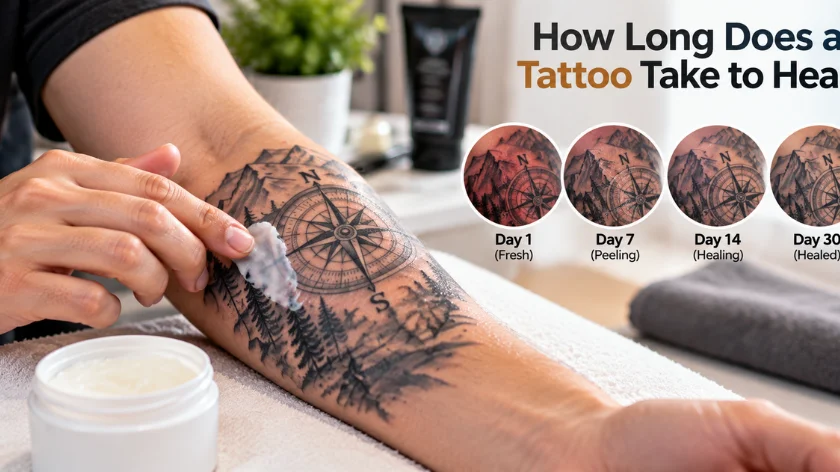
A fresh tattoo usually looks much calmer within two to four weeks. Deeper skin repair can continue for several months after the surface looks normal. If you’re asking how long does a tattoo take to heal, the answer depends on the healing milestone.
| Healing stage | Typical timing | What you may notice | Main care goal |
|---|---|---|---|
| Early wound phase | Days 1–3 | Redness, soreness, mild swelling, clear fluid | Protect and clean gently. |
| Peeling phase | Days 4–14 | Itching, flakes, light scabbing | Moisturize and avoid picking. |
| Surface settling | Weeks 2–4+ | Less flaking, smoother skin, clearer color | Prevent friction and soaking. |
| Deeper recovery | Several months | Skin looks normal while deeper tissue remodels. | Protect from irritation and sun. |
Direct answer / TL;DR: Most new ink looks mostly healed within two to four weeks, but deeper repair takes longer. Medical guidance varies because “healed” can mean different things. Use your skin’s condition, your artist’s instructions, and any warning signs to decide when it’s safe to resume normal activities.
How Long Does a Tattoo Take to Heal at Each Stage?
Healing is not a single event that happens on one date. Mayo Clinic says most tattoos take about two weeks to heal. Cleveland Clinic notes that the top skin layer may take longer, with deeper layers needing several more months.
Those estimates are not truly contradictory because they describe different milestones. Visible redness, oozing, and flaking often improve first. Complete tissue recovery continues after the design looks settled.
Days 1–3: Redness, Soreness, and Fluid
During the first few days, the area acts like a fresh skin injury. You may notice mild redness, warmth, swelling, soreness, and clear fluid. These changes should start improving rather than getting worse each day. Your artist may cover the area with a traditional dressing or adhesive film.
Follow the exact removal timing they provide because products differ. Wash your hands before touching the area, and do not peel a dressing off aggressively.
Days 4–14: Itching, Flaking, and Light Scabbing
Dryness, itching, peeling, and thin scabs often appear during the next stage. The skin can look cloudy or dull while new surface cells form. This appearance does not automatically mean pigment has been lost. Avoid scratching, rubbing, or pulling at flakes. Picking can reopen the skin and increase the risk of scarring or infection.
A simple fragrance-free moisturizer can reduce uncomfortable dryness when your aftercare plan allows it.
Weeks 2–4 and Beyond: The Surface Starts Settling
By this point, peeling and tenderness should be fading for many people. Some areas need longer, especially large or heavily worked pieces. Hands, feet, joints, and high-friction areas can also stay irritated because they move and rub more often.
Do not use appearance alone as proof that healing is complete. Skin can look smooth while deeper layers are still repairing. Continue avoiding activities that cause soaking, heavy friction, or repeated trauma until the surface is fully closed.
The Following Months: Deeper Repair Continues
Pigment sits below the outermost skin layer, so deeper tissue needs additional recovery time. Cleveland Clinic notes that deeper layers can take several months to heal completely. This longer phase usually happens without dramatic peeling or scabbing.
You may feel normal long before deeper remodeling finishes. That is expected and does not mean something is wrong. Long-term sun protection and avoiding repeated irritation also help preserve the appearance of body art.
What Normal Healing Looks Like
Normal healing should move in a generally better direction. Early redness should shrink, soreness should ease, and fluid should decrease. Itching and peeling can replace the first few days of tenderness. The key pattern is gradual improvement. A day may feel itchier than the previous day, but the whole area should not become increasingly hot or painful. Compare the current symptoms with yesterday’s rather than focusing on color alone.
People familiar with cosmetic pigment procedures may recognize a similar flaking stage. HealthySpire’s nano blading guide explains how pigment treatments can look darker, patchier, or flaky before settling. The exact aftercare still depends on the procedure used.
Signs That May Mean Infection or Another Reaction
Some redness and swelling are expected after skin has been repeatedly punctured. Infection becomes more concerning when symptoms worsen instead of easing. The American Academy of Dermatology and Cleveland Clinic identify several warning signs.
- Redness that spreads, expands, or becomes darker
- Pain or heat that increases instead of improving
- Pus, odor, or significant drainage
- Fever, chills, or feeling unwell
- Red streaks extending away from the affected area
FDA guidance on tattoo and permanent makeup safety advises contacting a healthcare professional when the area is not healing or a rash develops. Seek urgent care for severe symptoms or rapidly spreading redness. A serious allergic reaction also requires prompt medical care.
An ink reaction can look different from an infection. It may cause persistent itching, raised bumps, scaling, swelling, or changes limited to one pigment color. A clinician or board-certified dermatologist can help distinguish the cause.
Aftercare That Supports Healthy Healing
The best routine is simple and consistent. Mayo Clinic recommends gentle washing, careful drying, and regular moisturizing. It also advises sun avoidance and no swimming while the skin heals. Use clean hands and avoid scrubbing. Pat the area dry instead of rubbing it with a towel. Apply only a thin layer of mild, fragrance-free moisturizer when your instructions allow it.
Loose clothing can reduce sticking and friction. Avoid exfoliants, harsh fragranced products, and anything that burns or stings. If a product causes a rash, stop using it and ask a healthcare professional for guidance. Healthy skin care matters beyond the first month.
HealthySpire’s general health section offers broader wellness information for everyday health questions. Long-term hydration and sun protection can also help surrounding skin stay comfortable.
When Can You Swim, Exercise, or Go Back in the Sun?
Avoid pools, hot tubs, lakes, rivers, and prolonged baths until the surface has fully healed. Mayo Clinic specifically recommends avoiding swimming while the area is healing. Wait until there are no open spots, scabs, or active peeling.
Exercise depends on placement, size, and friction. Heavy sweating, tight clothing, shared gym surfaces, or repeated stretching can irritate healing skin. HealthySpire’s guide to sweating and exercise explains how perspiration mainly helps regulate body heat.
Sun exposure can irritate healing skin and fade pigment over time. Keep fresh body art out of direct sun while it heals. Once the skin is fully healed, follow standard sun-protection guidance for exposed skin.
What Can Slow Healing?
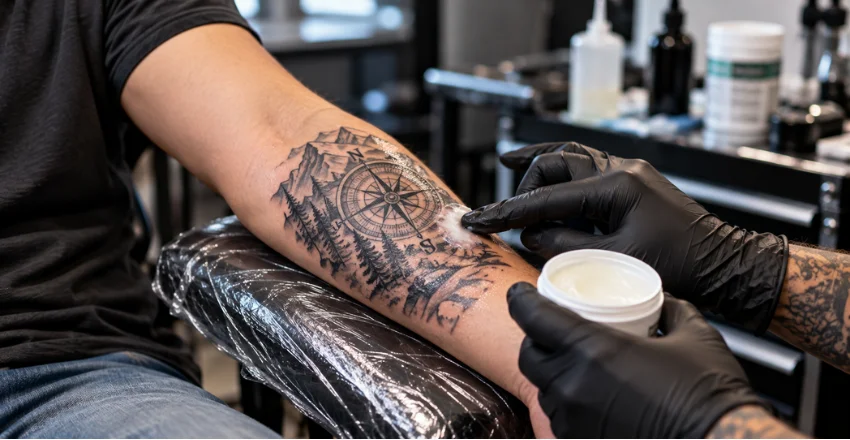
Large designs usually create more skin trauma than small ones. Dense color packing, repeated passes, and areas that constantly bend can also extend recovery. Friction from shoes, waistbands, work gear, or sports equipment may keep the surface irritated.
Your general health can matter too. Conditions or medicines affecting immunity, circulation, inflammation, or wound repair may change recovery. Ask a healthcare professional for personal guidance if you have concerns about healing.
Aftercare mistakes can create avoidable problems. Picking scabs, soaking too early, using irritating products, or ignoring worsening symptoms can delay recovery. A clean studio and proper equipment also reduce infection risk from the start.
A U.S. Safety Note About Tattooing
In the United States, state and local authorities oversee tattooing practices and licensing rules. The FDA oversees inks and pigments as cosmetics. Requirements for studios and artists can therefore differ by location. The FDA has received reports of infections from contaminated inks, including sealed products.
Sterile technique still matters even when the studio looks clean. Before a future appointment, check local health department rules and ask about single-use needles and pigment cups.
How to Know When the Area Is Healed
A healed surface should feel like the surrounding skin again. There should be no drainage, open areas, active scabs, or ongoing peeling. Tenderness, heat, and swelling should also be gone. Color can still change slightly as the skin settles. Don’t judge the final result during the early flaky stage. Persistent raised, painful, wet, or itchy areas deserve professional guidance before a touch-up.
Frequently Asked Questions
How long does a tattoo take to heal completely?
Most visible healing happens over the first few weeks, while deeper recovery can continue for months. The exact timing changes with size, placement, technique, and aftercare. Use symptom improvement, not a calendar date, as your only test.
How do I know when new ink is fully healed?
The surface should be smooth, closed, and free of scabs or peeling. It should not feel hot, swollen, wet, or increasingly tender. Deeper repair can continue after these visible signs disappear.
When can I swim after getting inked?
Wait until the surface is fully healed before swimming or soaking. That means no open skin, active peeling, or scabs should remain. Pools, hot tubs, lakes, and oceans can irritate healing skin or introduce germs.
How often should I moisturize?
Follow the schedule your artist or clinician gives you. Mayo Clinic suggests applying a mild moisturizer several times daily. Cleveland Clinic recommends twice daily during its early aftercare routine.
Can I work out during healing?
Light movement may be comfortable if it does not rub, stretch, or make you sweat heavily over the area. You may need a short break from strenuous activity, depending on placement and size. Resume gradually and keep shared equipment away from healing skin.
What should I never do during healing?
Do not pick scabs, scrub the area, or submerge it before the surface closes. Avoid tight friction, direct sun, and irritating products during early recovery. Seek medical help if pain, redness, heat, drainage, or fever worsens.