

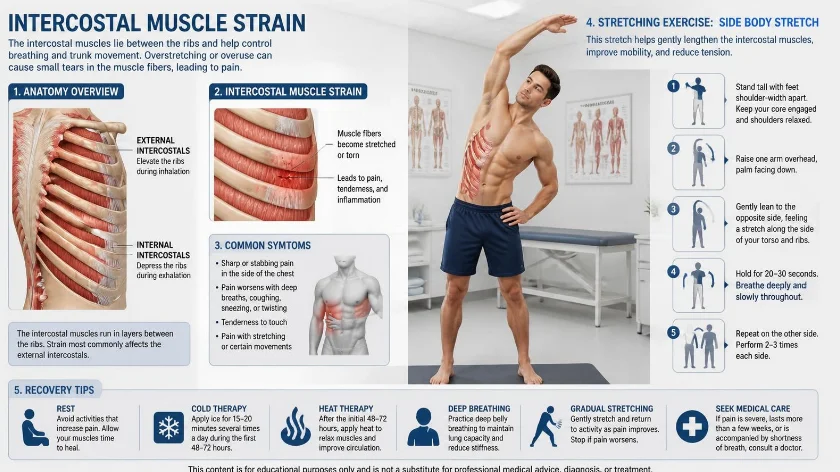
An intercostal muscle strain affects the muscles between your ribs that help move and stabilize your chest. Pain often worsens with deep breathing, coughing, twisting, or reaching. Mild strains may improve with rest and gradual activity, while more serious injuries can take weeks to heal.
Don’t automatically blame chest pain on a pulled muscle. Sudden or severe chest pain, breathing difficulty, faintness, or pain spreading to your arm or jaw needs urgent medical attention.
Direct answer: An intercostal strain happens when muscles between the ribs stretch too far or tear. Common signs include localized rib pain, tenderness, stiffness, and pain during deep breathing or movement. Treatment usually involves relative rest, cold or heat, appropriate pain relief, and a gradual return to activity.
| Key fact | What to know |
| Location | Muscles between the ribs |
| Common symptoms | Local pain, tenderness, tightness, painful breathing |
| Common triggers | Twisting, lifting, coughing, sports, direct impact |
| Typical treatment | Relative rest, ice, heat, pain management, gradual movement |
| Recovery | Often several weeks, depending on severity |
| Emergency concern | New severe chest pain or significant breathing difficulty |
What Is an Intercostal Muscle Strain?
The intercostal muscle strain forms several layers between neighboring ribs. They help the rib cage move during breathing and contribute to trunk stability. These muscles also work during coughing, twisting, lifting, and many athletic movements.
A strain occurs when muscle fibers become overstretched or torn. The injury may happen suddenly during one forceful movement. It can also develop after repeated coughing or repetitive upper-body activity.
Because these muscles move with every breath, even a small injury can feel surprisingly painful. Pain can also resemble problems involving the ribs, lungs, or heart. That overlap makes it especially important to pay close attention to other symptoms.
Intercostal Muscle Strain Symptoms
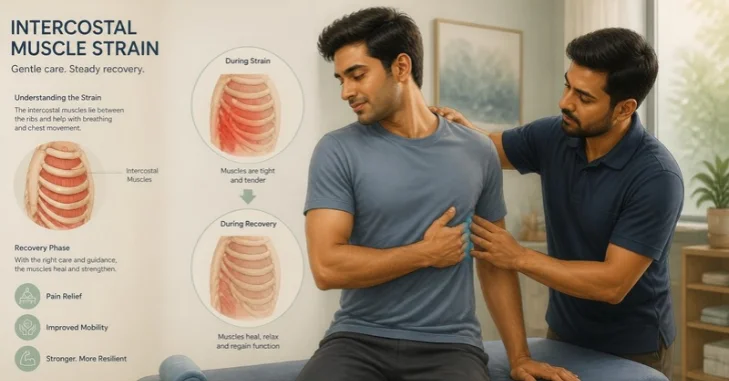
The location and behavior of the pain can provide useful clues. Muscular pain often changes when you move or press the affected area. Still, symptoms alone cannot reliably exclude a more serious cause of chest pain.
These are the most common symptoms.
- Sharp, aching, or pulling pain around the ribs
- Tenderness when you press the painful area
- Pain that increases with deep breathing
- Pain when coughing or sneezing
- Discomfort during twisting or bending
- Muscle tightness or stiffness
- Pain during reaching or lifting
- Mild swelling after an acute injury
- Reduced trunk movement because of discomfort
The pain may begin immediately after a sudden movement. In other cases, soreness develops gradually after repeated activity. A long coughing spell can also irritate these muscles without a memorable injury.
Localized tenderness can support a muscular explanation. Cleveland Clinic notes that movement and touching the affected area often aggravate intercostal pain. These findings still don’t prove that a muscle strain is the only problem.
What Causes a Strain Between the Ribs?
Twisting while the torso is under load is a common trigger. Sports involving rotation can place substantial force across the chest wall. Golf, baseball, tennis, rowing, and similar activities can all stress these muscles.
Heavy lifting can cause the same problem, especially when combined with rotation. Reaching overhead repeatedly may also overload the rib muscles. Sudden increases in exercise can make strains more likely.
Other possible triggers are listed below.
- Repeated or forceful coughing
- Frequent sneezing
- A fall or direct blow to the chest
- Lifting while twisting
- Forceful throwing or swinging
- Repetitive upper-body exercise
- Stretching beyond your comfortable range
- Returning too quickly to strenuous exercise
Building strength gradually can reduce avoidable training stress. HealthySpire’s guide to lean bulking and progressive resistance training also explains why controlled progression matters during strength programs.
Intercostal Strain or Something More Serious?
Pain from a pulled rib muscle can be intense. Unfortunately, serious heart and lung conditions can also cause chest discomfort. You shouldn’t diagnose unexplained chest pain based only on its location.
Muscular pain is often localized and reproducible with movement or pressure. It may worsen when you twist, reach, cough, or take a deep breath. A recent workout, a coughing illness, or an awkward movement can also provide another clue.
Heart-related discomfort may feel like pressure, squeezing, fullness, or pain rather than a tender pulled muscle. The National Heart, Lung, and Blood Institute lists shortness of breath, nausea, cold sweats, and lightheadedness among the warning signs of a heart attack. Pain or discomfort can spread into the arms, back, neck, jaw, or stomach.
When to Call 911
Call 911 in the United States for new or severe chest pain that could represent a medical emergency. Don’t drive yourself if you believe you may be having a heart attack. Emergency medical services can begin assessment and treatment during transport.
Seek emergency help when chest discomfort occurs with any of these symptoms.
- Significant or worsening shortness of breath
- Pressure, squeezing, or fullness in the chest
- Pain spreading into an arm, jaw, neck, or back
- Fainting or severe lightheadedness
- Cold sweating or unexplained nausea
- Coughing up blood
- Severe pain after major chest trauma
Chest pain deserves more caution than an ordinary sore leg or arm muscle. When the cause isn’t clear, professional evaluation is safer than assuming you pulled a rib muscle.
How Is an Intercostal Muscle Strain Diagnosed?
A clinician will usually ask when the pain began and what you were doing beforehand. They may ask whether coughing, breathing, twisting, or touching the area changes your symptoms. Your recent injuries, exercise, illnesses, and medical history also matter.
The physical examination may include checking tenderness and observing trunk movement. Your clinician may also listen to your heart and lungs. This helps determine whether the symptoms fit a chest-wall injury.
Imaging isn’t automatically necessary for every muscle strain. A clinician may order an X-ray or another test when symptoms suggest a rib injury or lung problem. Testing depends on the circumstances rather than one standard approach.
How to Treat an Intercostal Muscle Strain
Treatment usually focuses on controlling pain while allowing the injured tissue to recover. Complete inactivity is rarely the long-term goal. Instead, gradually increase activity as pain and movement improve.
Rest From Painful Activities
Temporarily stop movements that clearly aggravate the injury. Heavy lifting, forceful rotation, and demanding workouts may need to wait. You can usually continue comfortable everyday movement unless your clinician recommends otherwise.
Avoid repeatedly testing the painful motion to see whether it has healed. That can keep irritating recovering tissue. Return to harder activity progressively rather than jumping back into your previous workload.
Use Cold Early
Cold may help reduce pain after a recent strain. MedlinePlus recommends wrapping ice in cloth instead of placing it directly against your skin. You can repeat short applications during the early stage of an injury.
Don’t leave an ice pack against your skin for prolonged periods. Stop if your skin becomes unusually numb, painful, or discolored. People with circulation or sensation problems should ask a clinician before using cold therapy.
Try Heat as Pain Settles
Heat may feel more comfortable after the early inflammatory period. It can help tight muscles relax before gentle movement. Avoid temperatures hot enough to burn your skin.
Cold and heat are comfort measures, not instant cures. Let your symptoms guide what feels helpful. Persistent or worsening pain deserves reassessment instead of increasingly aggressive home treatment. Elsewhere on the site: Why Symptoms and Treatment Differ in OCD Versus Obsessive Compulsive Personality Disorder.
Consider Over-the-Counter Pain Relief Carefully
Acetaminophen or nonsteroidal anti-inflammatory drugs may help some people manage muscle pain. Ibuprofen and naproxen are examples of NSAIDs. These medicines aren’t appropriate for everyone.
Health conditions, pregnancy, allergies, and other medicines can affect which option is safe. Follow the product label and ask a pharmacist or clinician if you’re unsure. Avoid accidentally combining products containing the same active ingredient.
Keep Breathing Normally
Rib-area pain can make you want to take shallow breaths. Yet repeatedly avoiding normal breaths isn’t a useful recovery strategy. Comfortable, controlled breathing helps keep your chest moving.
Don’t force painful maximal breaths as an unsupervised exercise. Instead, aim for relaxed breathing within a tolerable range. A clinician can give specific breathing instructions after significant chest injuries.
Holding a pillow gently against the painful area may make coughing more comfortable. Cleveland Clinic recommends this type of support for some people with cough-related strains. Don’t wrap or tightly bind your chest to restrict movement.
How Long Does Recovery Take?
Recovery time depends on the extent of the injury and how much the area keeps being stressed. Cleveland Clinic notes that muscle strains may take roughly four to six weeks to heal completely. Mild injuries may become comfortable sooner.
More significant tears can take longer and may require physical therapy. Recovery can also slow when repeated coughing or strenuous activity keeps loading the injured area. Your ability to move comfortably matters more than a calendar date.
Don’t use pain alone as your only readiness test for sports. You should also regain comfortable trunk movement and be able to breathe normally. Return to demanding twisting and lifting progressively.
When Can You Exercise Again?
Start by restoring comfortable everyday movement. Then add low-intensity activity that doesn’t sharply increase symptoms during or after the session. Progress one variable at a time.
Your first workouts back should be easier than your normal sessions. Reduce weight, repetitions, range, or rotational speed as needed. HealthySpire’s guide on lean bulking and gradual muscle growth can help you plan a more controlled return to resistance training.
Sweating also isn’t proof that a recovery workout is effective. HealthySpire explains the difference between sweating and actual exercise intensity in its fitness coverage. Instead, focus on pain-free movement and gradual workload progression.
Stop exercising if you develop new chest pressure, severe pain, dizziness, or unusual breathing difficulty. Those symptoms need medical attention, not another training modification. Returning several days later is better than turning a minor injury into a longer setback.
Can You Prevent Another Rib Muscle Strain?
No prevention strategy eliminates every strain. You can reduce avoidable stress by preparing your body for the movements your sport or job requires. Gradual workload increases are particularly useful after time away from exercise.
These habits can help.
- Warm up before demanding rotational exercise.
- Increase training volume gradually
- Practice controlled lifting technique
- Avoid twisting suddenly under heavy loads
- Build trunk strength progressively
- Rest when repeated movement causes increasing pain
- Treat persistent coughing with appropriate medical guidance
Recovery matters as much as exercise selection. Muscles exposed to repeated high loads without adequate recovery may become harder to train effectively. Consistent training usually works better than sudden bursts of excessive effort.
When Should You See a Doctor?
Schedule a medical evaluation when rib or chest pain remains unexplained. Seek care if symptoms keep worsening rather than improving. Pain that prevents normal breathing or daily activity deserves attention.
Get evaluated after significant trauma to the chest. A clinician may need to rule out a rib fracture or another injury. Fever, worsening cough, or new respiratory symptoms also change the situation.
You don’t need to train through persistent pain indefinitely. Physical therapy may help when stiffness, weakness, or movement problems remain after the acute injury settles. Your clinician can decide whether rehabilitation or further testing is appropriate.
The Next Step
Most uncomplicated muscle strains improve with time, relative rest, and a gradual return to normal movement. Watch whether your pain lessens and everyday activities get easier. Don’t rush back into heavy lifting because one quiet day feels better.
Chest symptoms require extra caution. Call 911 for symptoms suggesting a heart or breathing emergency, and seek medical advice for persistent pain. Once serious causes are excluded, a measured recovery plan can help you return to normal activity safely.
Frequently Asked Questions
What does an intercostal muscle strain feel like?
It often causes localized pain or tenderness between or around the ribs. Breathing deeply, coughing, sneezing, twisting, or reaching may make the pain worse. Some people also notice stiffness or muscle tightness.
Can coughing cause a pulled rib muscle?
Yes, forceful or repeated coughing can overload the muscles between your ribs. Symptoms may appear gradually during an illness rather than after one sudden injury. Also evaluate ongoing coughing if it is severe or persistent.
Can a rib muscle strain hurt when breathing?
Yes, because the intercostal muscles help move the chest wall while you breathe. A deeper breath may stretch or contract the injured tissue and increase pain. Breathing pain can have other causes, so unexplained symptoms need medical assessment.
Should you stretch a strained intercostal muscle?
Aggressive stretching during the painful early stage may aggravate the injury. You can introduce gentle movement as symptoms improve. A physical therapist can recommend appropriate exercises when pain persists, or your mobility remains limited.
Is intercostal pain the same as a broken rib?
No, muscle strains and rib fractures involve different tissues. Both can produce localized pain that worsens with breathing, coughing, or movement. A healthcare professional can determine whether examination or imaging is appropriate.
How do you sleep with rib muscle pain?
Choose a position thatdoesn’tt increase the painful pulling sensation. Some people find an elevated upper body more comfortable during early recovery. Avoid positions that force your torso into painful rotation.