

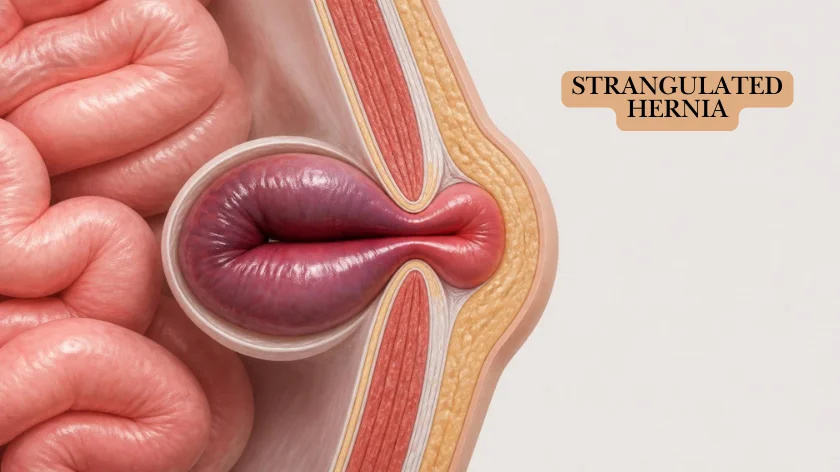
A strangulated hernia happens when blood flow to trapped tissue inside a hernia becomes cut off. This condition is a medical emergency because affected intestinal tissue can become damaged or die. Severe or worsening pain, vomiting, fever, or skin color changes around a hernia require immediate medical attention.
If you think you may have this complication, do not wait for symptoms to improve at home. In the United States, call 911 for severe symptoms or go to the nearest emergency department. Prompt evaluation and surgery can help prevent bowel damage and other dangerous complications.
| Key question | Practical answer |
|---|---|
| What happens? | Blood supply to tissue trapped in a hernia becomes restricted or cut off. |
| Is it an emergency? | Yes. Immediate medical evaluation is necessary. |
| Common warning signs | Increasing pain, tenderness, nausea, vomiting, fever, or skin color changes |
| Can bowel obstruction occur? | Yes, particularly when the intestine becomes trapped. |
| How is it diagnosed? | Doctors use an examination and may use ultrasound or CT imaging. |
| Main treatment | Urgent or emergency surgery |
| Can you treat it at home? | No. Suspected strangulation requires professional emergency care. |
Direct answer: Strangulation occurs when trapped tissue loses its blood supply. It can cause worsening pain, tenderness, vomiting, fever, and skin color changes near the bulge. Without prompt treatment, intestinal tissue may die. Suspected strangulation requires immediate emergency evaluation and usually urgent surgery.
What Is a Strangulated Hernia?
A hernia develops when tissue or an organ pushes through a weak area in surrounding muscle or connective tissue. Sometimes that tissue becomes trapped and cannot return to its normal position. Doctors call a stuck hernia an incarcerated hernia.
Strangulation develops when pressure around trapped tissue compromises its blood supply. The affected tissue may include part of the intestine. Without adequate blood flow, that tissue can become injured and eventually die.
This distinction matters because an uncomplicated bulge may not require emergency surgery. Strangulation, by contrast, requires immediate medical treatment. Waiting for a routine appointment can allow tissue damage and other complications to progress.
Strangulated Hernia Symptoms You Should Not Ignore
Symptoms may develop quickly or worsen over time. Increasing pain is one of the most important warning signs. The hernia may also become tender and painful when touched.
Watch for these emergency warning signs.
- Sudden, severe, or steadily worsening pain
- A painful or extremely tender hernia bulge
- Nausea or vomiting
- Fever
- Red, purple, dark, or unusually pale skin around the bulge
- A bulge that suddenly becomes larger
- A bulge that previously went back inside but no longer does
- Abdominal swelling or bloating
- Difficulty having a bowel movement
- Inability to pass gas
The National Institute of Diabetes and Digestive and Kidney Diseases advises immediate medical help for symptoms of a stuck or strangulated hernia. These can include severe pain, fever, redness, nausea, vomiting, and intestinal obstruction symptoms. Strangulation can threaten both the intestine and the person’s overall health.
Why Is Strangulation So Dangerous?
The intestine needs a continuous blood supply to receive oxygen and nutrients. Severe compression can reduce or stop that circulation. Tissue deprived of blood may become permanently damaged. Dead or damaged bowel tissue creates further medical risks. Complications can include infection, gangrene, intestinal perforation, or peritonitis.
Serious infection can progress rapidly and may become life-threatening. Bowel obstruction may occur at the same time. Warning signs can include abdominal pain, bloating, vomiting, constipation, and inability to pass gas. Healthyspire’s guide to how long you can go without pooping explains when bowel symptoms need urgent attention.
Incarcerated vs. Strangulated Hernia
People often confuse incarceration with strangulation, but they describe different complications. An incarcerated hernia contains tissue that has become trapped and cannot return to its normal position. Strangulation means blood flow to trapped tissue has become compromised.
| Feature | Incarcerated hernia | Strangulated hernia |
|---|---|---|
| Tissue trapped | Yes. | Yes. |
| Returns easily inside | No | No |
| Blood supply cut off | Not necessarily | Yes. |
| Bowel obstruction possible | Yes. | Yes. |
| Tissue death possible | Can progress to this stage | Significant concern |
| Urgent medical assessment | Yes. | Yes, immediately. |
| Surgery | Often required | Emergency surgery is generally required. |
An incarcerated hernia can progress to strangulation. That progression is why a newly painful, stuck bulge needs prompt medical assessment. You cannot reliably determine blood flow to the tissue yourself.
What Causes a Hernia to Become Strangulated?
Strangulation can occur when herniated tissue becomes tightly trapped within an opening. Pressure can restrict the blood vessels supplying that tissue. This complication may affect several hernia types and locations. Inguinal hernias occur around the groin and can become incarcerated or strangulated.
Femoral hernias can also become trapped within the femoral canal. Umbilical and other abdominal wall hernias may develop these complications as well. You cannot predict strangulation based only on the size of a visible bulge. Symptoms and changes in the hernia provide important clues. A healthcare professional must determine whether trapped tissue is at risk.
How Doctors Diagnose Strangulation
Diagnosis usually begins with your symptoms, medical history, and a physical examination. A clinician examines the painful area and assesses the hernia. Tenderness, skin changes, and whether the bulge can be reduced provide useful information.
Imaging may be needed when the diagnosis is uncertain or complications need further assessment. Ultrasound can help doctors evaluate some hernias. CT imaging may also provide detailed information about trapped bowel and surrounding structures.
Testing should not delay care when clinical findings clearly indicate an emergency. The treatment team decides which tests are appropriate for each patient. Their priority is to identify threatened tissue and treat the problem quickly.
How Is Strangulation Treated?
Emergency surgery is the standard treatment for this complication. The goal is to release trapped tissue and restore its normal position. The surgeon also assesses whether the affected intestine remains healthy enough to preserve.
If part of the intestine has become irreversibly damaged, the surgeon may need to remove the affected section. The exact operation depends on the hernia location and tissue condition. The patient’s health and any complications also influence surgical decisions.
The abdominal wall defect usually needs repair to prevent tissue from protruding through the same opening again. Surgical techniques vary depending on the situation. Emergency operations can differ from planned repairs because surgeons must first address threatened or damaged tissue.
What Should You Do If You Suspect Strangulation?
Do not attempt to manage severe symptoms with home remedies. A suspected strangulation needs emergency assessment, not routine self-care. Delaying care while waiting for the bulge or pain to improve may allow further tissue damage.
Go to an emergency department when a known or suspected hernia becomes intensely painful or suddenly changes. Vomiting, fever, abdominal swelling, and inability to pass stool or gas increase concern. Red, purple, dark, or unusually pale skin around the bulge is another warning sign.
Call 911 when symptoms are severe, or you cannot safely reach emergency care. Follow the emergency clinician’s instructions about eating, drinking, and medications. Surgery may be necessary, so the medical team needs to guide those decisions.
Can Strangulation Resolve Without Surgery?
A hernia does not repair its structural defect on its own. More importantly, you can’t safely manage a loss of blood supply through exercise, diet, massage, or home remedies. Suspected strangulation requires emergency medical care.
Trying to force a severely painful hernia back inside can also delay appropriate treatment. Let a trained healthcare professional evaluate a stuck or painful bulge. Emergency clinicians can determine whether tissue is trapped and whether urgent surgery is necessary.
Mild digestive discomfort has many possible causes unrelated to a surgical emergency. Healthyspire’s guide to common upset stomach symptoms discusses everyday digestive discomfort. Severe pain or vomiting with a hernia should not be treated as an ordinary upset stomach.
Can Strangulation Be Prevented?

Not every case is predictable or preventable. Getting a known hernia medically evaluated can help you understand its location and risk of complications. Your clinician can explain whether observation or planned surgical repair makes sense.
Watch for changes in an existing bulge. New pain, tenderness, enlargement, or inability to push the bulge back deserves medical attention. Early evaluation can identify incarceration before more serious problems develop. General health information also works best when you understand its limits.
Healthyspire explains its research and editorial approach on its health information and editorial standards page. Qualified healthcare professionals should always guide individual treatment decisions.
Recovery After Emergency Hernia Surgery
Recovery varies depending on the operation and whether bowel tissue was damaged. Someone treated before significant intestinal injury may have a different recovery from someone requiring bowel removal. Age, health conditions, infection, and surgical technique also affect recovery.
Your surgical team will give instructions about wound care, activity, diet, and pain control. Follow lifting and strenuous-activity restrictions for the recommended period. Contact the surgical team if you develop worsening pain, fever, wound problems, vomiting, or other concerning symptoms.
Follow-up appointments are an important part of recovery. They allow clinicians to check healing and address complications early. Ask your surgeon when you can safely return to work, driving, exercise, and lifting.
When to Get Emergency Help
Never ignore a painful hernia, especially if symptoms suddenly worsen. Seek immediate emergency care for severe pain, vomiting, fever, skin discoloration, abdominal swelling, or inability to pass gas. These symptoms may indicate trapped intestine, obstruction, or compromised blood flow.
Do not wait for a primary-care appointment when emergency warning signs are present. In the United States, call 911 for severe symptoms or go directly to an emergency department. Rapid medical assessment matters because threatened intestinal tissue can deteriorate quickly.
The Bottom Line
Strangulation is an emergency caused by loss of blood flow to tissue trapped within a hernia. Warning signs include worsening pain, tenderness, vomiting, fever, bowel obstruction symptoms, and changes in skin color. Emergency surgery is generally required to release the trapped tissue and address any intestinal damage.
If you have a known hernia that suddenly becomes painful, hard, tender, or impossible to reduce, seek urgent medical attention. Do the same when symptoms include vomiting or significant skin changes. Prompt treatment offers the best opportunity to protect affected tissue and prevent serious complications.
Frequently Asked Questions
What does a strangulated hernia feel like?
It often causes persistent or increasing pain around a hernia. The bulge may become extremely tender, and nausea or vomiting can occur. Skin over the area may also become red or darker than usual.
How quickly can a hernia become dangerous?
No safe waiting period applies to everyone. Once blood supply becomes compromised, intestinal tissue can suffer serious damage. Seek emergency care when symptoms suggest strangulation rather than waiting to see how many hours pass.
Can you still poop if a hernia is strangulated?
Some people may still pass stool, especially with certain hernia patterns. Others develop intestinal obstruction and cannot pass stool or gas. Being able to use the bathroom does not reliably exclude strangulation.
What color does the skin turn during strangulation?
The skin may become red, purple, dark, or otherwise change color as the condition worsens. Cleveland Clinic also notes that skin can become paler before becoming darker. Any significant color change with severe hernia pain warrants emergency care.
Is strangulation life-threatening?
Yes, it can become life-threatening without prompt treatment. Loss of blood supply can cause tissue death and serious complications. Immediate medical evaluation and surgical treatment can reduce these risks.